1678
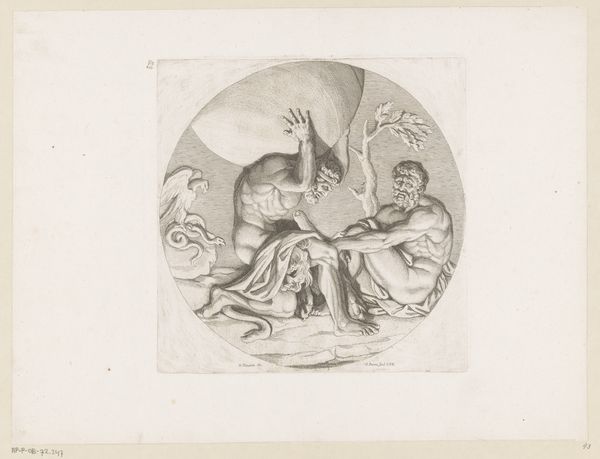
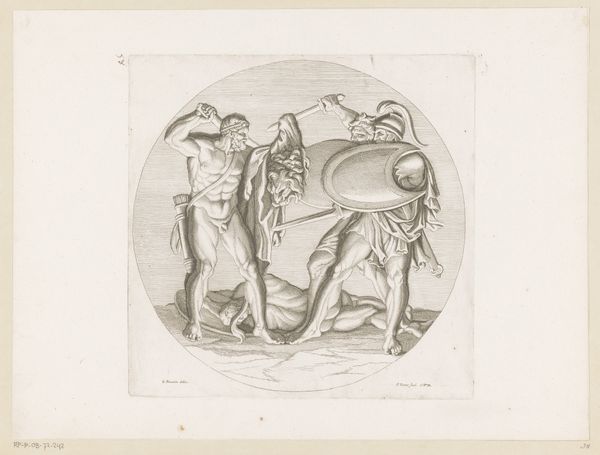
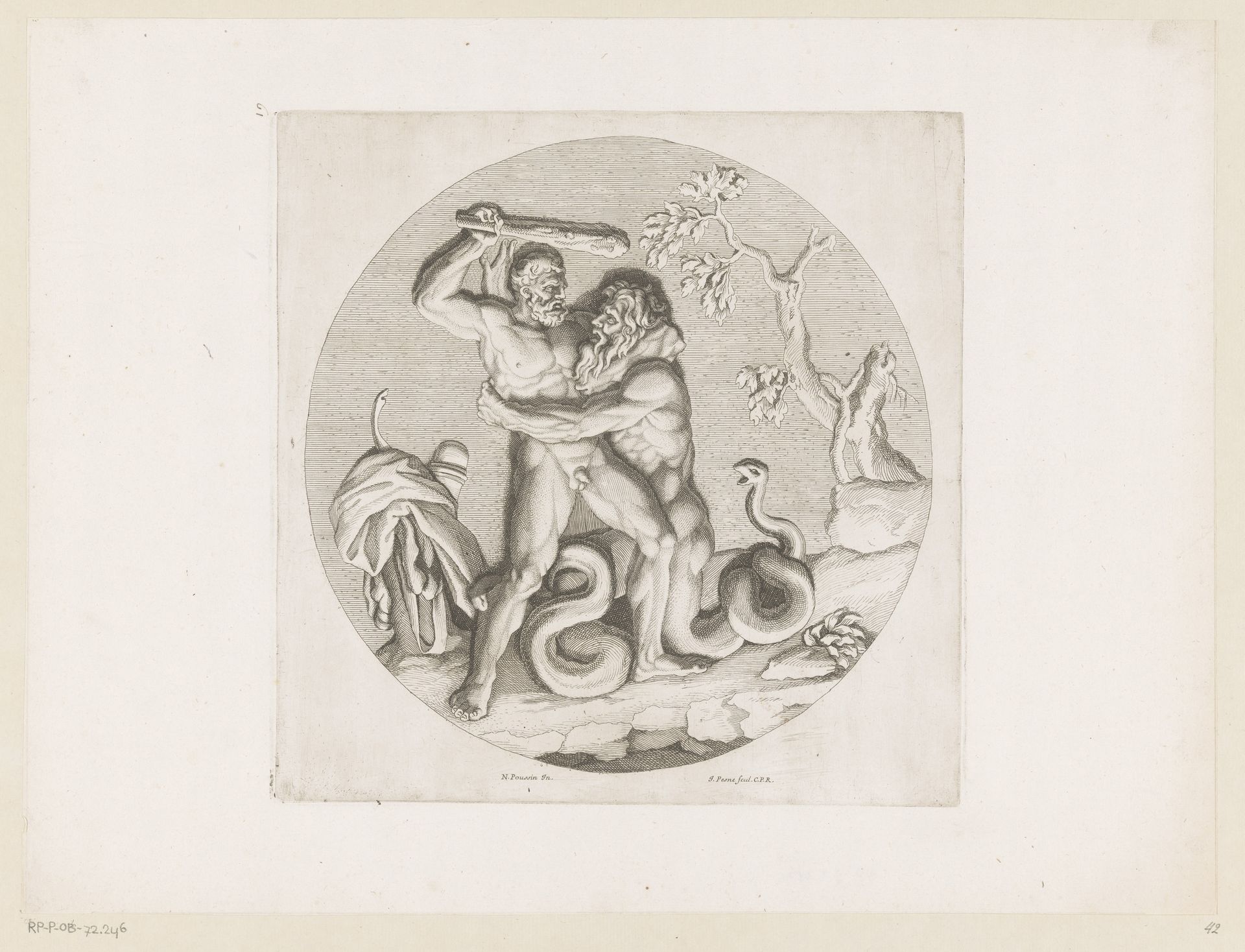
Hercules overwint de reus met de slangenstaart

Jean Pesne
1623 - 1700Location
RijksmuseumListen to curator's interpretation
Curatorial notes
Jean Pesne created this engraving, "Hercules overwint de reus met de slangenstaart," sometime between 1623 and 1700. Pesne was working in a period of immense change, particularly in the visual representation and idolization of masculinity. Here, Hercules battles a giant with a serpent tail, which, symbolically, is a contest between order and chaos, human versus animal, and perhaps most pertinently, civilization over barbarism. The figure of Hercules, already freighted with cultural meaning, is made to bear the burden of power, control, and reason. The body of Hercules then becomes a battleground, a site on which cultural anxieties about gender, sexuality, and race are mapped. This struggle is not just about physical dominance, but about asserting a very particular kind of masculine ideal. Hercules’ triumph then reinforces a hierarchy, casting anyone who doesn't fit this ideal as monstrous or less human. The engraving asks us, even now, to consider what is at stake when we celebrate such narratives of conquest and control. What do we risk losing in the process?