About this artwork
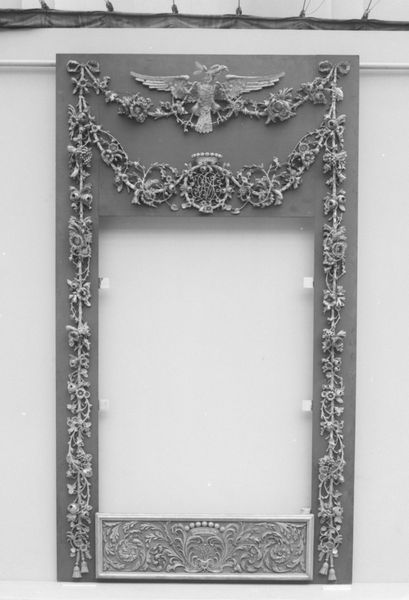
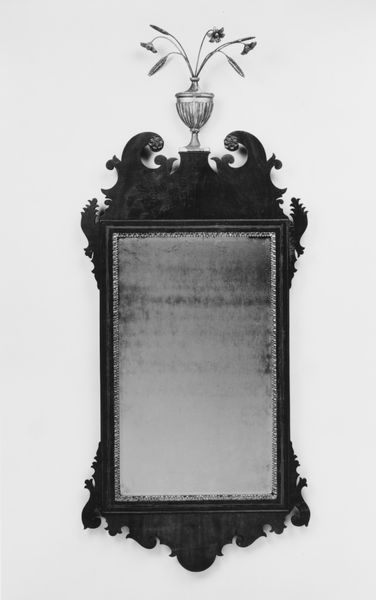
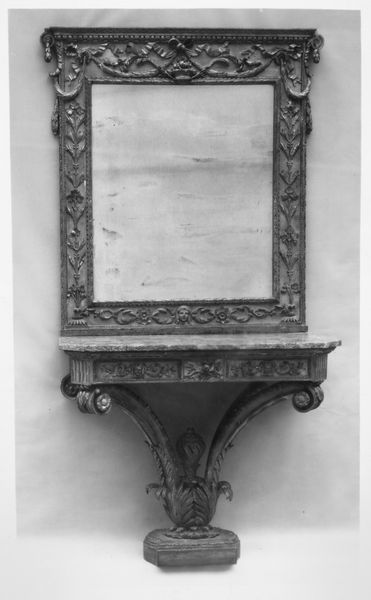
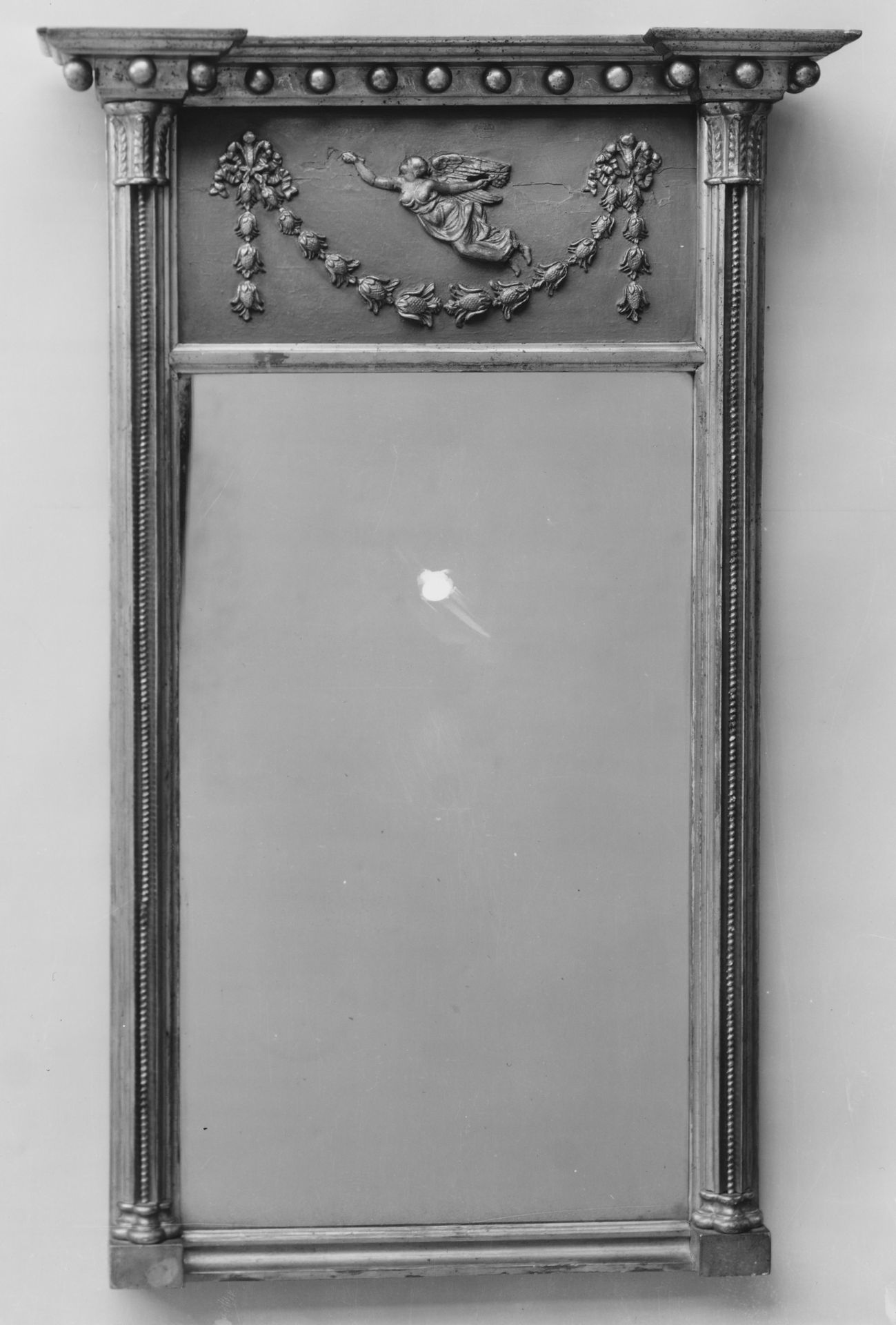
John Doggett created this looking glass sometime in the first half of the 19th century, likely using wood and glass sourced from local workshops. In the early American Republic, decorative objects like mirrors were not just functional items but also potent symbols of status and taste. The classical motifs, such as the stylized garlands and the figure reminiscent of ancient Greek sculpture, reflect the era’s fascination with the aesthetics of republicanism and democracy. Artisans drew inspiration from pattern books and architectural guides to replicate these refined designs and appeal to wealthy clientele. Doggett's choice of ornamentation speaks to the social aspirations of the rising merchant class in the northeastern United States. These households would be interested in demonstrating their knowledge and appreciation of classical traditions. Understanding this work fully requires a dive into the historical records of early American decorative arts, including business inventories, newspaper advertisements, and probate records, which all shed light on the social and economic context of this looking glass.
Looking Glass
1810 - 1820


Artwork details
- Medium
- carving, wood
- Dimensions
- 35 x 22 1/4 in. (88.9 x 56.5 cm)
- Location
- Metropolitan Museum of Art, New York, NY
- Copyright
- Public Domain
Tags
portrait
neoclacissism
carving
sculpture
wood
decorative-art
Comments
Be the first to share your thoughts about this work.
About this artwork
John Doggett created this looking glass sometime in the first half of the 19th century, likely using wood and glass sourced from local workshops. In the early American Republic, decorative objects like mirrors were not just functional items but also potent symbols of status and taste. The classical motifs, such as the stylized garlands and the figure reminiscent of ancient Greek sculpture, reflect the era’s fascination with the aesthetics of republicanism and democracy. Artisans drew inspiration from pattern books and architectural guides to replicate these refined designs and appeal to wealthy clientele. Doggett's choice of ornamentation speaks to the social aspirations of the rising merchant class in the northeastern United States. These households would be interested in demonstrating their knowledge and appreciation of classical traditions. Understanding this work fully requires a dive into the historical records of early American decorative arts, including business inventories, newspaper advertisements, and probate records, which all shed light on the social and economic context of this looking glass.
Comments
Be the first to share your thoughts about this work.