About this artwork
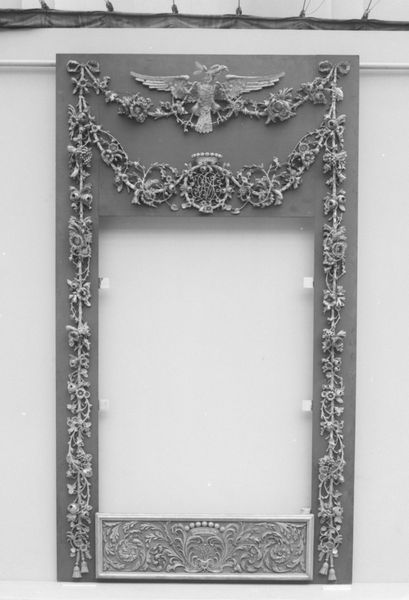
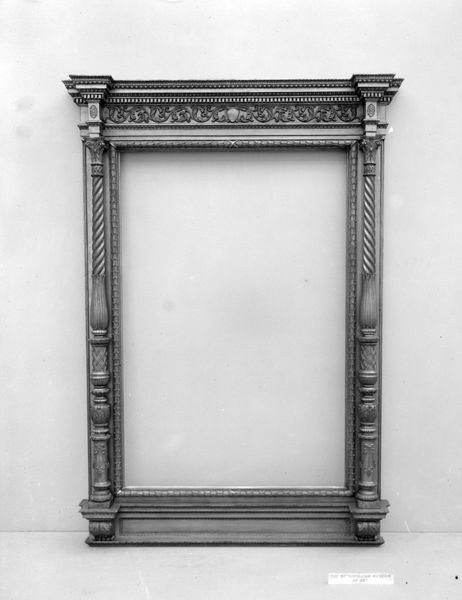
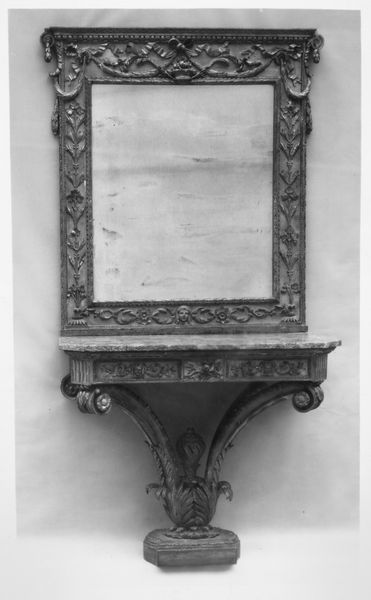
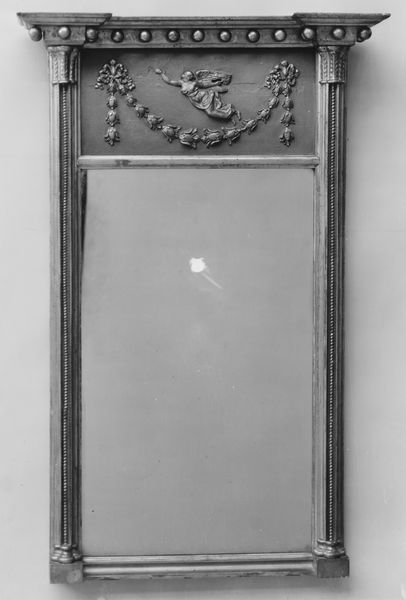
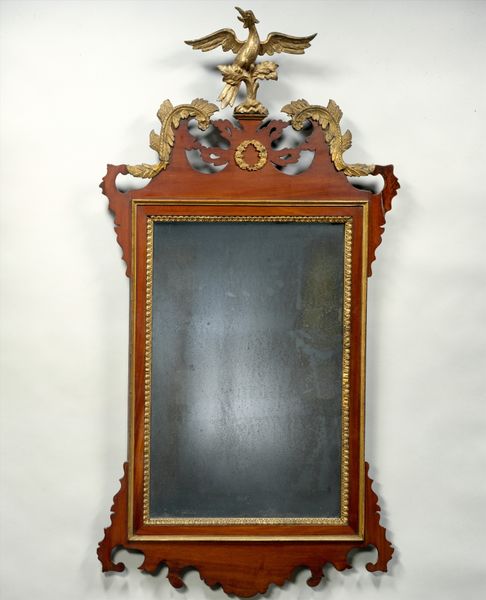
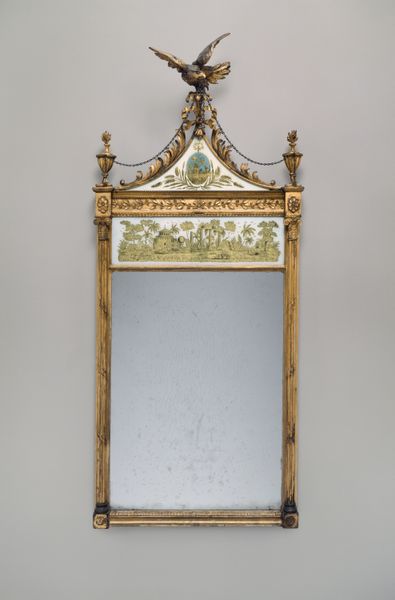
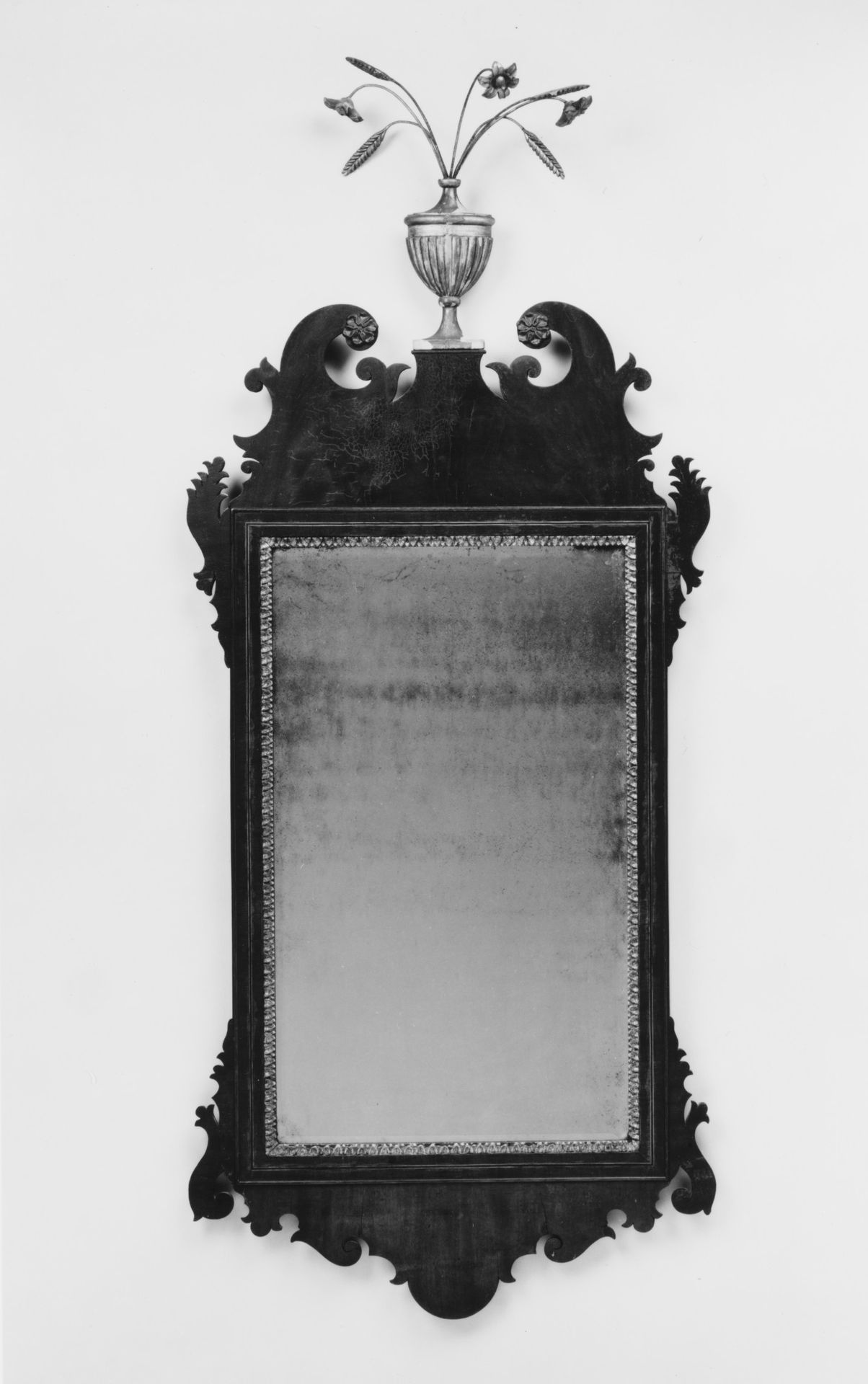
This Looking Glass was made by James Stokes around the late 18th to early 19th century. It is made from mahogany, glass, gesso, and gilded wood. The mirror's wooden frame has been carefully carved with decorative details. Mahogany was a prized material during this time, often imported from the Americas. Skilled woodworking was thus a signifier of status, and a demonstration of the owner's capacity to afford fine things. The process of carving and gilding requires a huge amount of labor, reflecting the hierarchical structure of society at the time. The delicate gesso work and gilded accents add visual richness and texture to the frame, while the silvered glass would have been a relatively expensive commodity. The mirror isn't just a looking glass, it reflects the world of labor, trade, and social status in which it was made. Appreciating the materials and the making is key to understand the full meaning of the artwork, challenging traditional distinctions between fine art and craft.
Looking Glass 1795 - 1800


Artwork details
- Medium
- carving, wood
- Dimensions
- 54 1/2 x 22 1/2 x 1 1/2 in. (138.4 x 57.2 x 3.8 cm)
- Location
- Metropolitan Museum of Art, New York, NY
- Copyright
- Public Domain
Tags
portrait
carving
sculpture
united-states
wood
decorative-art
Comments
No comments
About this artwork
This Looking Glass was made by James Stokes around the late 18th to early 19th century. It is made from mahogany, glass, gesso, and gilded wood. The mirror's wooden frame has been carefully carved with decorative details. Mahogany was a prized material during this time, often imported from the Americas. Skilled woodworking was thus a signifier of status, and a demonstration of the owner's capacity to afford fine things. The process of carving and gilding requires a huge amount of labor, reflecting the hierarchical structure of society at the time. The delicate gesso work and gilded accents add visual richness and texture to the frame, while the silvered glass would have been a relatively expensive commodity. The mirror isn't just a looking glass, it reflects the world of labor, trade, and social status in which it was made. Appreciating the materials and the making is key to understand the full meaning of the artwork, challenging traditional distinctions between fine art and craft.
Comments
No comments