About this artwork
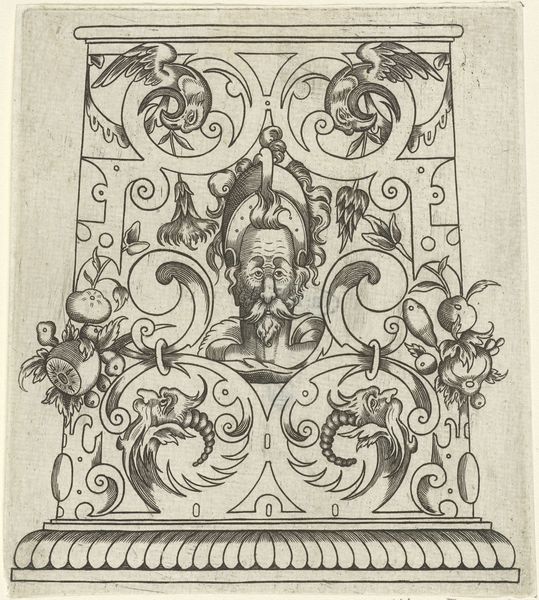
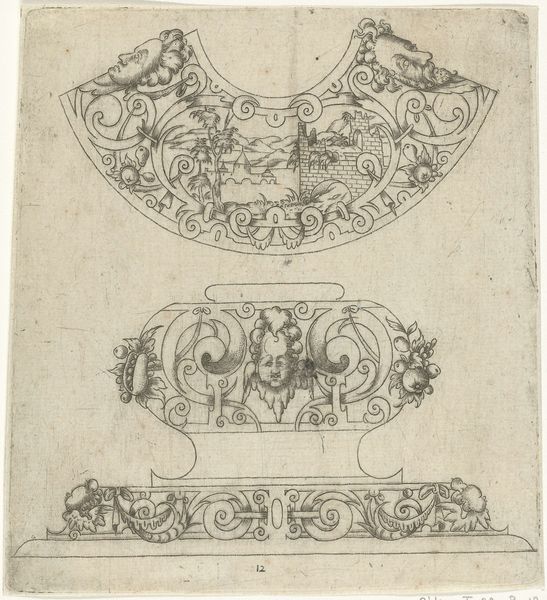
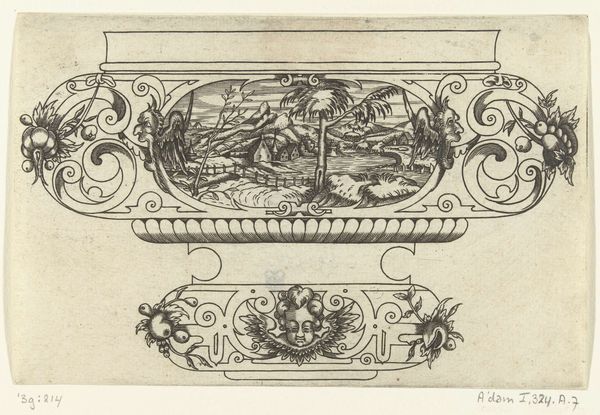
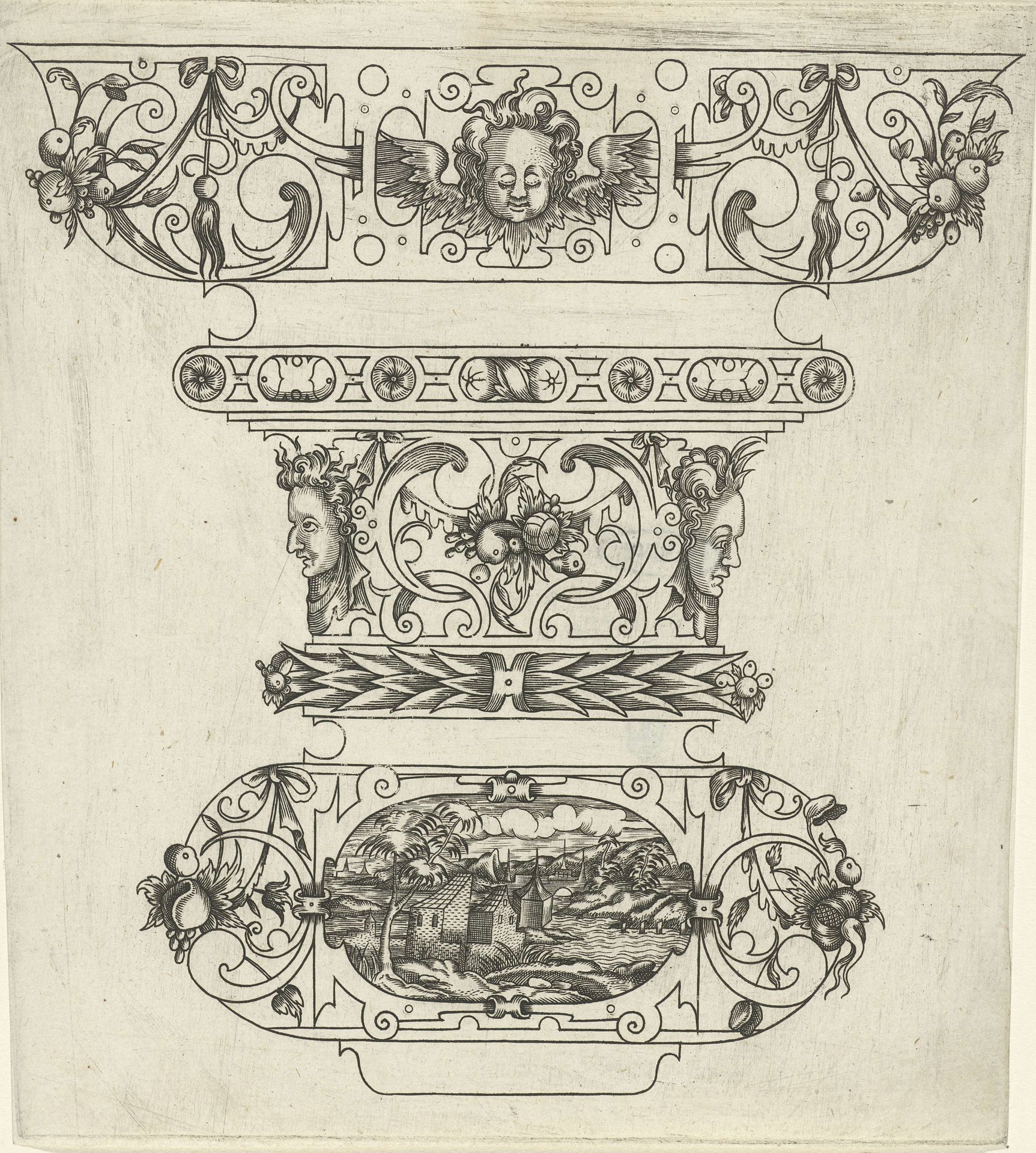
This print shows the upper section of a goblet, made by an anonymous artist. The primary material is ink, meticulously applied using an engraving technique. The print is a testament to the engraver's skill, who used tools to create detailed and repeatable patterns. The linear quality and the fineness of detail give the design a sense of depth and texture, as seen in the cherubic faces and cascading foliage. The work would have been a form of industrial design, offering templates for artisans. The use of engraving, with its capacity for reproduction, speaks to the rising culture of design dissemination. Prints like this one played a crucial role in shaping taste and standardizing design aesthetics. This aesthetic economy connects the artist to larger systems of labor, consumption, and the burgeoning industrial age. The production of the print also challenges traditional art, because it is meant for the use of other artisans, not as a piece of art itself.
Bovenste gedeelte van een bokaal met drie te variëren onderdelen c. 1500 - 1598

Anonymous
@anonymousLocation
RijksmuseumArtwork details
- Medium
- drawing, print, intaglio, engraving
- Dimensions
- height 165 mm, width 146 mm
- Location
- Rijksmuseum
- Copyright
- Rijks Museum: Open Domain
Tags
drawing
pen drawing
pen illustration
pen sketch
intaglio
old engraving style
pen-ink sketch
pen work
northern-renaissance
engraving
Comments
No comments
About this artwork
This print shows the upper section of a goblet, made by an anonymous artist. The primary material is ink, meticulously applied using an engraving technique. The print is a testament to the engraver's skill, who used tools to create detailed and repeatable patterns. The linear quality and the fineness of detail give the design a sense of depth and texture, as seen in the cherubic faces and cascading foliage. The work would have been a form of industrial design, offering templates for artisans. The use of engraving, with its capacity for reproduction, speaks to the rising culture of design dissemination. Prints like this one played a crucial role in shaping taste and standardizing design aesthetics. This aesthetic economy connects the artist to larger systems of labor, consumption, and the burgeoning industrial age. The production of the print also challenges traditional art, because it is meant for the use of other artisans, not as a piece of art itself.
Comments
No comments