photography, gelatin-silver-print
#
sculpture
#
photography
#
historical photography
#
gelatin-silver-print
Dimensions: height 238 mm, width 192 mm
Copyright: Rijks Museum: Open Domain
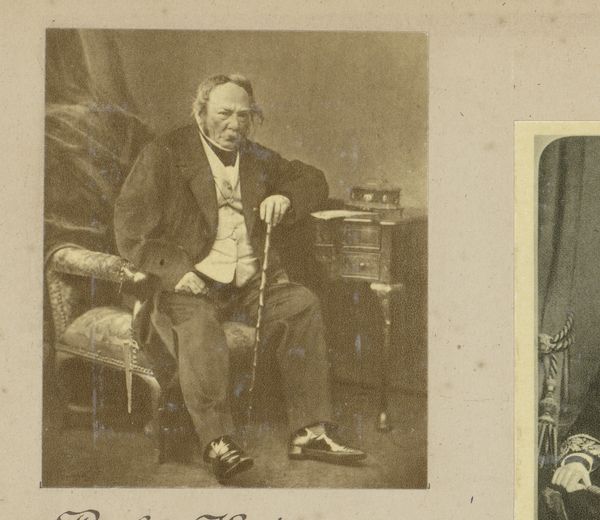
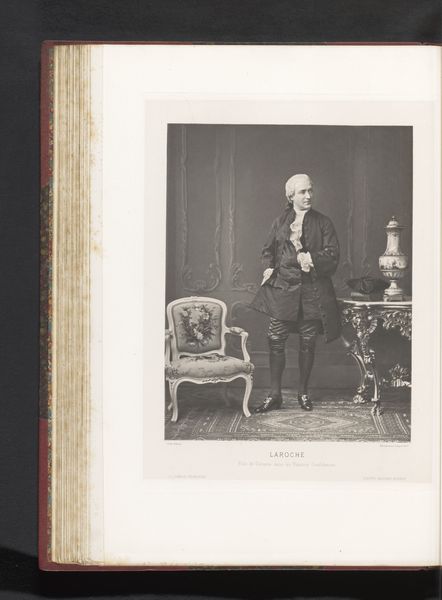
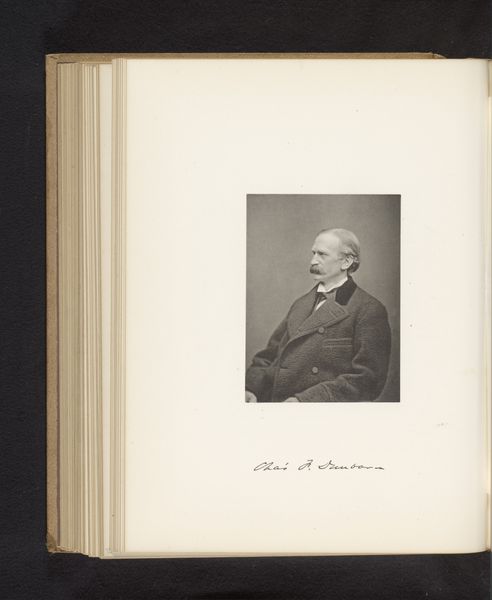
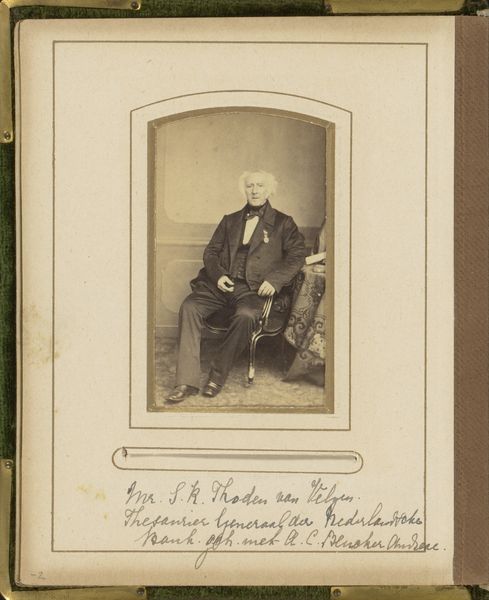
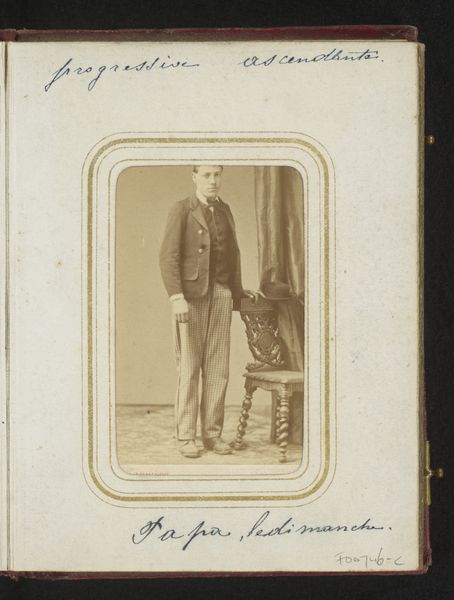
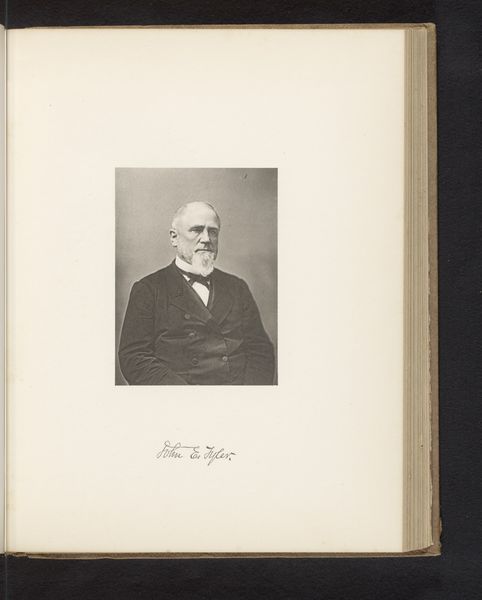
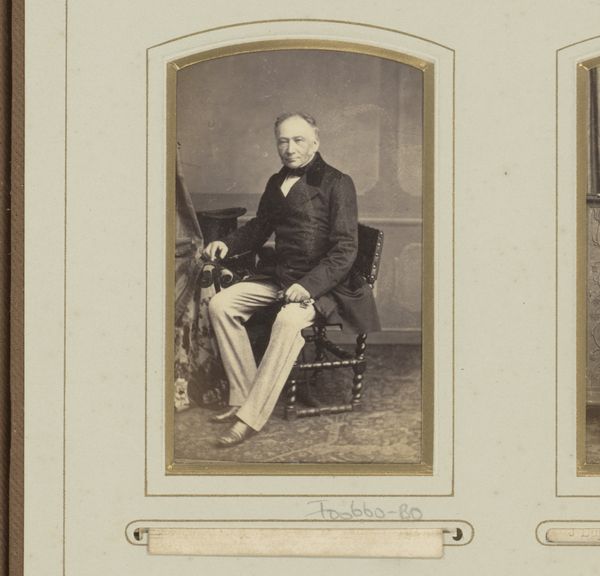
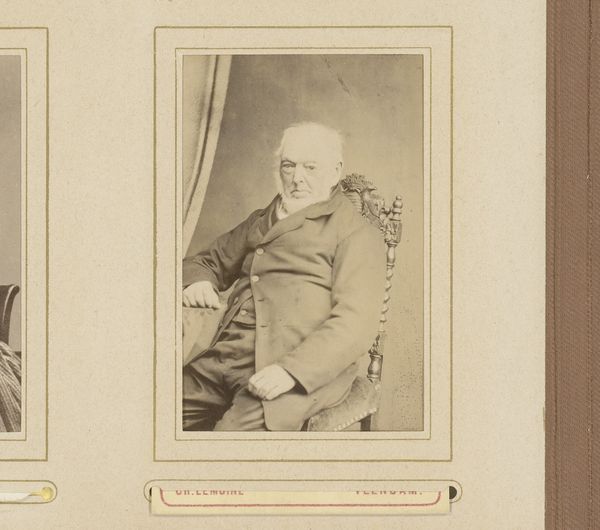
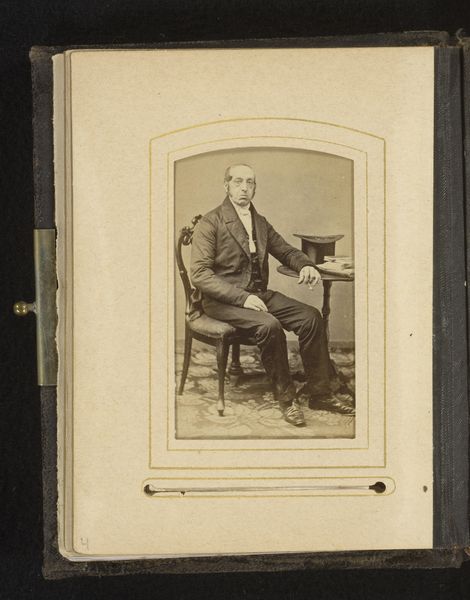
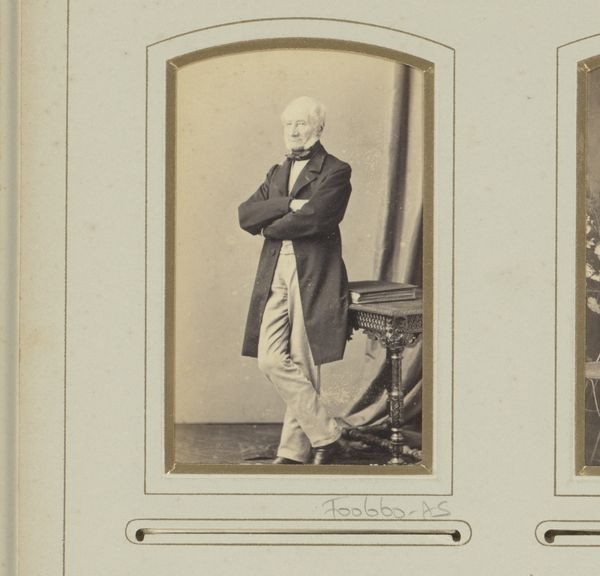
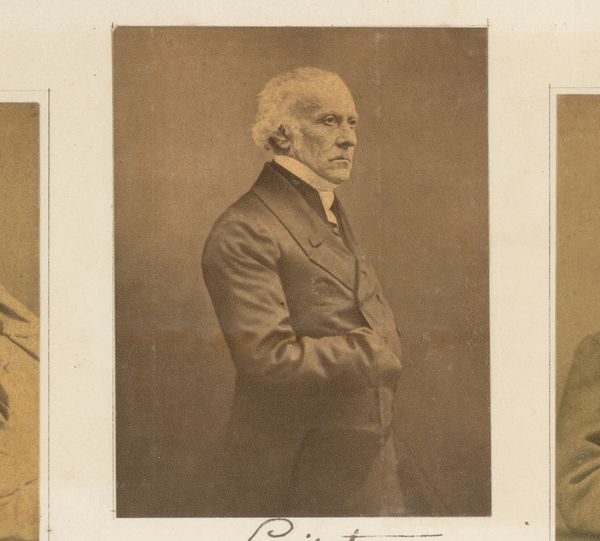
Editor: Here we have Bertall's "Portret van Paul de Kock," a gelatin-silver print created before 1877. The gentleman is captured with a cane and has a certain air of self-importance. What can you tell me about it? Curator: This image, while seemingly straightforward, is a product of its time. Think about the power dynamics at play. We have a man, likely of means, being immortalized through the then-novel medium of photography. How does this formal pose reinforce social hierarchies? What narrative is the artist creating, and for whom? Editor: It does seem very staged, doesn't it? The backdrop, the little table...it all speaks to wealth and status. Do you think the photograph reinforces those ideas, or perhaps subverts them in any way? Curator: It reinforces them, certainly, but the subversion lies in what isn’t shown. Consider the working class during this era, largely excluded from such representations. The image is silent on their lives, their struggles. It reinforces the visibility of one group at the expense of another, creating a very biased historical record. Whose stories are validated and preserved? Whose are erased? Editor: That's a powerful point. It’s a beautiful image, technically, but it highlights an unequal society. Are there any other aspects you see relating to this? Curator: Consider the gaze. Is there a connection with the viewer, or is it a performance for an unseen audience, reinforcing existing power structures of who gets to be seen, and how? These early portraits are powerful tools that either reinforced the establishment or paved the way for marginalized communities to step into the frame. Editor: I see what you mean. Looking at it through that lens completely changes my perception. It is not just a portrait, but a statement. Curator: Exactly. It’s a fragment of a much larger, ongoing conversation about representation and power. Editor: This was very insightful. Thank you for providing that social and historical context! I definitely have a new appreciation for analyzing historical photographs.
Comments
No comments
Be the first to comment and join the conversation on the ultimate creative platform.
 Collect
 React
React Comment
More like this