sculpture, wood
#
portrait
#
african-art
#
figuration
#
sculpture
#
wood
#
yoruba-art
Dimensions: 12 5/8 x 4 1/2 x 4 1/16 in. (32.1 x 11.4 x 10.3 cm) (including attached wood mount)
Copyright: Public Domain
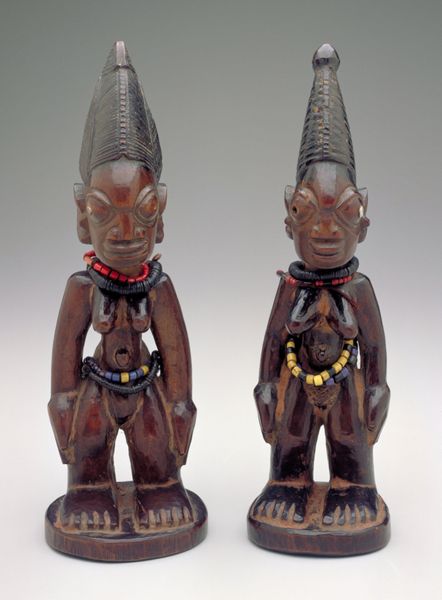
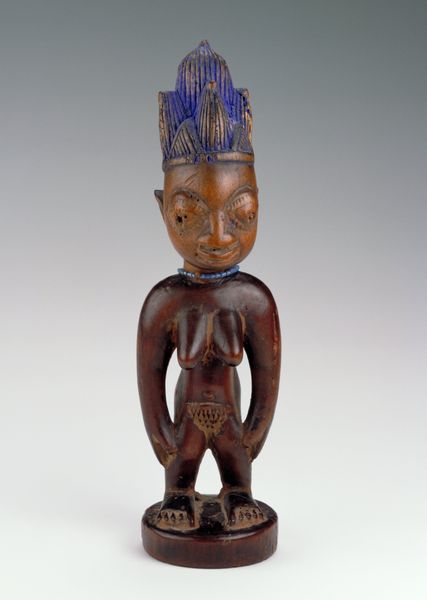
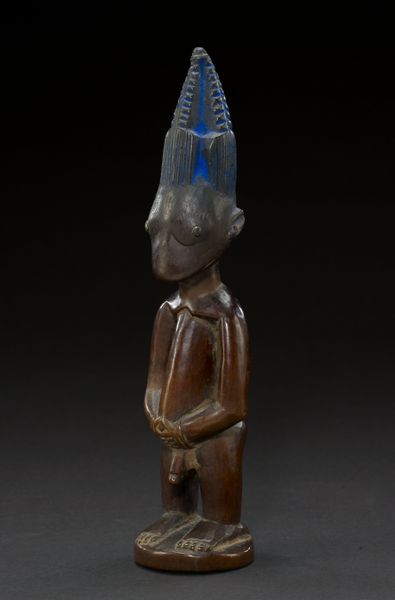
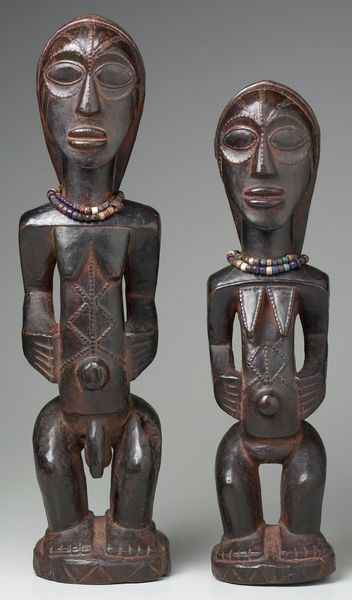
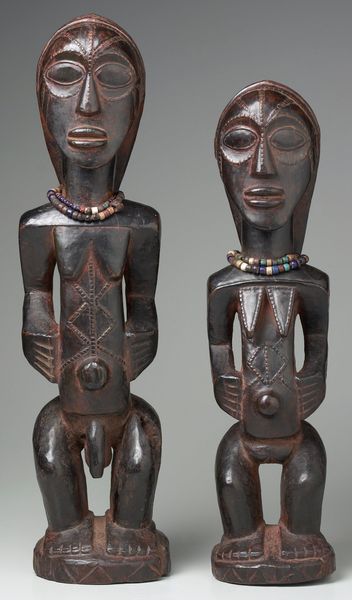
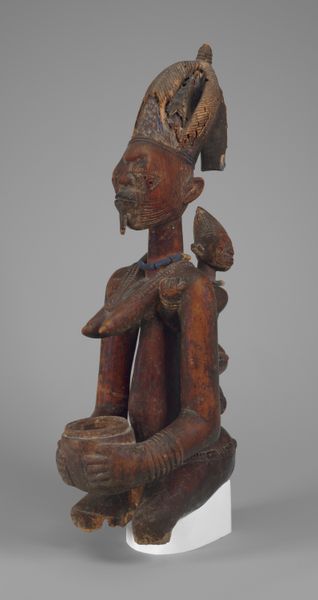
Curator: Here we have a pair of Ere Ibeji figures, crafted by a Yoruba artist around the 20th century. They are carved from wood and currently reside here at the Minneapolis Institute of Art. Editor: Wow, there’s a stillness, a sacred quiet about these figures, wouldn't you say? Their carved bodies and faces give me a very strong, grounded, almost…patient feeling. Curator: The Ibeji tradition centers around the Yoruba belief in the spiritual significance of twins. When a twin dies, figures like these are commissioned and cared for by the family, acting as a symbolic representation of the deceased child. This emphasizes the societal structures related to Yoruba cosmology and beliefs around birth, death, and memory. Notice how their bodies are adorned with beads and the elaborate hairstyles that are depicted with so much care. The level of craftsmanship and personal investment becomes visible in every element of the figure. Editor: You can just feel the weight of that investment, can't you? Almost like these are more than just representations; like the spirit of the child truly lives in this wooden shell. Their somewhat abstracted features feel not so much primitive, but…essential. As though only the most crucial aspects of a person remain, like the essence distilled through grief and love. Curator: The choice of wood is also very telling of its role in Yoruba artistry, a natural medium shaped to bridge the gap between physical and spiritual realms. Each figure undergoes several stages of treatment including carving, coloring, and ritual cleansing by a Babalawo to embody the child it symbolizes, thus turning raw material into cultural objects. Editor: Imagine the hands that shaped them, the rituals performed, all that love and intention pouring into the wood… And now here we stand, witnessing not just a piece of carved material but also the reverberations of an eternal human yearning. I'd like to imagine the scent of that consecrated wood... Curator: Indeed, the Ere Ibeji go beyond just aesthetic items. They reveal important socio-cultural patterns, highlighting indigenous technologies in material transformation and ritual practices while commemorating significant Yoruba kinship values. Editor: I suppose these figures whisper not just of Yoruba craftsmanship, but universal human experiences tied to love and remembrance. Makes one stop and think about the narratives etched into every object we make, doesn't it?
Comments
No comments
Be the first to comment and join the conversation on the ultimate creative platform.
 Collect
 React
React Comment
More like this