1858
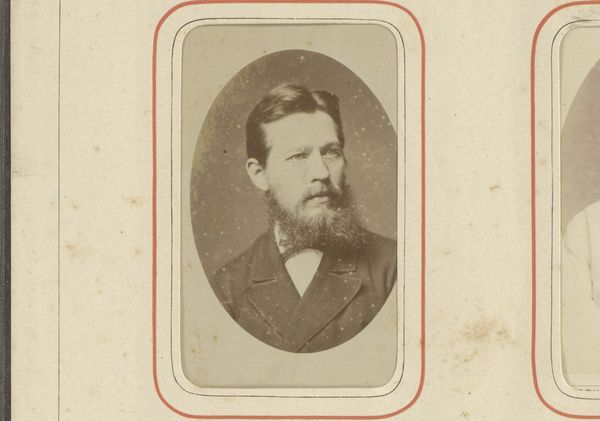
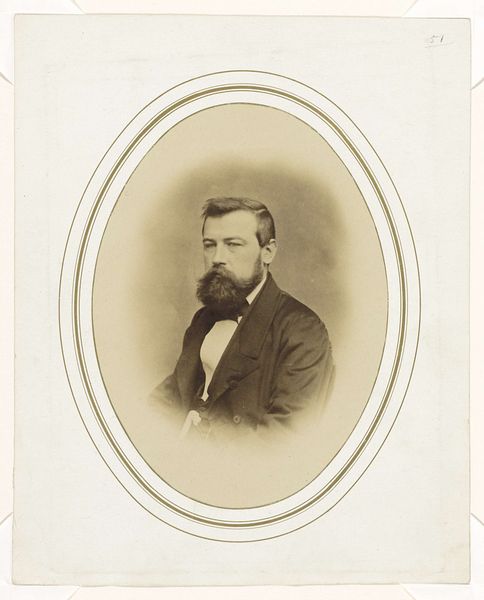
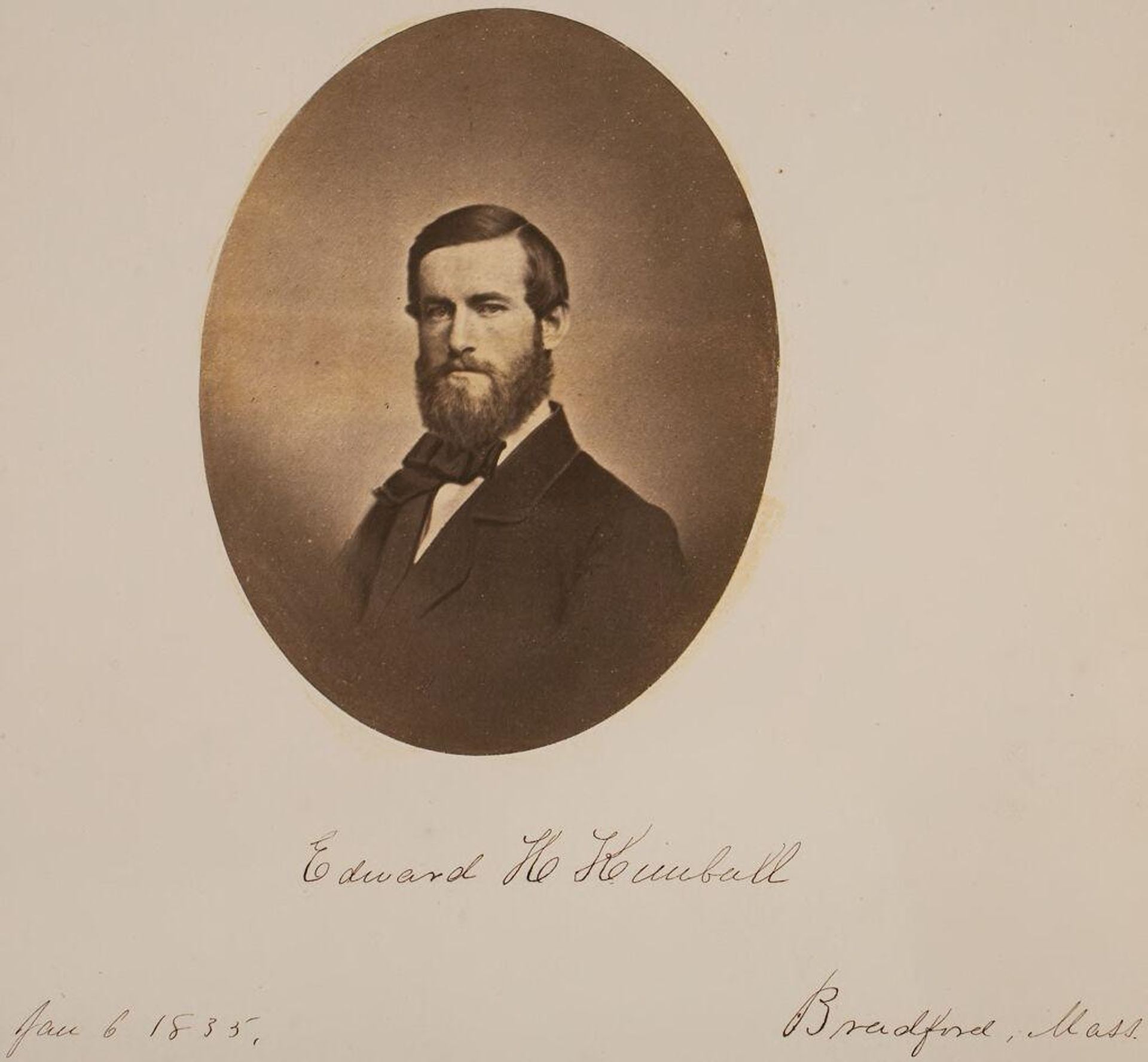
Edward Harrington Kimball, Bradford, Massachusetts (1835-1874)


Listen to curator's interpretation
Curatorial notes
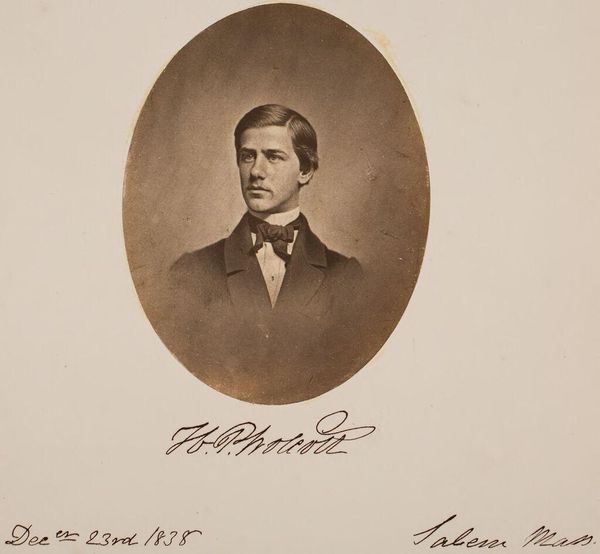
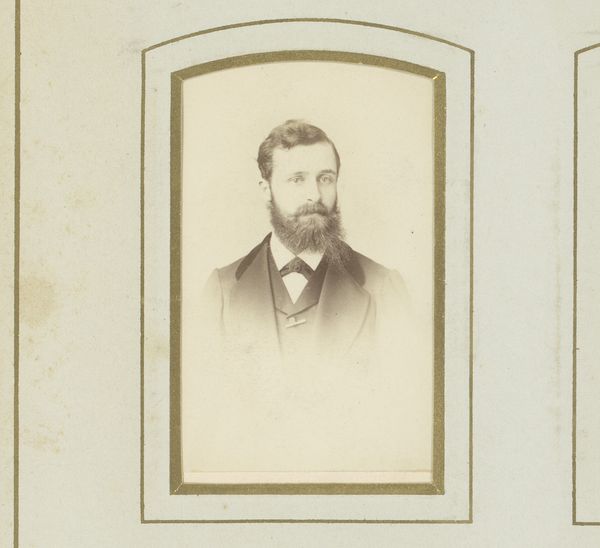
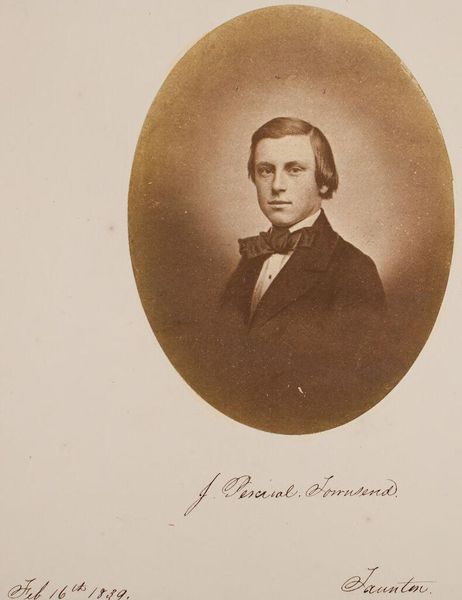
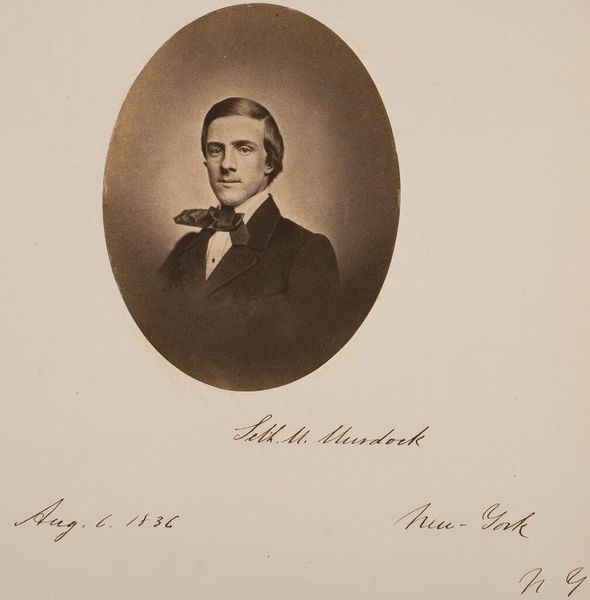
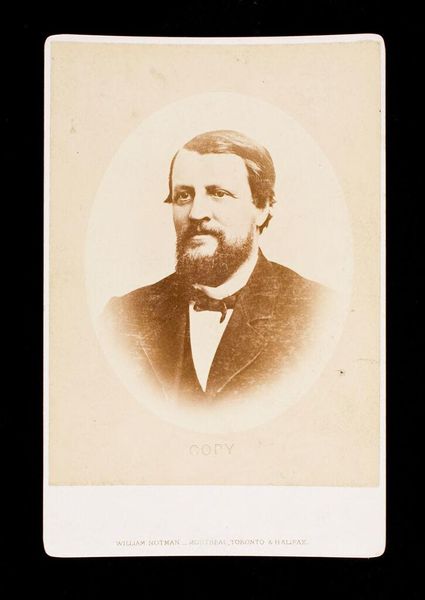
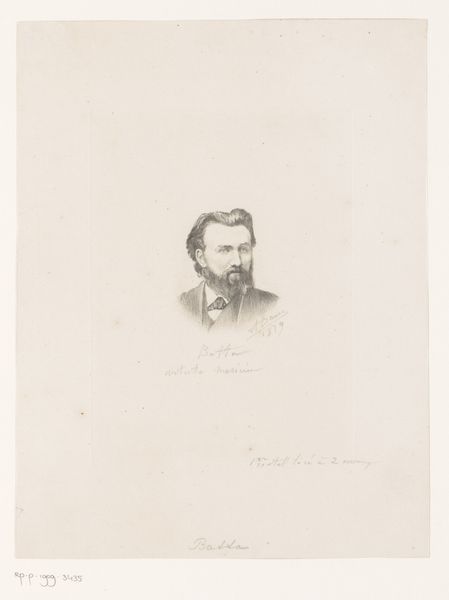
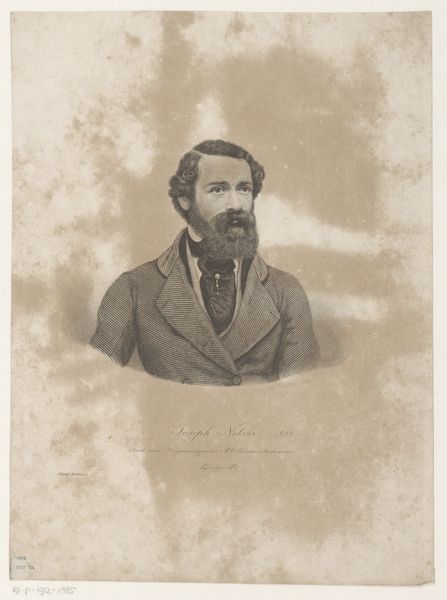
Editor: Here we have a portrait of Edward Harrington Kimball, by John Adams Whipple. It looks like a photograph mounted on card. It has a formal, almost severe quality. What can you tell me about this kind of portraiture in its time? Curator: This portrait offers a glimpse into the democratization of image-making in the mid-19th century. Photography provided access to portraiture for a broader segment of society, moving away from the exclusive domain of painted portraits for the elite. Consider who had access to such images and what that meant for self-representation. Editor: So, it was about expanding who got to be seen? Curator: Precisely. Photography became a tool for social visibility and a means of documenting identity, family, and status within a changing social landscape. It's fascinating how a single image can tell us so much about the socio-political context. Editor: I see what you mean. It’s more than just a picture; it’s a reflection of its time.