1823
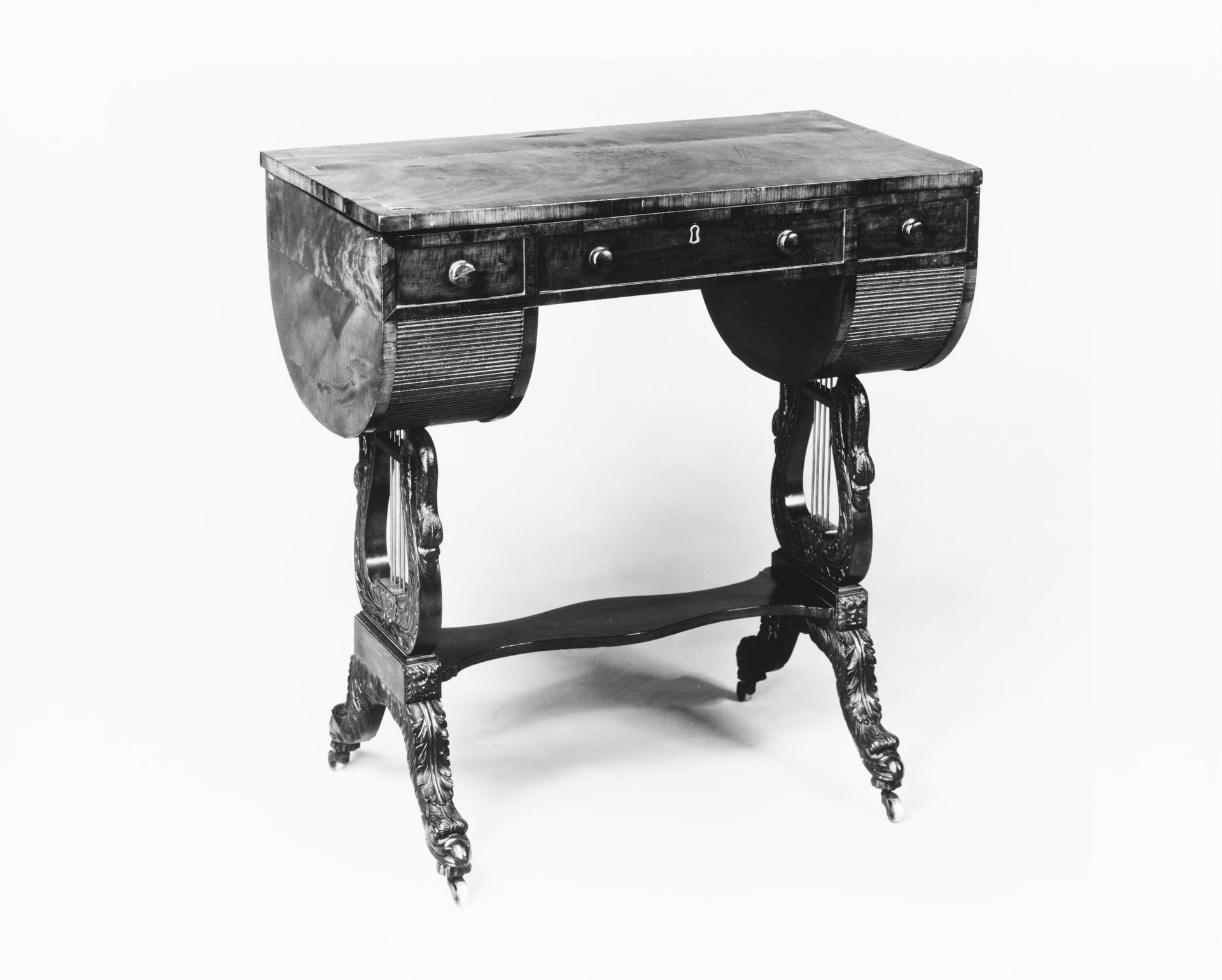
Worktable


Listen to curator's interpretation
Curatorial notes
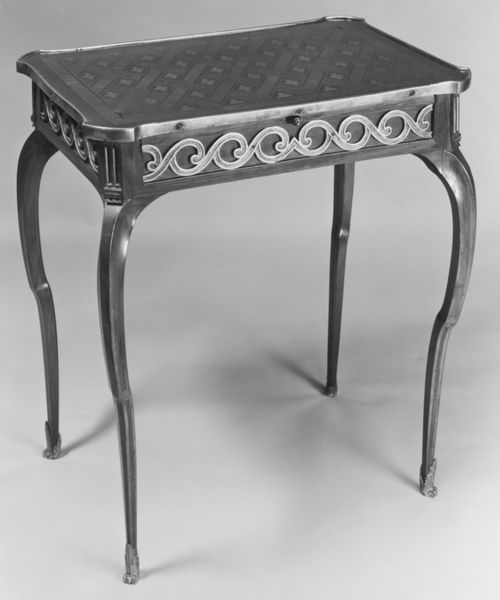
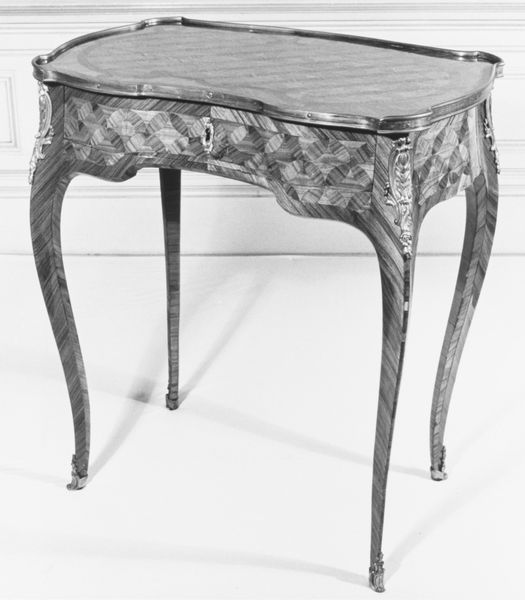
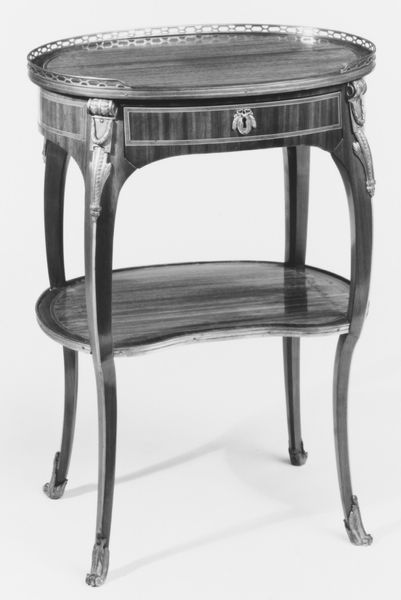
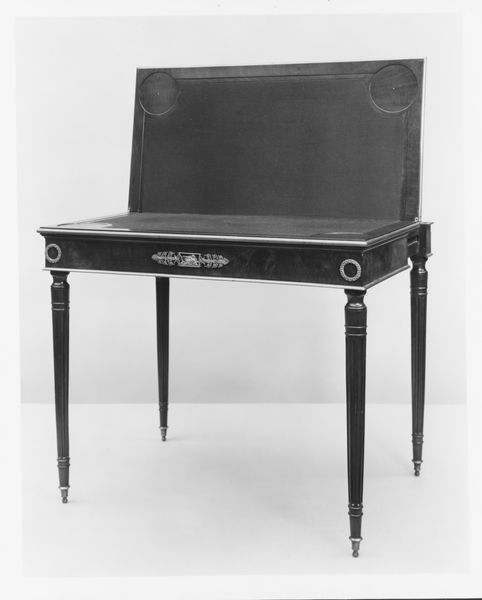
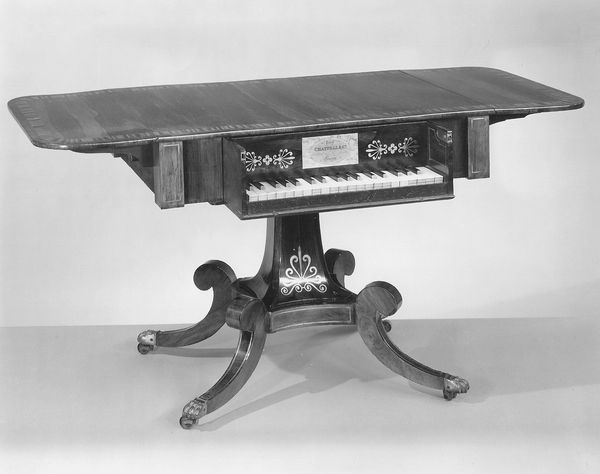
Curator: Here we have an exquisite example of early 19th-century craftsmanship: "Worktable," dating back to 1823. It is currently held in the collection of the Metropolitan Museum of Art, a prime piece of Neoclassical design. What’s your take on it? Editor: Well, initially, I see a harmonious yet slightly burdened elegance. Those carved, lyre-shaped supports look almost theatrical, as though ready for a salon performance rather than supporting daily labor. The contrast between the simple, almost austere tabletop and the ornate base creates an interesting tension. Curator: Absolutely. Let’s dig a little deeper into how the means of its making underscore broader historical contexts. We're talking about solid and veneered mahogany, with gilding and cast brass details—all pointing to specialized workshops where divisions of labor were strict, skills highly prized, and materials often sourced across colonial trade networks. Editor: You are so right. I see in the mahogany's polish the reflections of artisans bending their will to geometry; what’s left unsaid here lingers just behind the surface sheen. It feels like an ancestor, burdened with secrets in its perfect joining and gleaming trim. Did you know they call decorative art “the useful arts?” So funny to imagine something so extra is somehow also considered, uh, ‘useful’. Curator: It speaks to the burgeoning consumer culture of the period as well. It implies not only the status of ownership but also signifies a relationship between production, marketing, and the evolving tastes within emerging consumer classes of the era. It highlights the demand and creation of items, moving from solely utilitarian objects to pieces that showcase status. Editor: Oh, I agree. What kind of ‘work’ gets done at this table anyway? Certainly nothing too gritty. To me it seems perfect for drafting secret love letters with a quill. Now that would be a pretty neoclassical endeavor. It makes me question whether, at some point, the intent was not so much 'work,' as to project that ideal onto others—like so many ornamental aspirations toward diligence? Curator: Your points touch on a critical understanding of art history beyond aesthetics. Understanding how this table emerged within circuits of capital allows for critical reflection of economic power and class distinction manifest through materiality and design. Editor: Well, as always, it is so important to look closely, past beauty—to question what the object holds in terms of making and in our hearts. Thank you for your analysis of the broader picture of material value! Curator: And thank you, for humanizing and drawing attention to this work table’s role in culture.