About this artwork
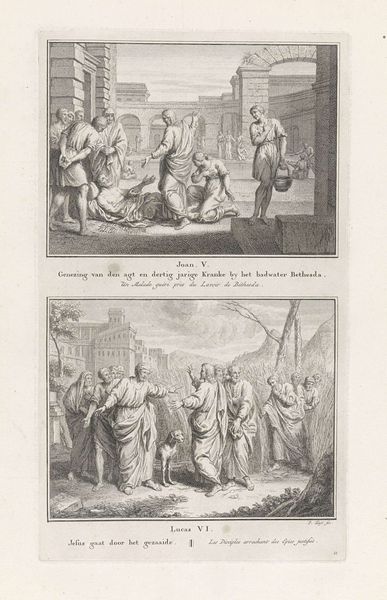
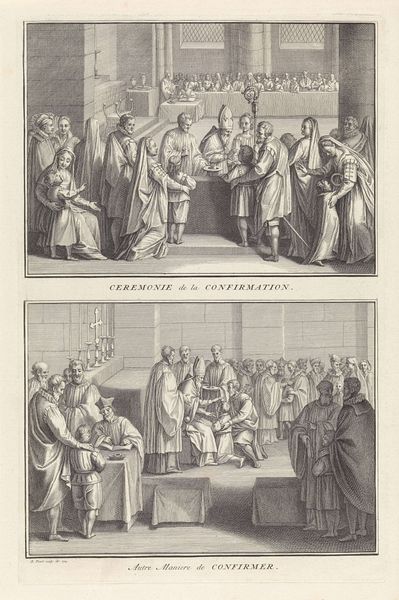
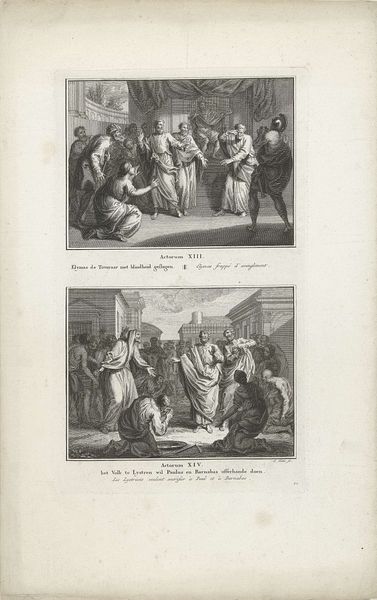
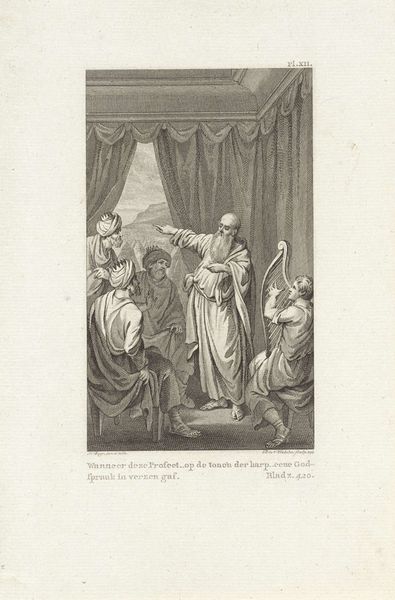
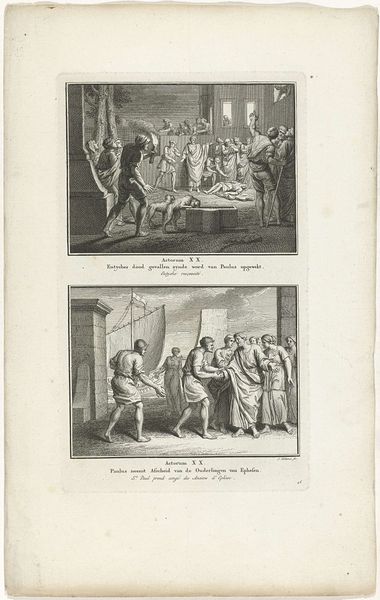
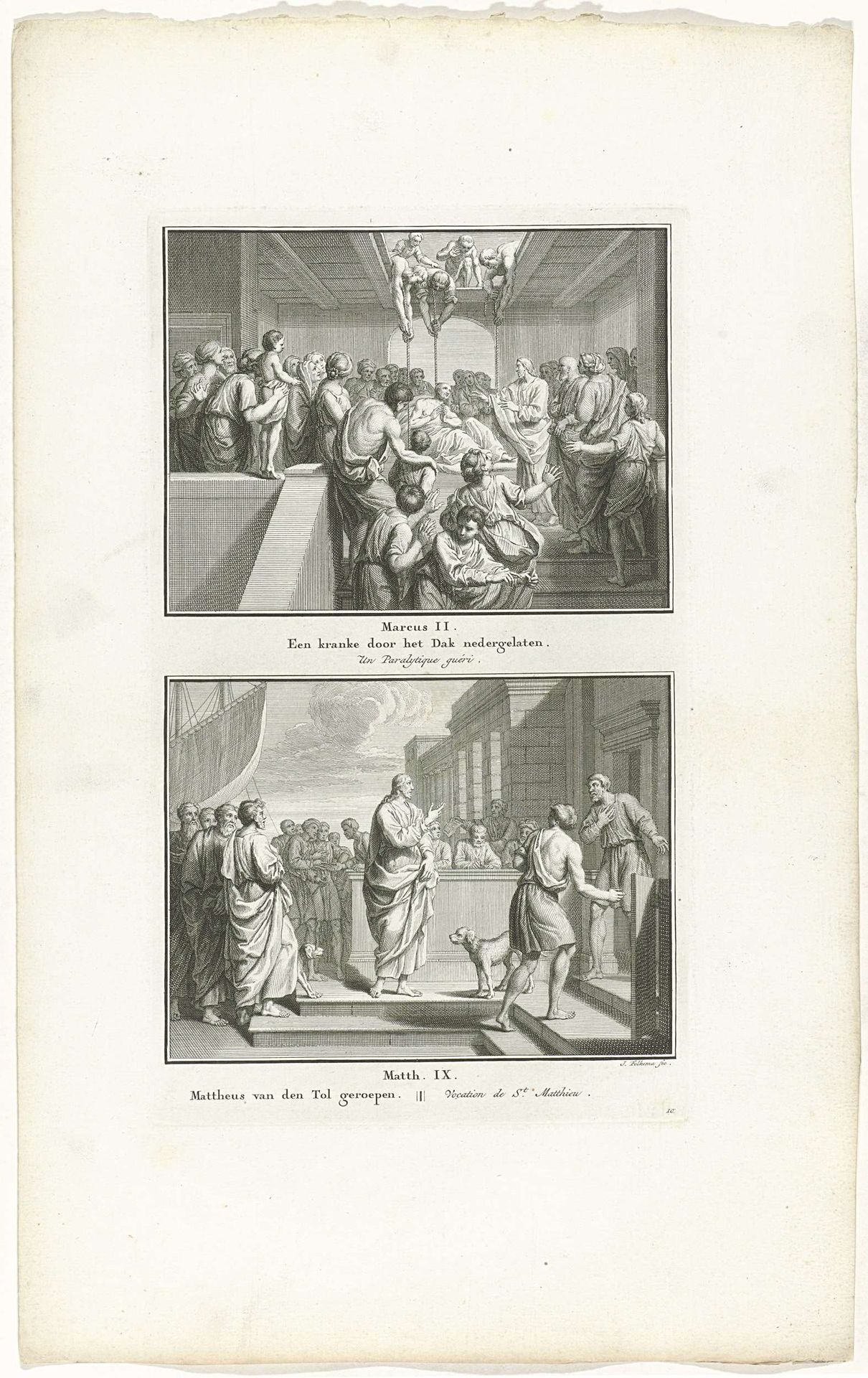
Jacob Folkema created this print titled 'Christus geneest een verlamde en de roeping van Mattheus' sometime between 1692 and 1767. Consider the immense power dynamics embedded in these biblical scenes, brought to us through Folkema's 18th-century lens. In the upper scene, a man is lowered through a roof to be healed by Christ, a literal demonstration of faith overcoming physical and social barriers. Below, Matthew, a tax collector, is called upon, challenging societal norms by elevating a figure of perceived corruption. As we contemplate these images, consider the emotional weight of these narratives. They highlight themes of redemption, divine intervention, and the disruption of social hierarchies. Folkema invites us to reflect on the transformative power of belief and the potential for radical inclusion. These scenes ask: who is deemed worthy, who is healed, and who is called to a higher purpose?
Christus geneest een verlamde en de roeping van Mattheus
1791

Jacob Folkema
1692 - 1767Location
RijksmuseumArtwork details
- Medium
- print, engraving
- Dimensions
- height 317 mm, width 186 mm
- Location
- Rijksmuseum
- Copyright
- Rijks Museum: Open Domain
Tags
Comments
Share your thoughts
About this artwork
Jacob Folkema created this print titled 'Christus geneest een verlamde en de roeping van Mattheus' sometime between 1692 and 1767. Consider the immense power dynamics embedded in these biblical scenes, brought to us through Folkema's 18th-century lens. In the upper scene, a man is lowered through a roof to be healed by Christ, a literal demonstration of faith overcoming physical and social barriers. Below, Matthew, a tax collector, is called upon, challenging societal norms by elevating a figure of perceived corruption. As we contemplate these images, consider the emotional weight of these narratives. They highlight themes of redemption, divine intervention, and the disruption of social hierarchies. Folkema invites us to reflect on the transformative power of belief and the potential for radical inclusion. These scenes ask: who is deemed worthy, who is healed, and who is called to a higher purpose?
Comments
Share your thoughts