drawing, print
drawing
narrative-art
human-figures
mannerism
figuration
11_renaissance
history-painting
italian-renaissance
virgin-mary
Copyright: Public Domain
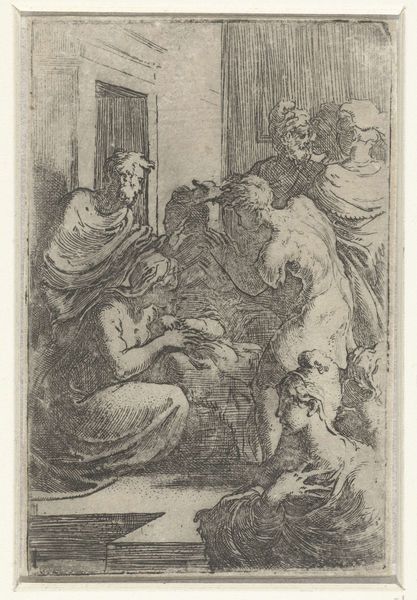
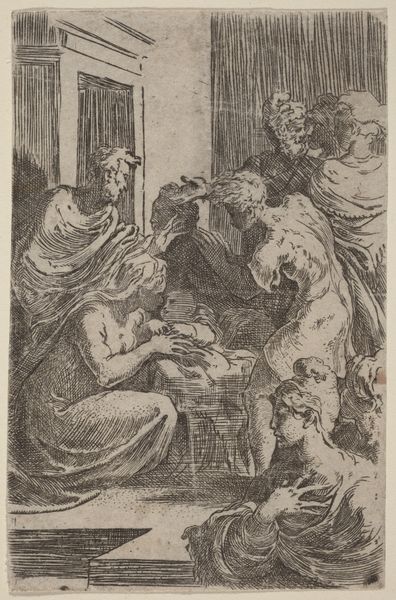
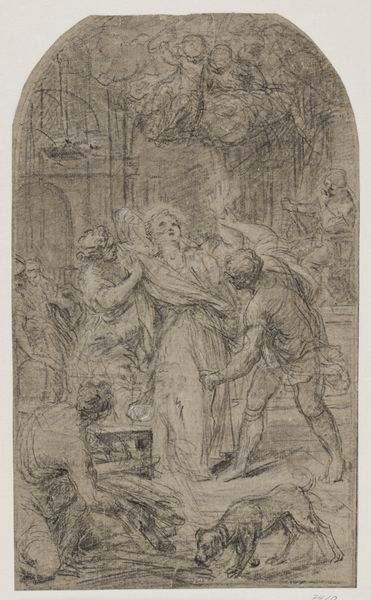
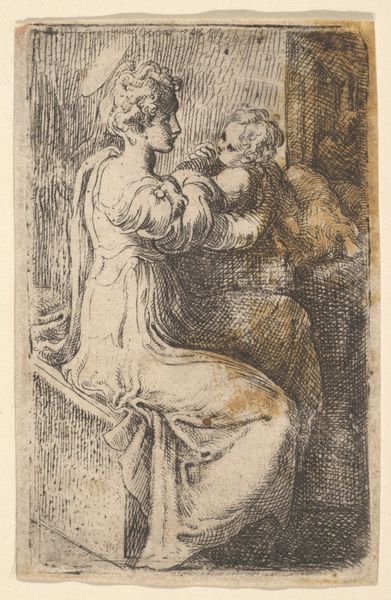
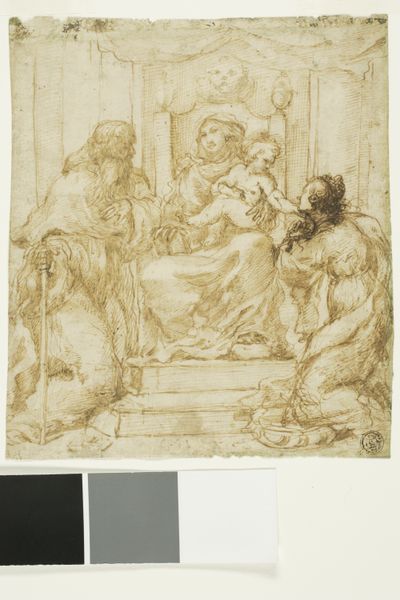
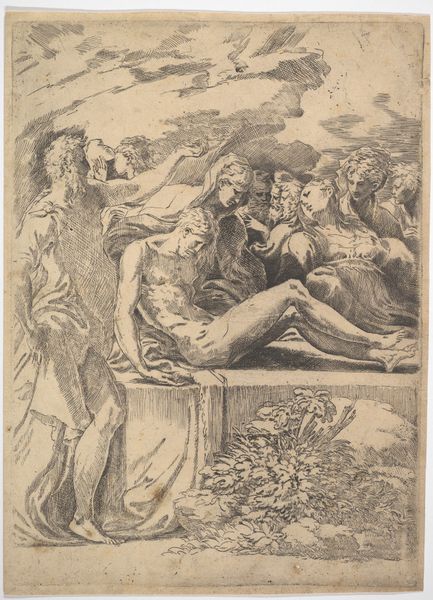
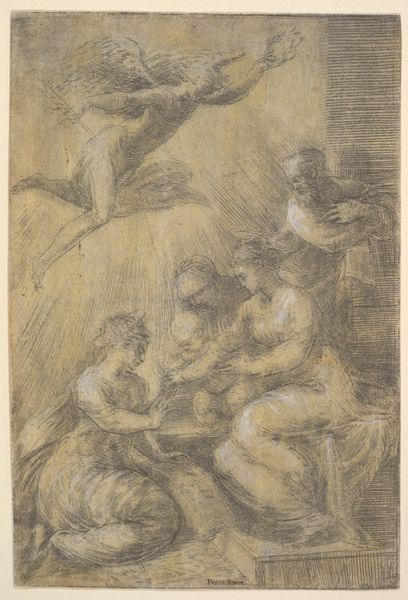
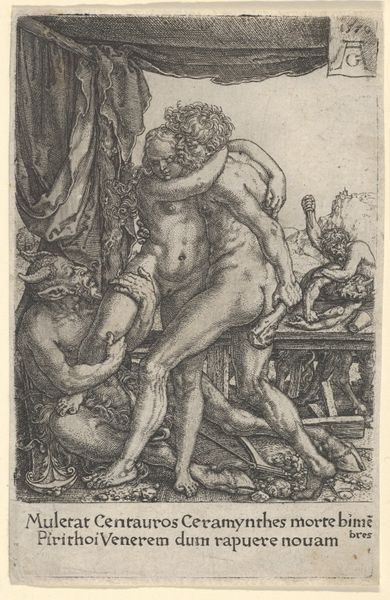
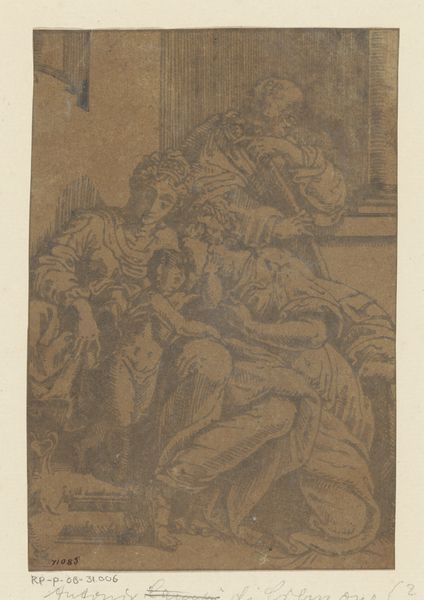
Editor: We're looking at Parmigianino's "The Nativity," made between 1522 and 1532. It's a print, currently at the Met. What strikes me first is how the artist plays with light and shadow to create such an active and kind of chaotic composition. What do you see in it? Curator: Primarily, I observe Parmigianino's Mannerist tendencies displayed through exaggerated figuration. Note the elongation of the human form, a distinct departure from High Renaissance ideals of proportion. Consider the linear quality dominating the piece; observe the intricate network of etched lines forming textures and defining volumes. How does the artist's use of line weight direct your eye through the composition? Editor: I see what you mean about the elongated bodies, and the lines do give it almost a frenetic energy, leading your eye all over. So, form over realism then? Curator: Precisely. It moves beyond representational accuracy, emphasizing stylized elegance and technical virtuosity. Think about the contrasting densities of line work; notice how they affect your perception of depth and spatial relationships. Could we argue that this emphasis on form elevates the print beyond a mere depiction of the Nativity? Editor: Definitely! It’s like the subject matter is secondary to the artist showing off what he can *do* with the medium. The complexity really makes it. I initially found it messy but I appreciate it now. Curator: Precisely, the visual impact results from formal qualities more than the narrative content. Studying his technique and understanding Mannerist aesthetics adds significant understanding of this drawing.
Comments
No comments
Be the first to comment and join the conversation on the ultimate creative platform.
 React
React Comment