About this artwork
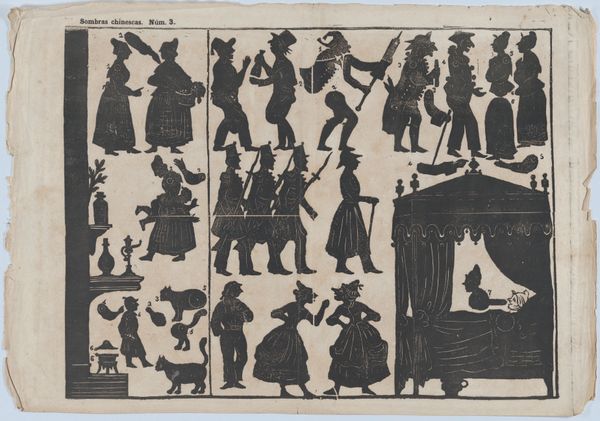
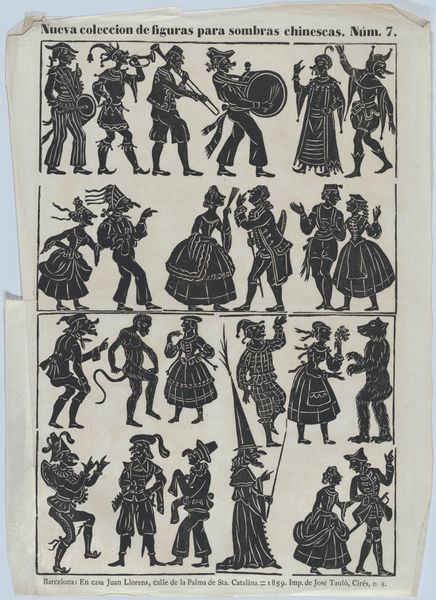
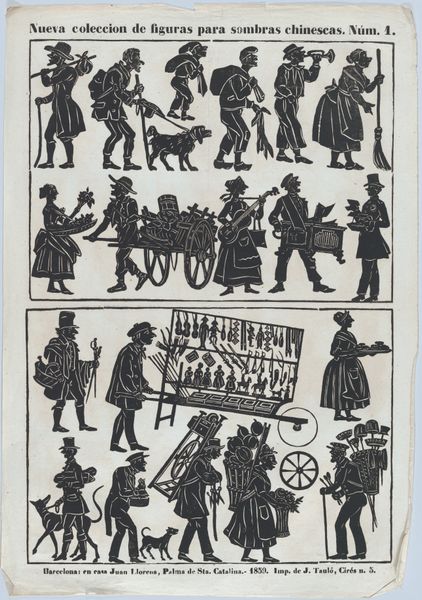
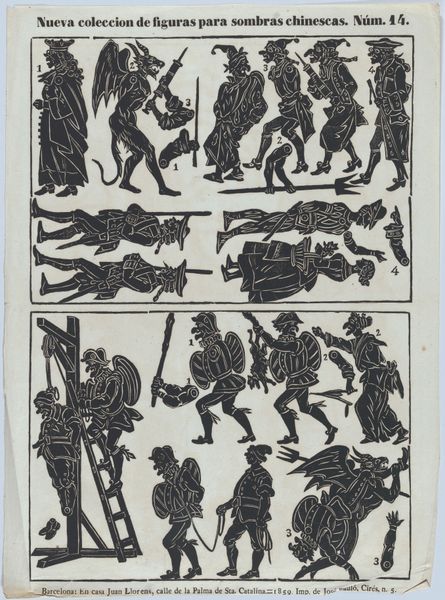
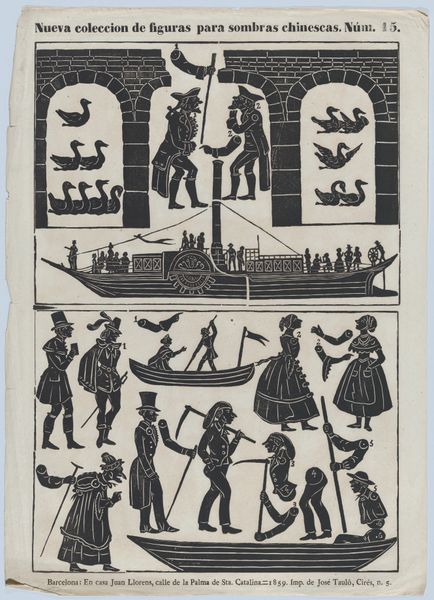
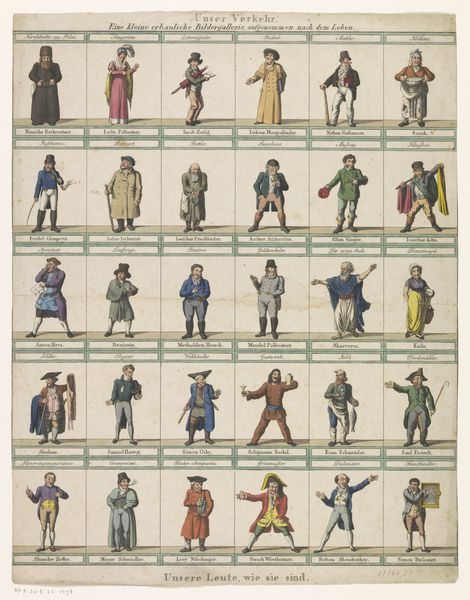
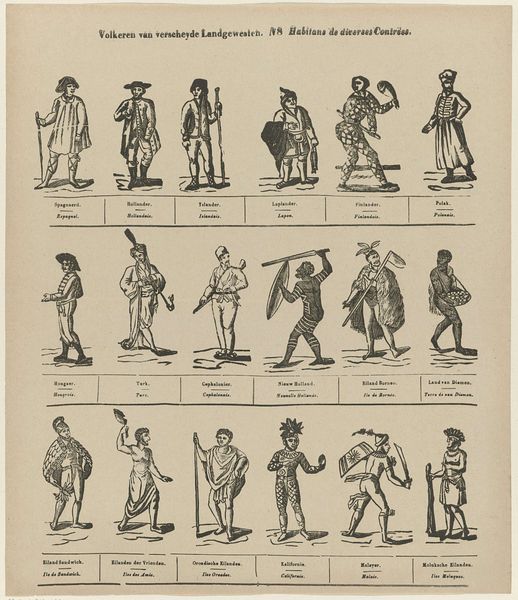
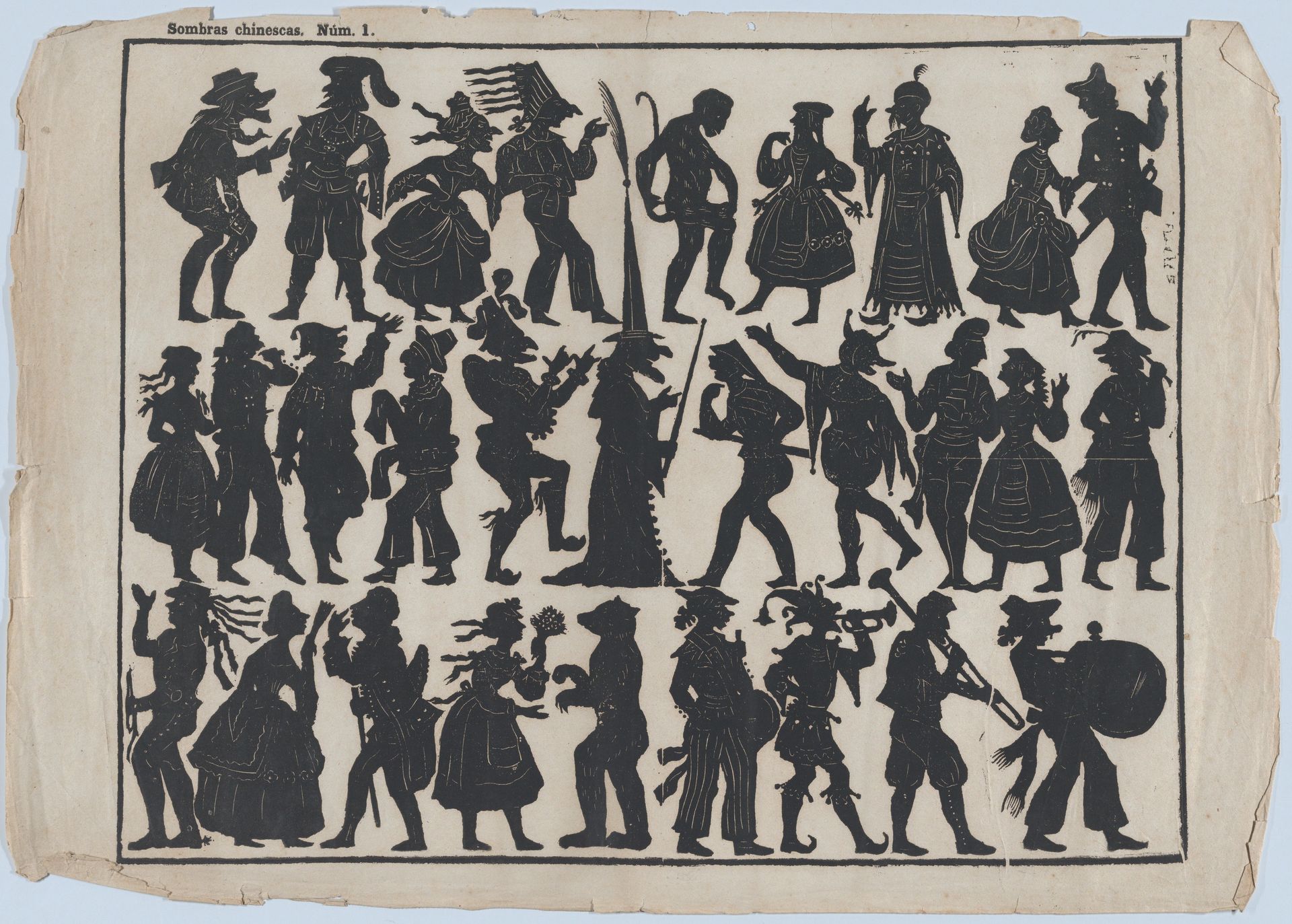
This 19th-century sheet of figures by Juan Llorens, intended for Chinese shadow puppets, presents a fascinating array of characters, each a silhouette brimming with cultural echoes. The figures, rendered in stark black against the light background, invite us to consider the art of shadow play, an ancient tradition rich in symbolism. Notice the jester, fool, and other figures with hats, whose exaggerated forms and dynamic poses speak to the transience and performance of the shadow theater. The figures' gestures, though simplified, are reminiscent of those found in commedia dell'arte, in which stock characters use exaggerated body language. The witch figure, with her pointed hat and staff, embodies the archetype of the sorceress—a figure that transcends borders—from the myths of antiquity to contemporary forms of entertainment. This is one example of how symbols resurface, evolve, and take on new meanings, becoming intertwined with our cultural memory.
Sheet 1 of figures for Chinese shadow puppets
1845 - 1855


Artwork details
- Medium
- drawing, print, woodcut
- Dimensions
- Sheet: 12 13/16 × 18 1/8 in. (32.5 × 46 cm)
- Location
- Metropolitan Museum of Art, New York, NY
- Copyright
- Public Domain
Tags
Comments
Share your thoughts
About this artwork
This 19th-century sheet of figures by Juan Llorens, intended for Chinese shadow puppets, presents a fascinating array of characters, each a silhouette brimming with cultural echoes. The figures, rendered in stark black against the light background, invite us to consider the art of shadow play, an ancient tradition rich in symbolism. Notice the jester, fool, and other figures with hats, whose exaggerated forms and dynamic poses speak to the transience and performance of the shadow theater. The figures' gestures, though simplified, are reminiscent of those found in commedia dell'arte, in which stock characters use exaggerated body language. The witch figure, with her pointed hat and staff, embodies the archetype of the sorceress—a figure that transcends borders—from the myths of antiquity to contemporary forms of entertainment. This is one example of how symbols resurface, evolve, and take on new meanings, becoming intertwined with our cultural memory.
Comments
Share your thoughts