c. 1936
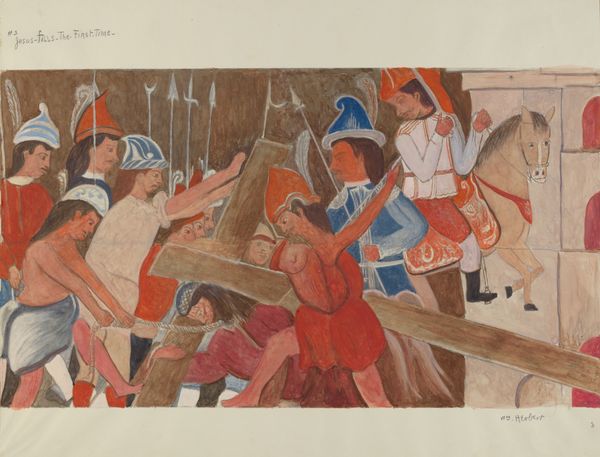
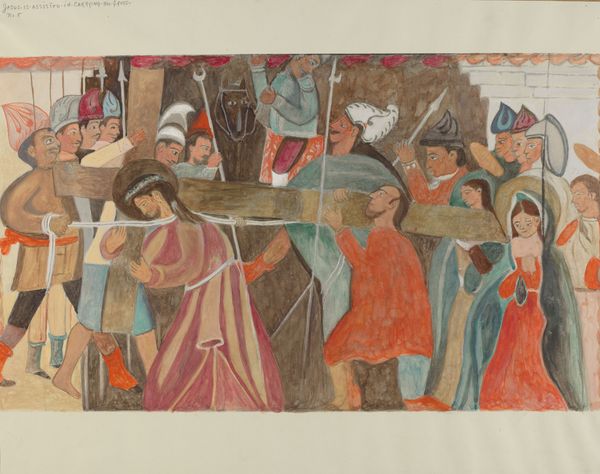
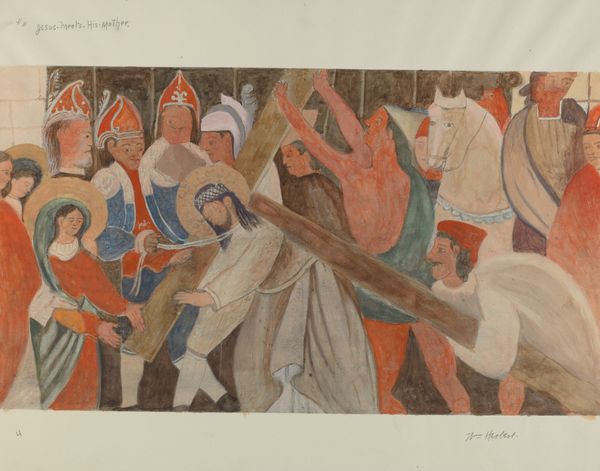
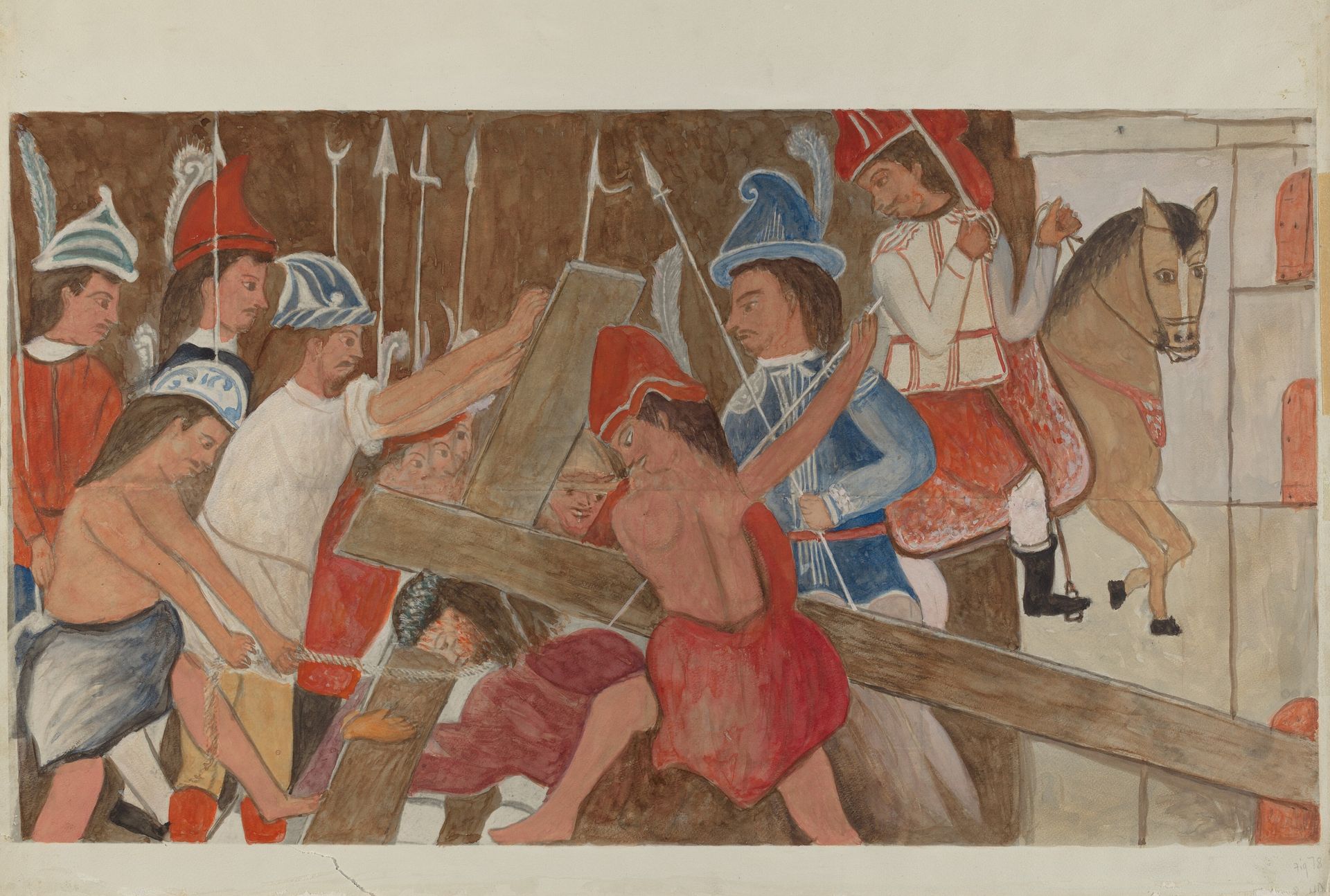
Station of The Cross No. 3: "Jesus Falls the First Time"


Listen to curator's interpretation
Curatorial notes
William Herbert, active in the 20th century, created this watercolor, titled "Station of the Cross No. 3: Jesus Falls the First Time". The medium itself, watercolor on paper, is unassuming, almost vernacular, but it carries significant symbolic weight. Herbert's choice of watercolor aligns with his broader engagement in the imagery of labor and spirituality. Here, he evokes the weight of the cross, not just as a physical burden but as a symbol of the immense human labor embedded in faith and society. The rough application of the pigment, especially in the figures straining under the cross's weight, emphasizes the physical toil involved. In this scene, Jesus's fall becomes an allegory for the struggles of the working class, painted with simple materials but laden with cultural meaning. By focusing on the labor of carrying the cross, Herbert elevates the everyday act of working to a level of religious significance. It prompts us to consider how artistic expression, regardless of its materials, can reflect and comment on the social realities of its time.