About this artwork
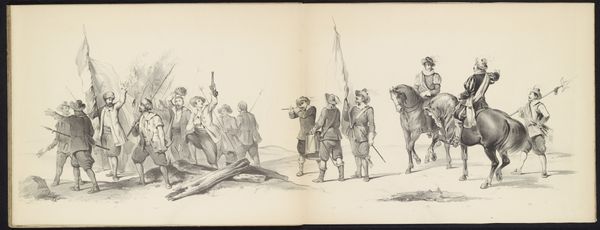
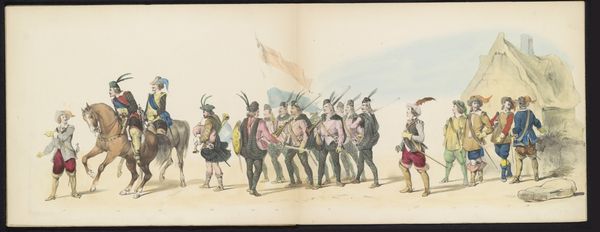
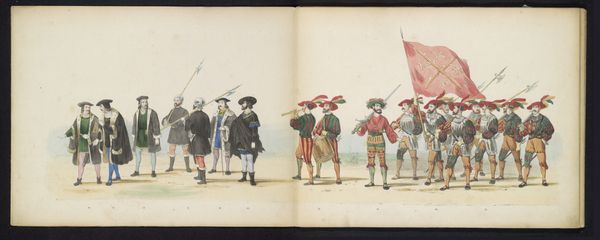
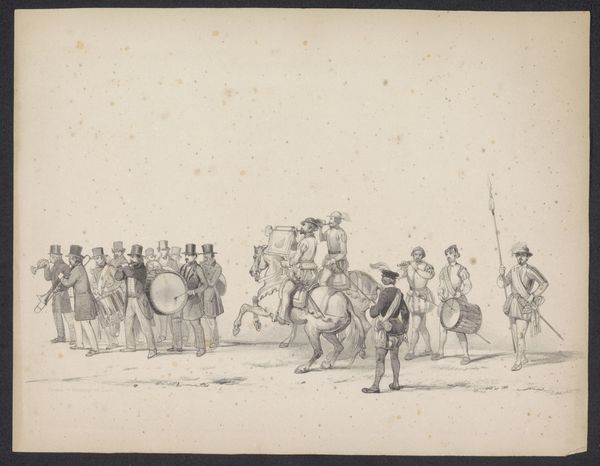
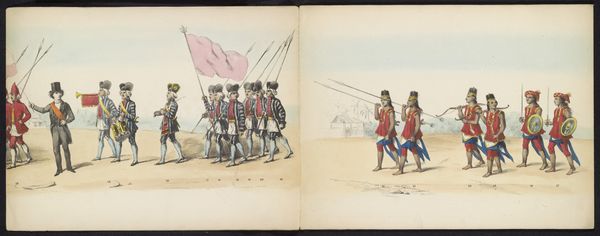
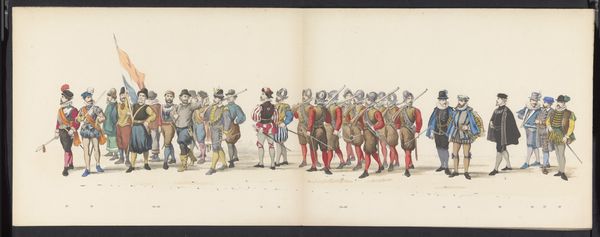
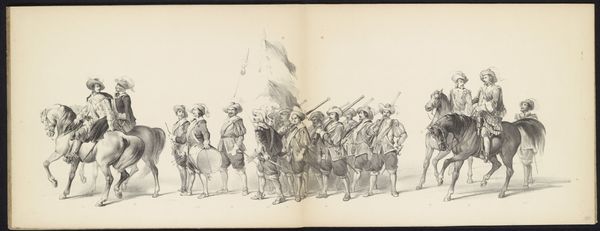
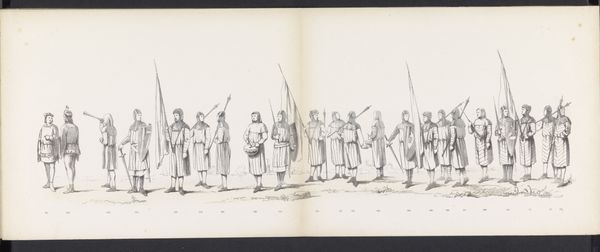
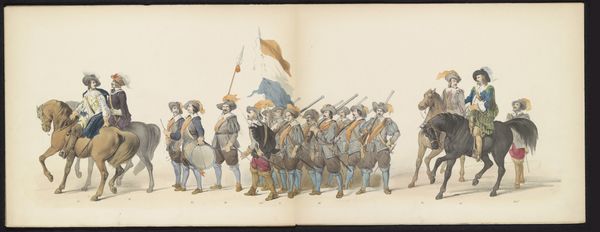
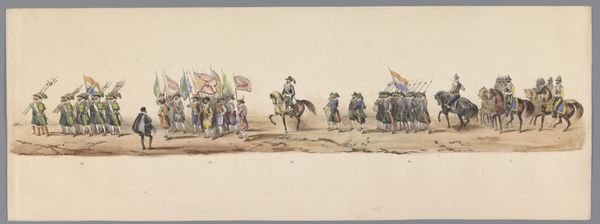
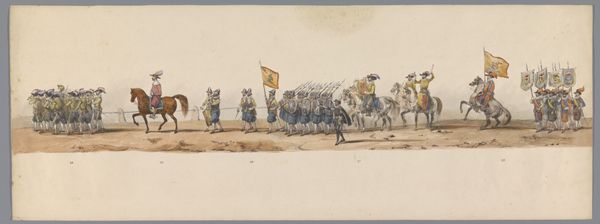
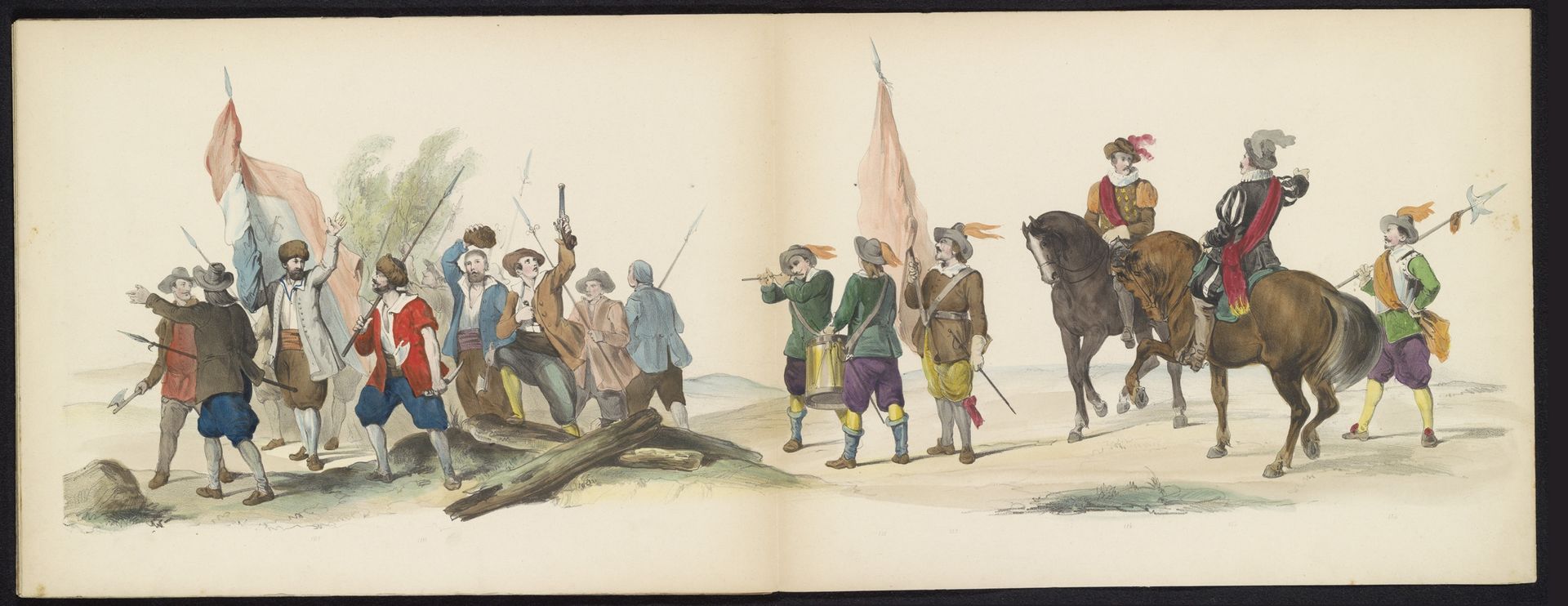
Carel Christiaan Antony Last created this drawing in 1850, now held at the Rijksmuseum. Its composition is divided into two distinct yet connected scenes, offering a glimpse into a historical masquerade. On the left, a boisterous group of figures strides forward, their movement implied through dynamic poses and flowing lines. The artist employs color to distinguish different characters and maintain visual interest, using a palette that is muted yet expressive. The lines and figures are drawn with an energy that conveys a sense of spontaneous festivity. The right side of the composition features figures on horseback, their presence lending a sense of gravitas to the procession. The scale and positioning suggest a hierarchy within the group. These choices invite us to consider the dynamics of power, spectacle, and representation inherent in such displays. Last uses the structure of this masquerade to reflect on societal norms and cultural performances of his time.
Maskerade van de Leidse studenten, 1850 (plaat 12)
1850

Carel Christiaan Antony Last
1808 - 1876Location
RijksmuseumArtwork details
- Medium
- drawing, print, watercolor
- Dimensions
- height 285 mm, width 750 mm
- Location
- Rijksmuseum
- Copyright
- Rijks Museum: Open Domain
Tags
Comments
Share your thoughts
About this artwork
Carel Christiaan Antony Last created this drawing in 1850, now held at the Rijksmuseum. Its composition is divided into two distinct yet connected scenes, offering a glimpse into a historical masquerade. On the left, a boisterous group of figures strides forward, their movement implied through dynamic poses and flowing lines. The artist employs color to distinguish different characters and maintain visual interest, using a palette that is muted yet expressive. The lines and figures are drawn with an energy that conveys a sense of spontaneous festivity. The right side of the composition features figures on horseback, their presence lending a sense of gravitas to the procession. The scale and positioning suggest a hierarchy within the group. These choices invite us to consider the dynamics of power, spectacle, and representation inherent in such displays. Last uses the structure of this masquerade to reflect on societal norms and cultural performances of his time.
Comments
Share your thoughts