About this artwork
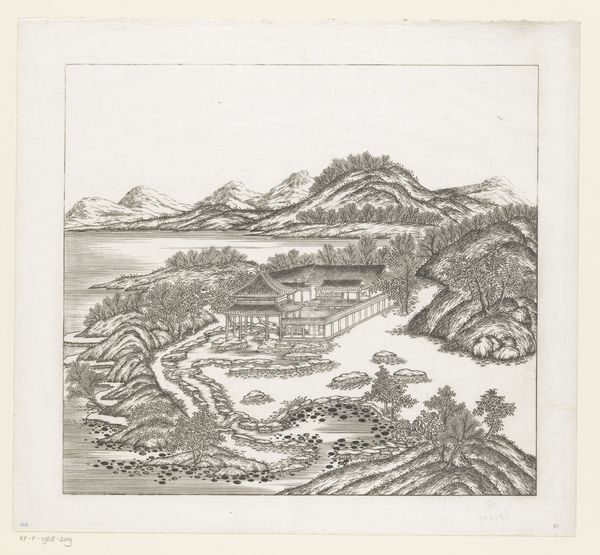
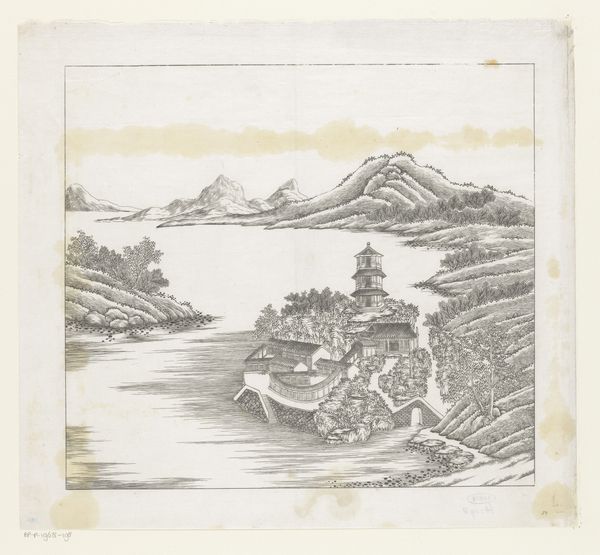
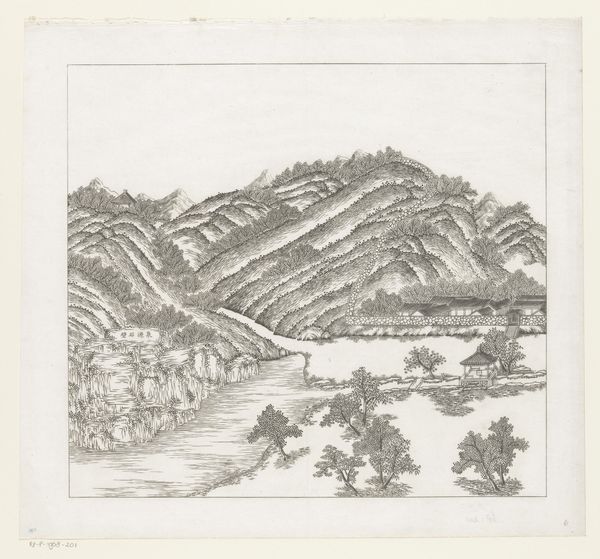
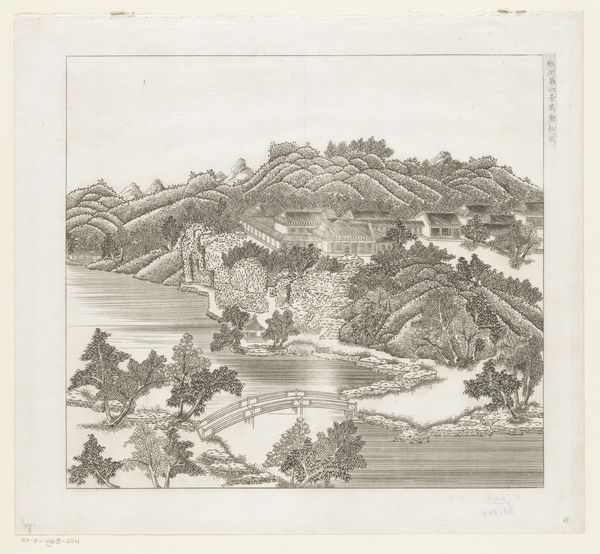
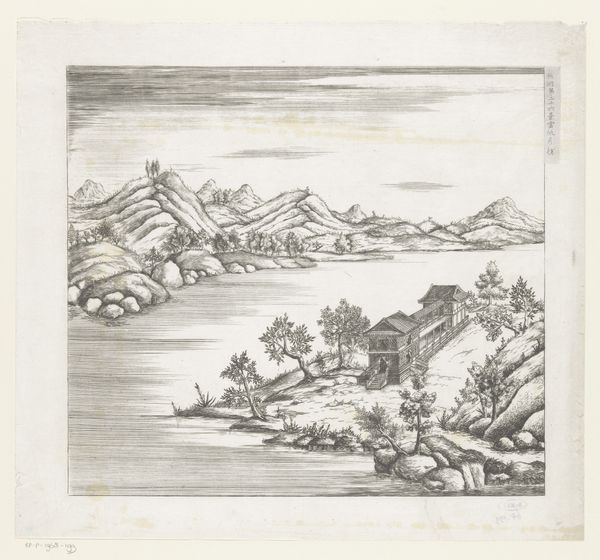
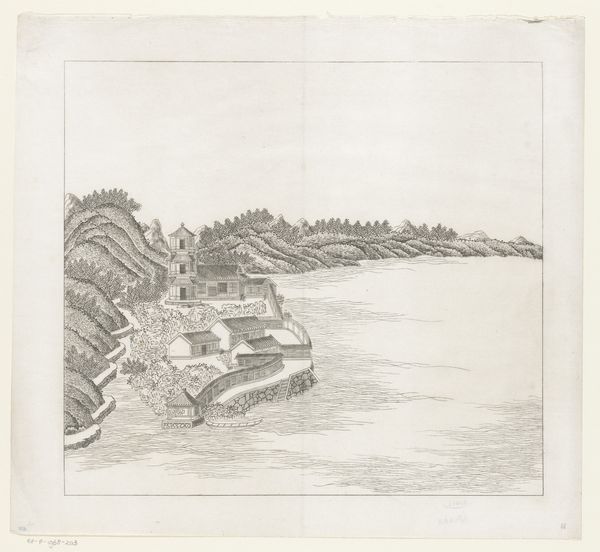
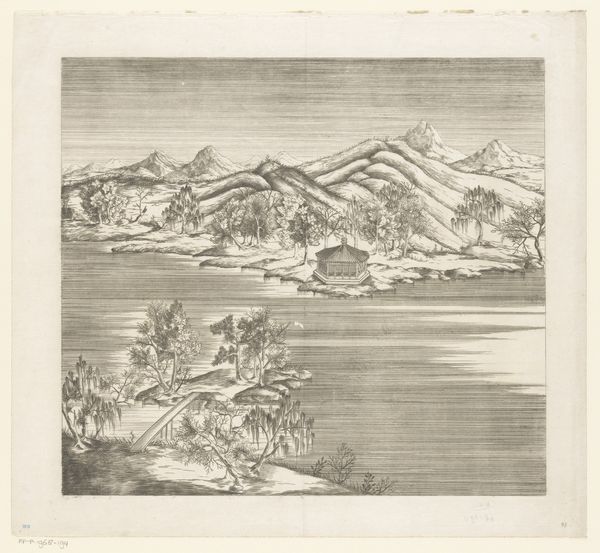
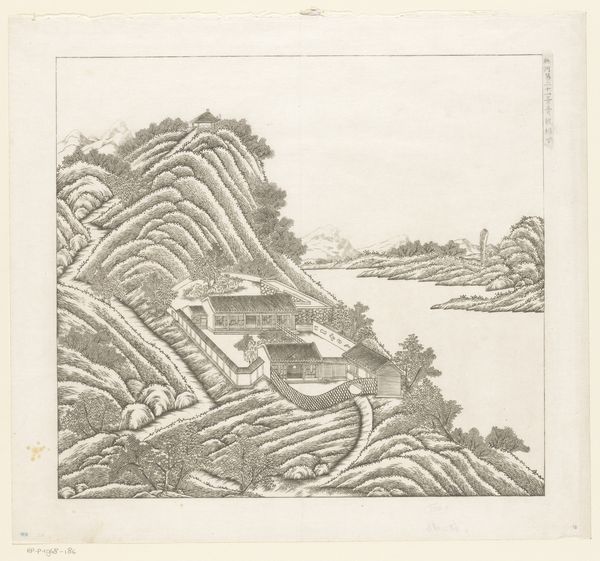
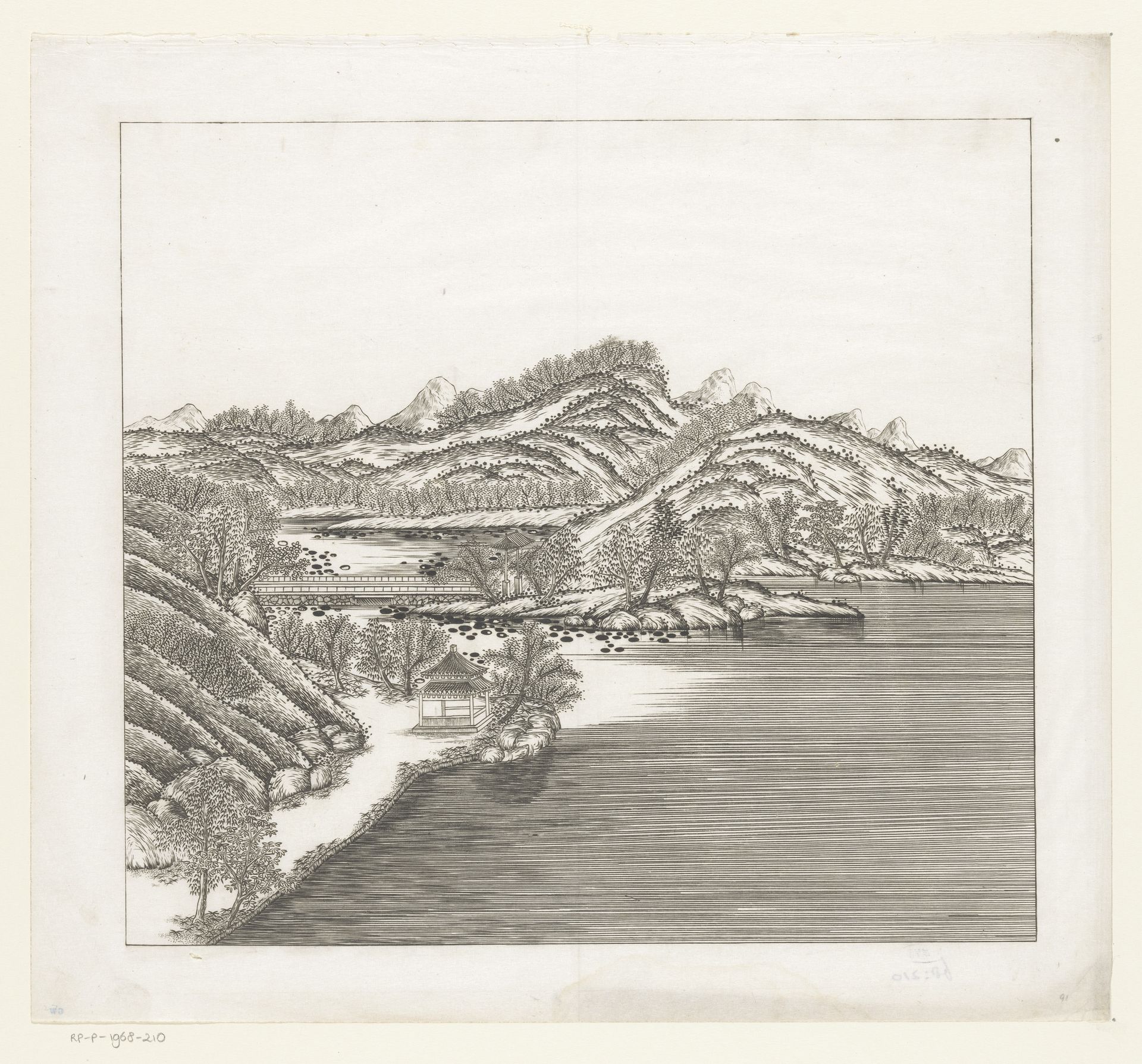
This drawing by Matteo Ripa offers a view of the imperial summer palace in Chengde, China, rendered in ink on paper. The composition unfolds horizontally, guiding the eye from the detailed foreground, across the lake, to the distant mountains. Ripa uses a meticulous system of lines to delineate form, creating texture and depth within a limited tonal range. Note how the precise, parallel lines suggest the undulation of the hills, while the clustered strokes give volume to the trees. The semiotic effect is to create a sense of order and control over nature. However, the drawing’s structure destabilizes established meanings of landscape art. By focusing on the imperial architecture within nature, Ripa reflects a cultural dialogue between European and Chinese aesthetics. The rigid geometry of the gazebo contrasts with the organic forms of the landscape, subtly questioning fixed perspectives on power and representation. Ultimately, the visual rhythm established by the varying densities of line work functions not merely as descriptive detail, but as an invitation to contemplate the broader philosophical implications of cultural exchange and artistic interpretation.
Gezicht op een deel van het keizerlijk zomerpaleis in Chengde (Jehol) te China
1712 - 1714

Matteo Ripa
1682 - 1746Location
RijksmuseumArtwork details
- Medium
- drawing, print, etching, paper, ink
- Dimensions
- height 325 mm, width 355 mm
- Location
- Rijksmuseum
- Copyright
- Rijks Museum: Open Domain
Tags
Comments
Share your thoughts
About this artwork
This drawing by Matteo Ripa offers a view of the imperial summer palace in Chengde, China, rendered in ink on paper. The composition unfolds horizontally, guiding the eye from the detailed foreground, across the lake, to the distant mountains. Ripa uses a meticulous system of lines to delineate form, creating texture and depth within a limited tonal range. Note how the precise, parallel lines suggest the undulation of the hills, while the clustered strokes give volume to the trees. The semiotic effect is to create a sense of order and control over nature. However, the drawing’s structure destabilizes established meanings of landscape art. By focusing on the imperial architecture within nature, Ripa reflects a cultural dialogue between European and Chinese aesthetics. The rigid geometry of the gazebo contrasts with the organic forms of the landscape, subtly questioning fixed perspectives on power and representation. Ultimately, the visual rhythm established by the varying densities of line work functions not merely as descriptive detail, but as an invitation to contemplate the broader philosophical implications of cultural exchange and artistic interpretation.
Comments
Share your thoughts