Dimensions: image: 681 x 857 mm
Copyright: © The estate of Richard Hamilton | CC-BY-NC-ND 4.0 DEED, Photo: Tate
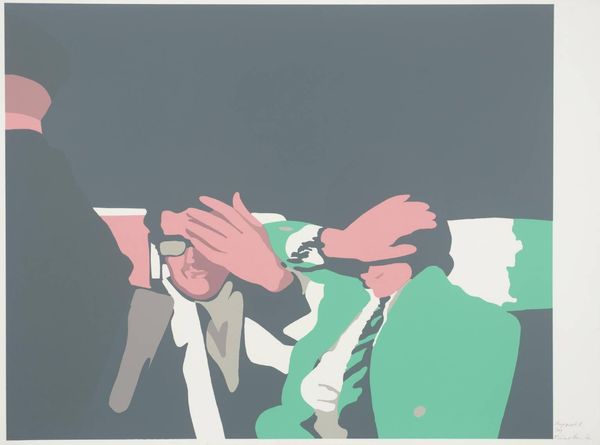
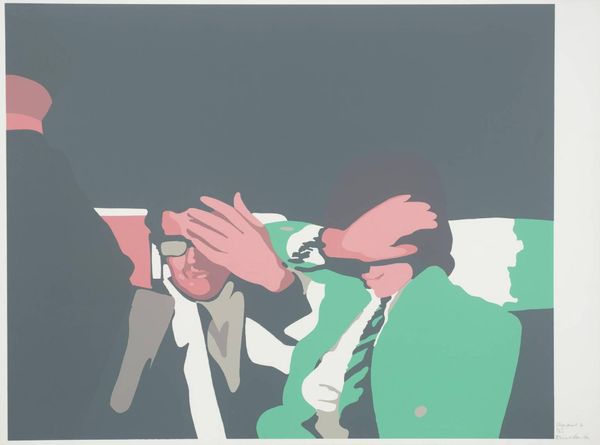
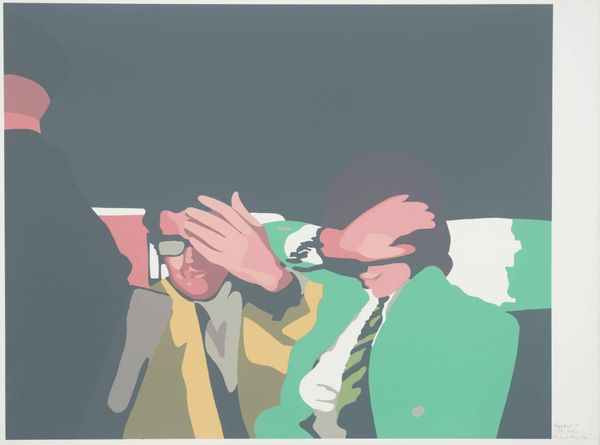
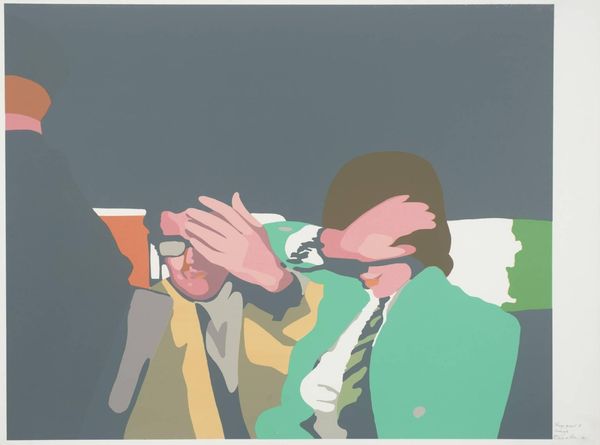
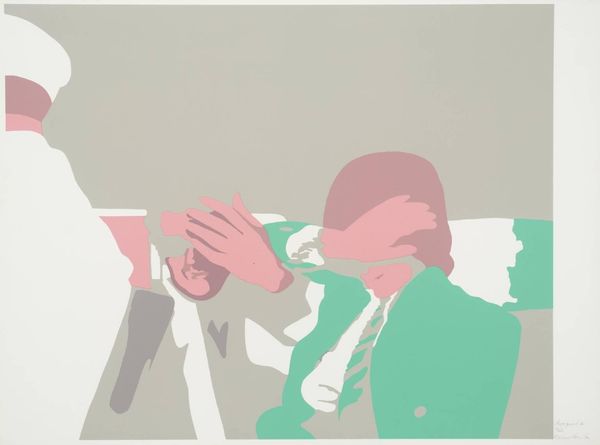
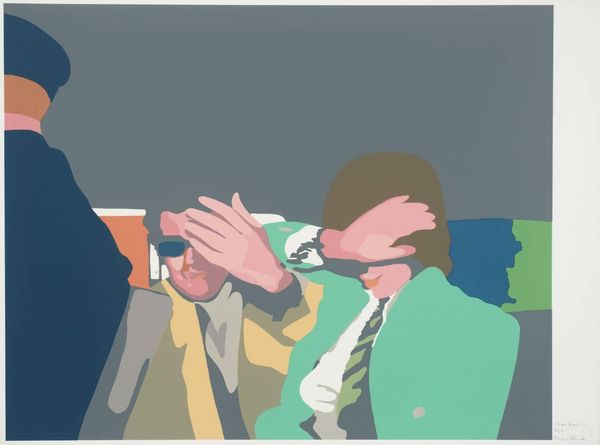
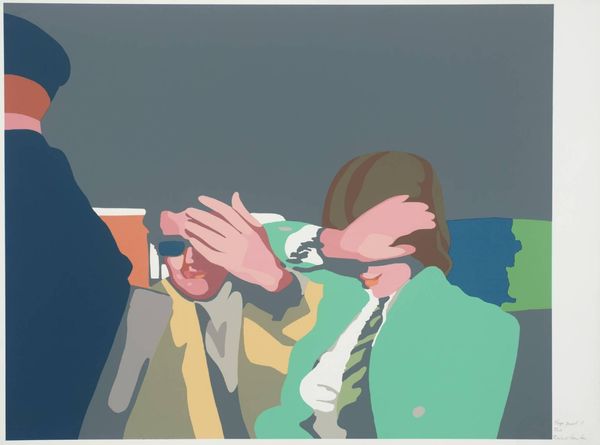
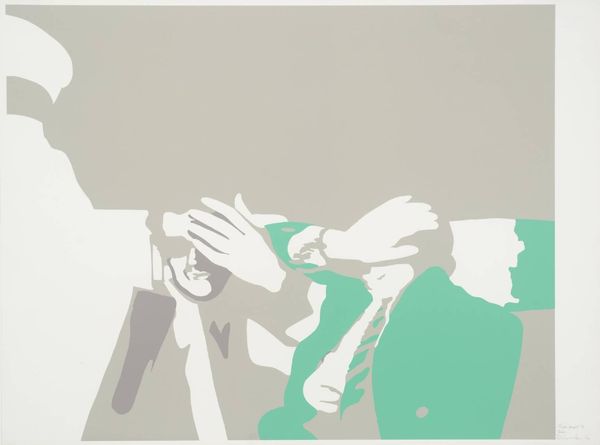
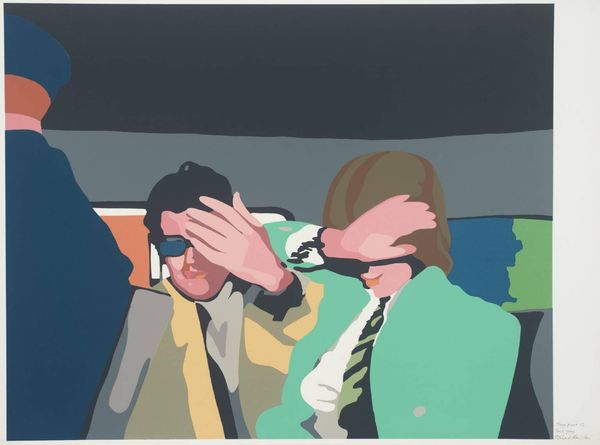
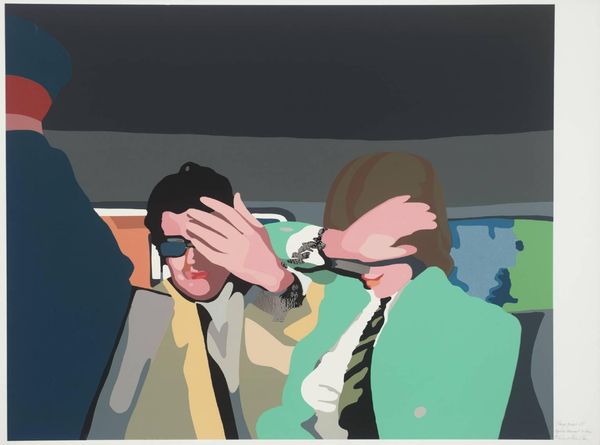
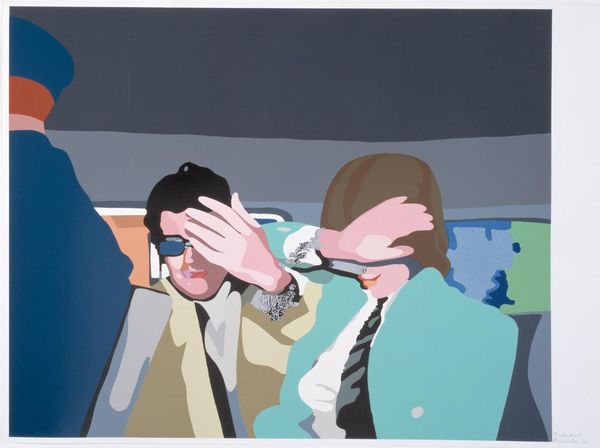
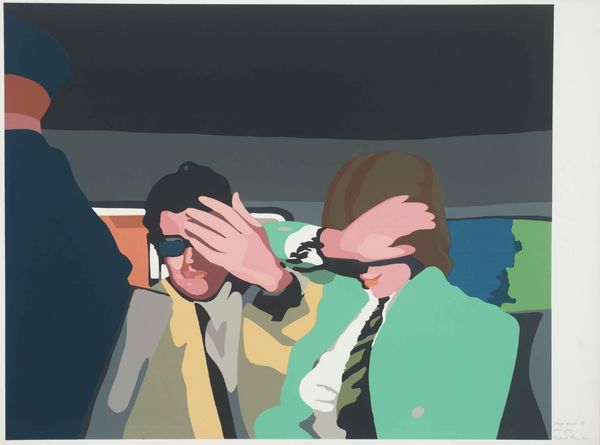
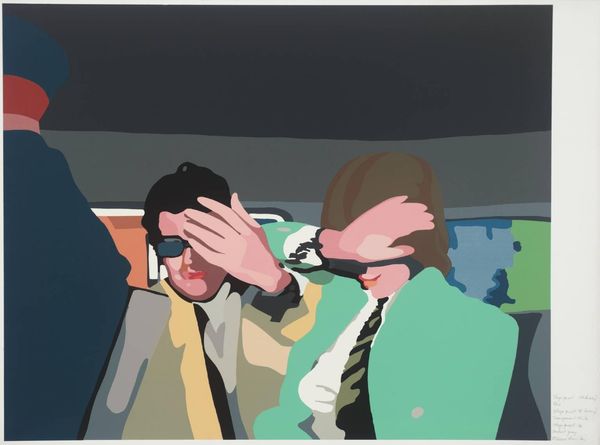
Editor: Here we have Richard Hamilton's "Stage Proof 7." What strikes me is how the flat planes of color create a fragmented, almost cubist effect, even though the subject matter seems rooted in contemporary life. What do you see in this piece? Curator: I see a sophisticated manipulation of form. The hard-edged abstraction juxtaposed with recognizable figures invites us to consider the surface. Note how the palette, though limited, creates depth through value contrasts, pushing and pulling the composition. What effect does this interplay have on your perception? Editor: I think it makes the image feel both familiar and alienating, like a photograph seen through a distorted lens. I'm intrigued by how the hands obscure the faces. Curator: Precisely. The obscuration forces us to focus on the composition itself, the relationships between shapes and colors, rather than narrative content. Ultimately, the work encourages us to deconstruct our expectations of representation. Editor: That's a different way to look at it, and it really clarifies the artist's intent. Thanks! Curator: Indeed. Looking closely at its formal elements allows us to consider how Hamilton challenges conventional methods of depiction.
Comments

tate 12 months ago
⋮
http://www.tate.org.uk/art/artworks/hamilton-stage-proof-7-p02422


Join the conversation
Join millions of artists and users on Artera today and experience the ultimate creative platform.
tate 12 months ago
⋮
Release – Stage Proofs 1-13 and 16-19 (P02416-32; the series is incomplete) is a group of seventeen prints showing the process of building up colour to make the print Release (P04254). Each proof represents the successive addition of a screen, made from a hand-cut stencil, used to apply a particular colour. The completed print Release combines the seventeen colour screens, each used once, and the photographic black screen which has the texture of an imprint on canvas as well as the photographic halftone, used twice.
 Collect
More like this