About this artwork
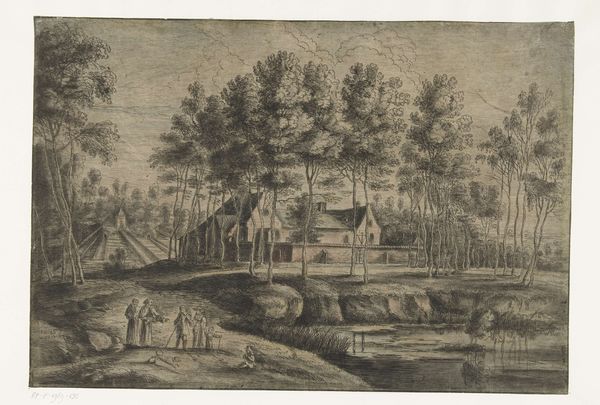
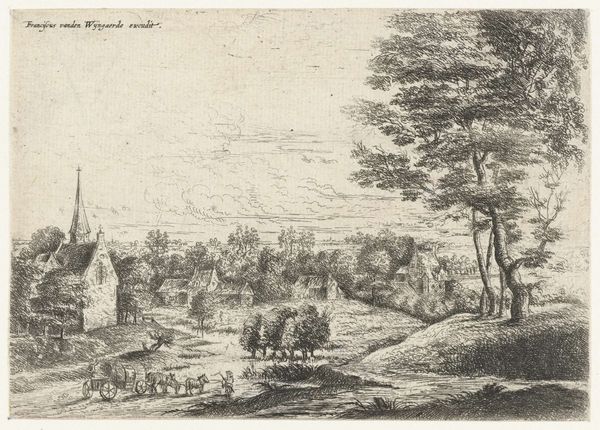
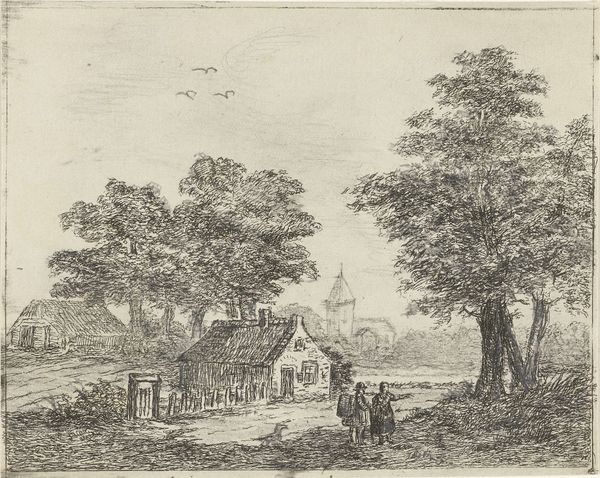
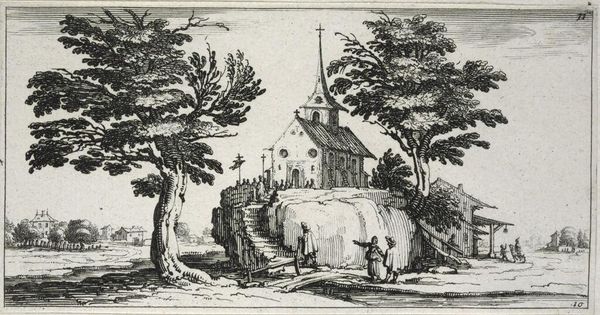
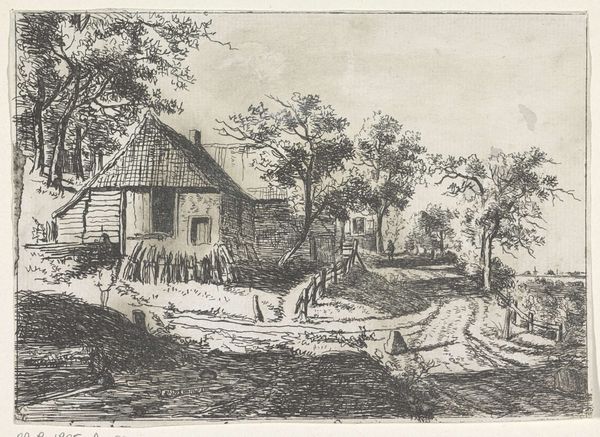
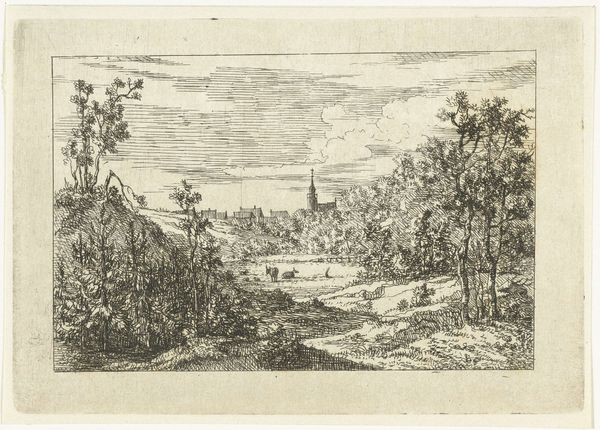
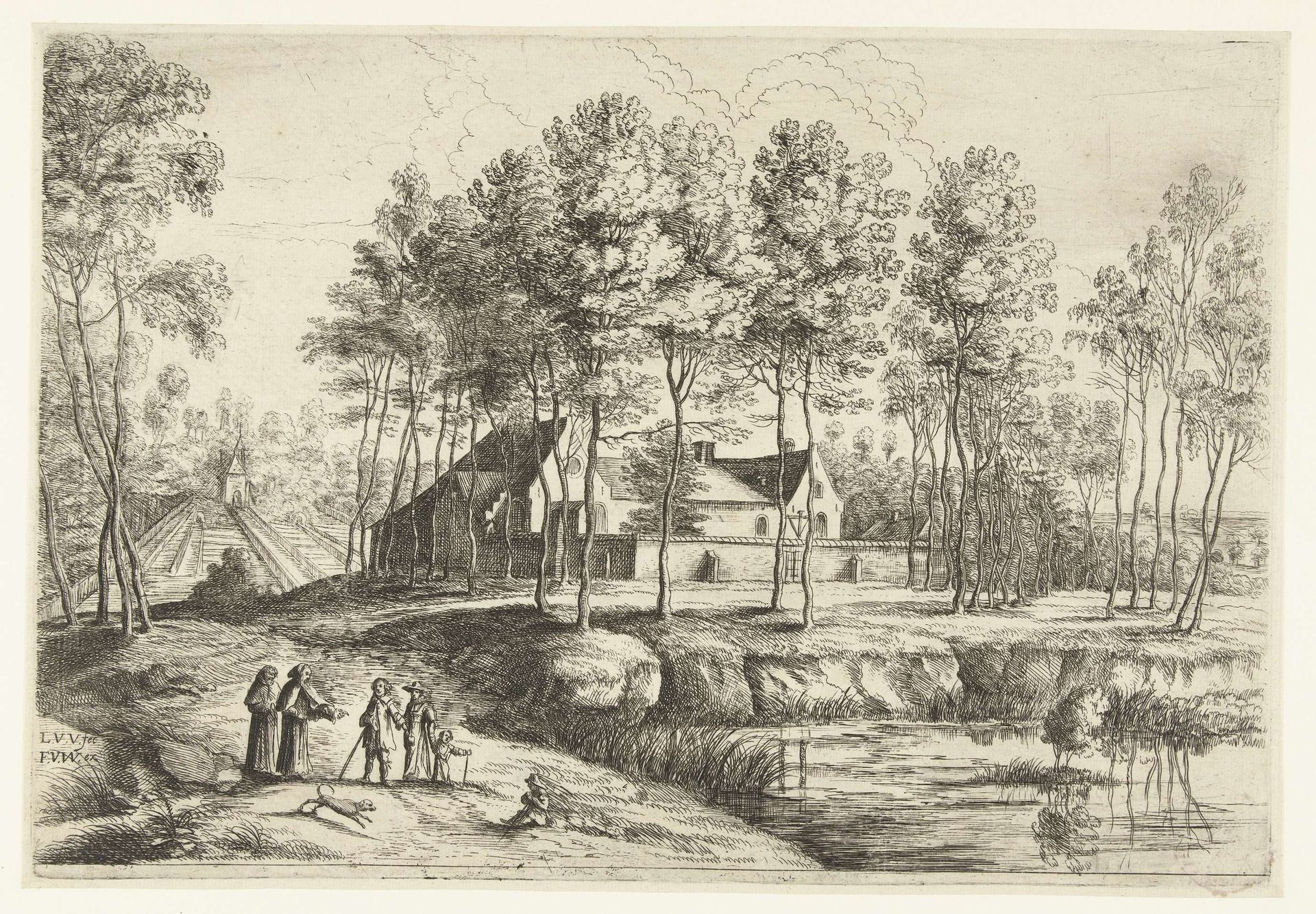
Lucas van Uden created this etching, "View of the Capuchin Monastery in Tervuren," in the 17th century. During this time, the Catholic Church wielded significant power, especially in regions like Flanders where Van Uden lived and worked. The presence of the monastery suggests the pervasive influence of religion on daily life and the social order. We see figures engaged in what appears to be a transaction or exchange, perhaps indicating the economic activities of the monastery or interactions between its members and the local population. The surrounding landscape is a reminder of the relationship between religious institutions and the natural world. This image provides insight into the visual culture of the period and how religious institutions were perceived and represented. The etching invites us to consider the complex relationship between religion, society, and landscape in 17th-century Flanders. It also makes us consider the role of the church in the lives of ordinary people.
Gezicht op het kapucijnenklooster te Tervueren
1605 - 1673

Lucas van Uden
1595 - 1673Location
RijksmuseumArtwork details
- Medium
- print, etching
- Dimensions
- height 220 mm, width 322 mm
- Location
- Rijksmuseum
- Copyright
- Rijks Museum: Open Domain
Tags
Comments
Share your thoughts
About this artwork
Lucas van Uden created this etching, "View of the Capuchin Monastery in Tervuren," in the 17th century. During this time, the Catholic Church wielded significant power, especially in regions like Flanders where Van Uden lived and worked. The presence of the monastery suggests the pervasive influence of religion on daily life and the social order. We see figures engaged in what appears to be a transaction or exchange, perhaps indicating the economic activities of the monastery or interactions between its members and the local population. The surrounding landscape is a reminder of the relationship between religious institutions and the natural world. This image provides insight into the visual culture of the period and how religious institutions were perceived and represented. The etching invites us to consider the complex relationship between religion, society, and landscape in 17th-century Flanders. It also makes us consider the role of the church in the lives of ordinary people.
Comments
Share your thoughts