photography, albumen-print
#
portrait
#
archive photography
#
photography
#
historical photography
#
albumen-print
Dimensions: height 102 mm, width 62 mm
Copyright: Rijks Museum: Open Domain
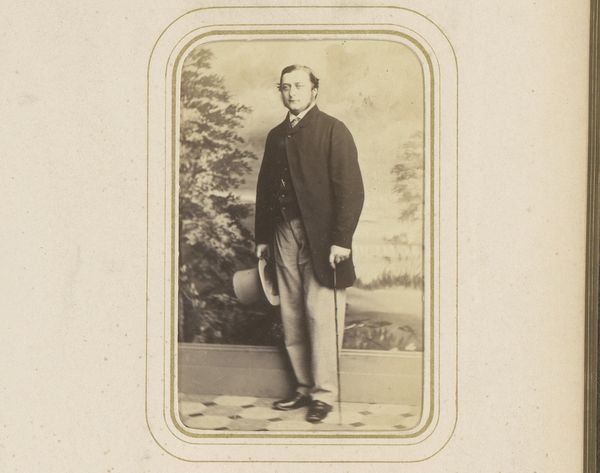
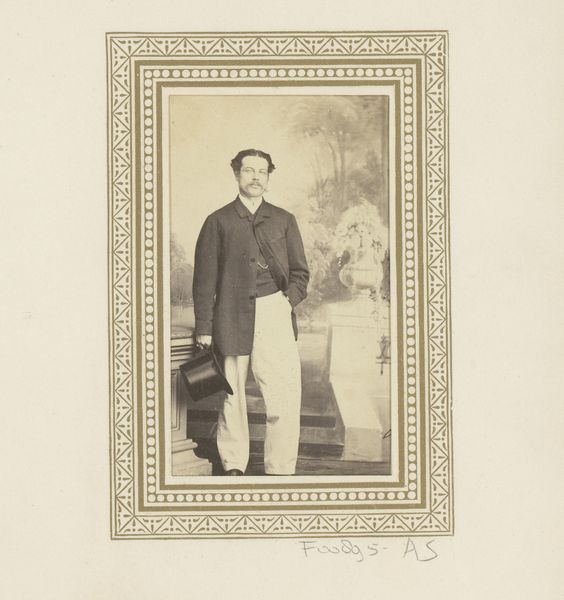
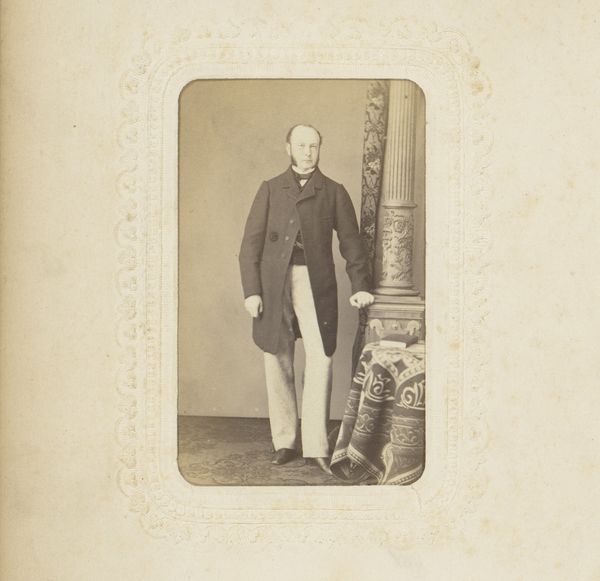
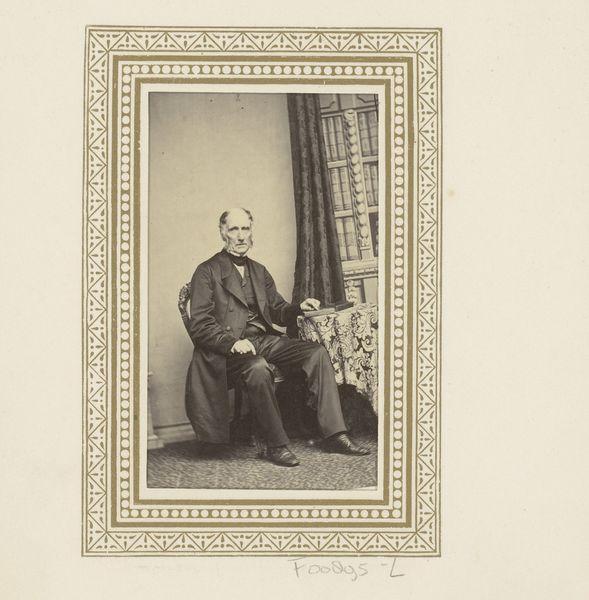
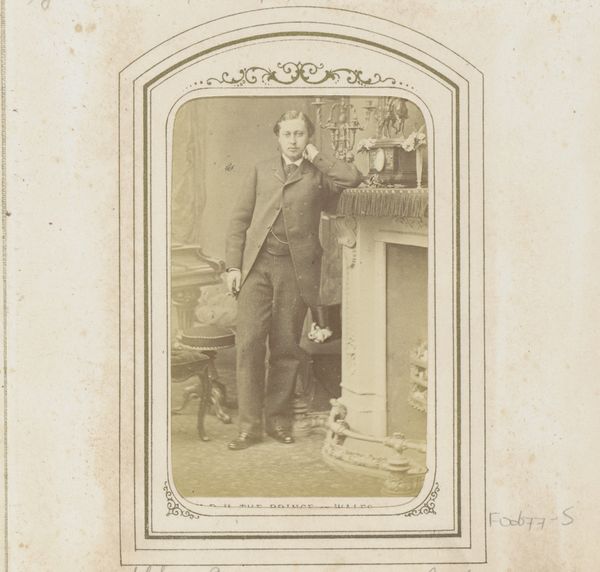
Curator: "Portret van een staande man, leunend op een boekenkast," or "Portrait of a Standing Man Leaning on a Bookcase," an albumen print created by the London Stereoscopic Company sometime between 1862 and 1890. What do you see when you first look at it? Editor: Pompousness! Utter and delightful pomposity. He practically reeks of self-satisfaction. I imagine he's just finished a particularly eloquent lecture on the classics, or perhaps a brilliantly cutting remark about a rival. Curator: Indeed, his pose suggests a certain confidence. His stance, leaning casually against the bookcase, feels very deliberate, a construction, perhaps, of his public persona. And what about the bookcase itself, teeming with texts – is it really about erudition or a mere prop for demonstrating access to knowledge? Editor: Both, I think. It's that delicious dance between genuine interest and performative intellectualism. The bookcase is a symbol, of course, but I wonder what’s actually *in* it. Are we talking philosophy, poetry, or maybe just very impressive-looking leather-bound encyclopedias? His smugness hints at a bit of a faker, don't you think? A grand illusion of knowledge... Curator: Perhaps, and his attire further complicates this reading: an intentionally mismatched color scheme, holding glasses – but are they for show, merely affecting a certain intelligence and attention to detail? These visual cues form a constellation that we then interpret. How does the photography itself help with this? Editor: I imagine the constraints of photography at the time played a part. This calculated pose seems more necessary, an antidote to longer exposure times which would necessitate frozen postures. The sepia tones give it this wonderfully antique feel – as if we’re peering into a long-gone era of high collars and even higher opinions. A snapshot from time, now a study of power. Curator: Indeed. The nuances captured in the shadows and textures of the image transform what could be merely a standard portrait into an examination of self-presentation and, possibly, even the construction of historical memory. The choice of props elevates this above what one might typically associate with carte de visite. Editor: Ultimately, it feels deeply human. Flawed, of course, and wonderfully silly. A reminder that even behind the most carefully curated facade, there's always a bit of that familiar yearning for respect.
Comments
No comments
Be the first to comment and join the conversation on the ultimate creative platform.
 Collect
 React
React Comment
More like this