About this artwork
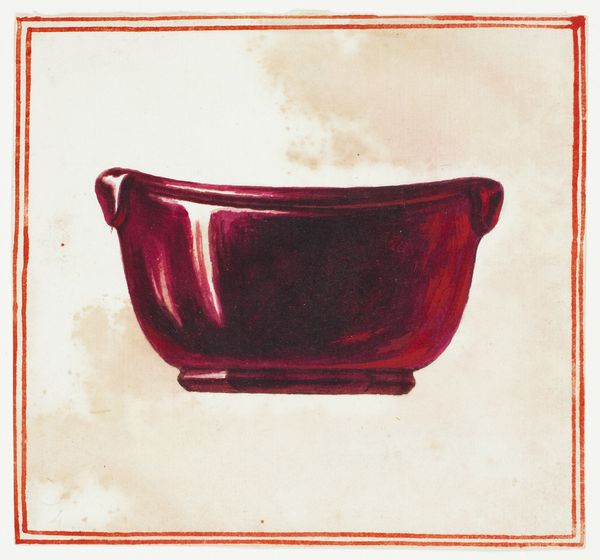
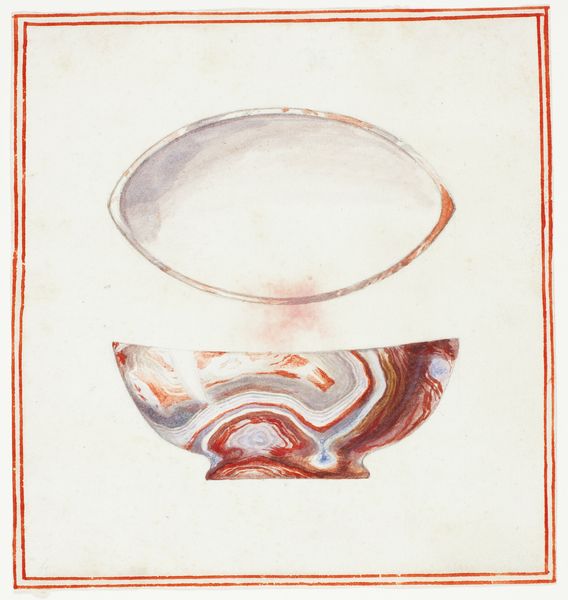
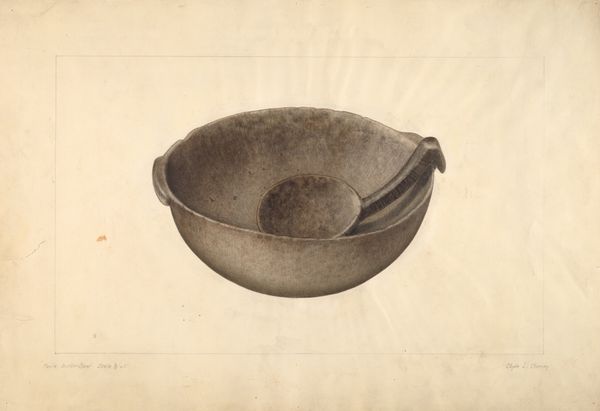
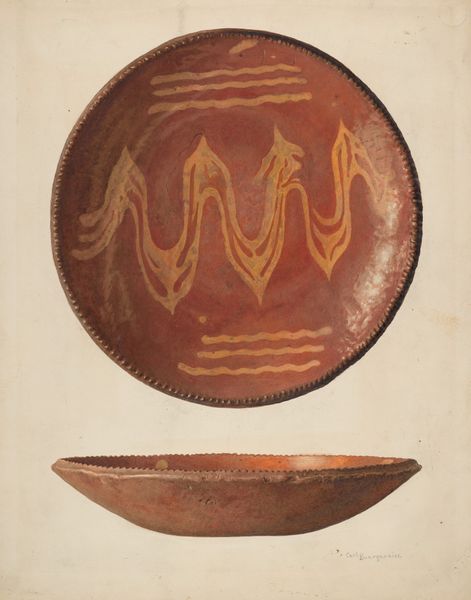
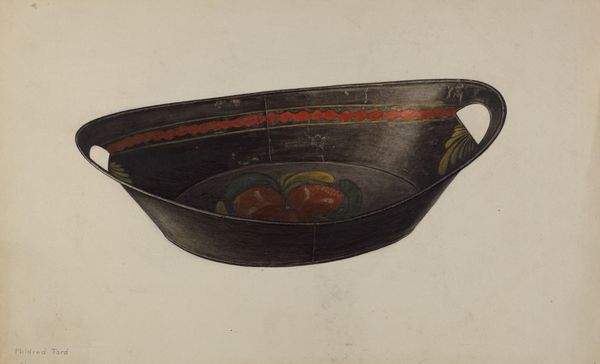
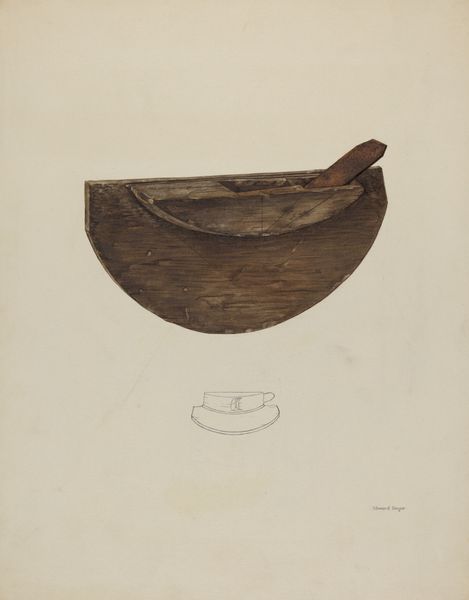
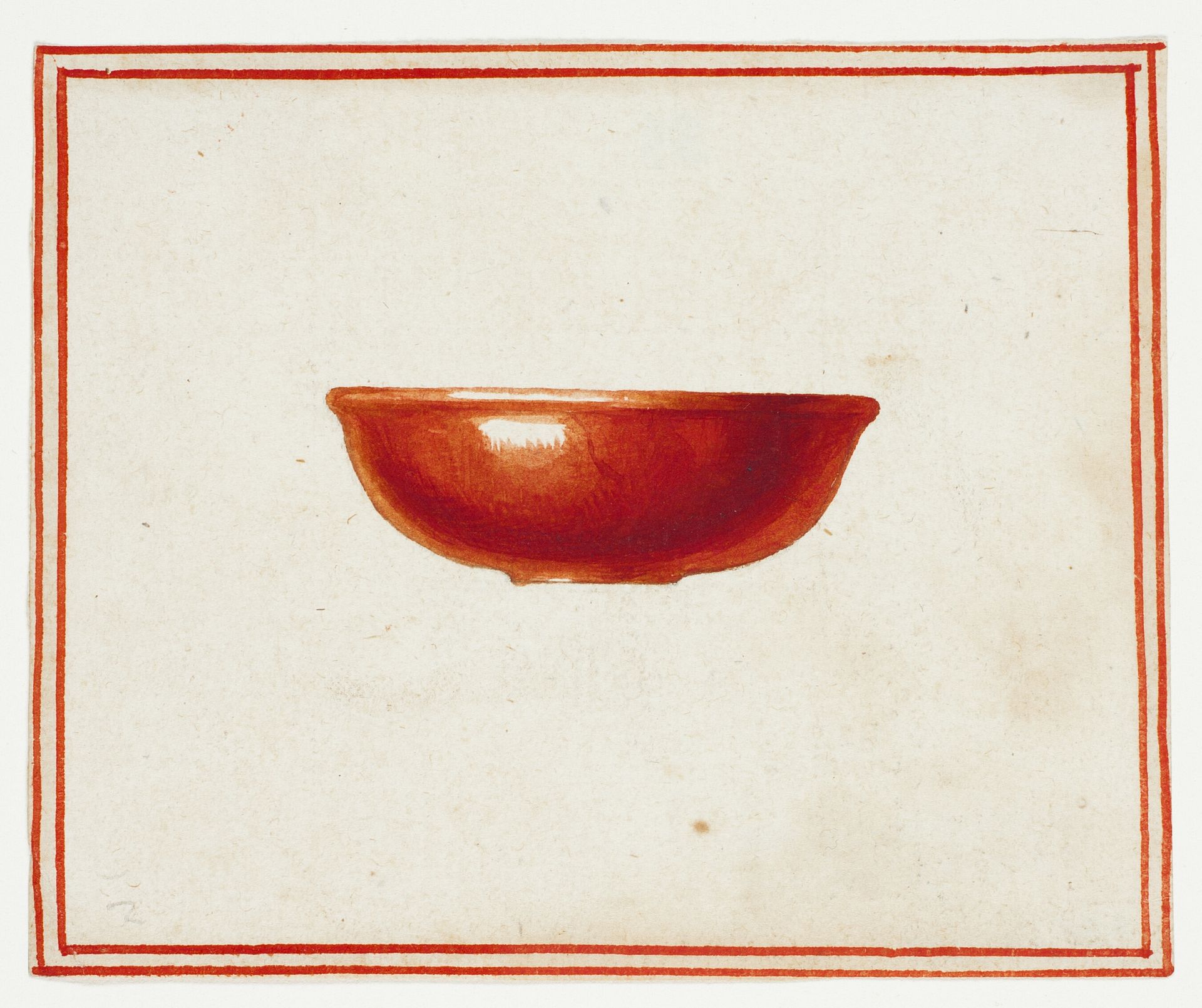
Giuseppe Grisoni's "Red Saucer," rendered in watercolor, presents a study in the interplay between form and color. The composition, defined by a single, centered object, draws the eye immediately to the titular saucer. Grisoni masterfully employs gradations of red to suggest volume and depth, allowing the saucer to emerge from the flat plane of the paper. The subtle shift from deep, saturated hues to lighter, reflective highlights articulates the curvature of the ceramic form, offering a tactile illusion of concavity. The structural simplicity invites contemplation on the nature of representation itself. The object becomes a sign, a visual marker divested of its everyday utility, and elevated to the level of artistic inquiry. The delicate red border acts as a frame and emphasizes the self-contained world of the artwork, inviting us to consider how such formal constraints shape our perception. Ultimately, the artwork reminds us that meaning resides not just in what is depicted, but in how it is depicted, opening a dialogue between the observer and the observed.
Red Saucer
n.d.


Artwork details
- Medium
- drawing, painting, print, gouache, ceramic, paper, watercolor, chalk, black-chalk
- Dimensions
- 80 × 98 mm
- Location
- The Art Institute of Chicago
- Copyright
- Public Domain
Tags
Comments
Share your thoughts
About this artwork
Giuseppe Grisoni's "Red Saucer," rendered in watercolor, presents a study in the interplay between form and color. The composition, defined by a single, centered object, draws the eye immediately to the titular saucer. Grisoni masterfully employs gradations of red to suggest volume and depth, allowing the saucer to emerge from the flat plane of the paper. The subtle shift from deep, saturated hues to lighter, reflective highlights articulates the curvature of the ceramic form, offering a tactile illusion of concavity. The structural simplicity invites contemplation on the nature of representation itself. The object becomes a sign, a visual marker divested of its everyday utility, and elevated to the level of artistic inquiry. The delicate red border acts as a frame and emphasizes the self-contained world of the artwork, inviting us to consider how such formal constraints shape our perception. Ultimately, the artwork reminds us that meaning resides not just in what is depicted, but in how it is depicted, opening a dialogue between the observer and the observed.
Comments
Share your thoughts