1800 - 1900
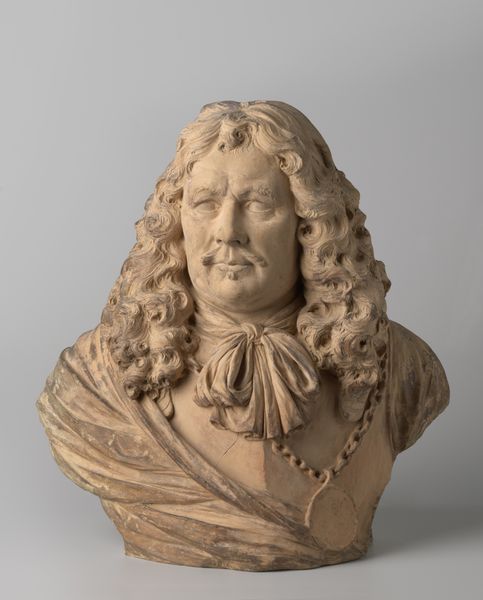
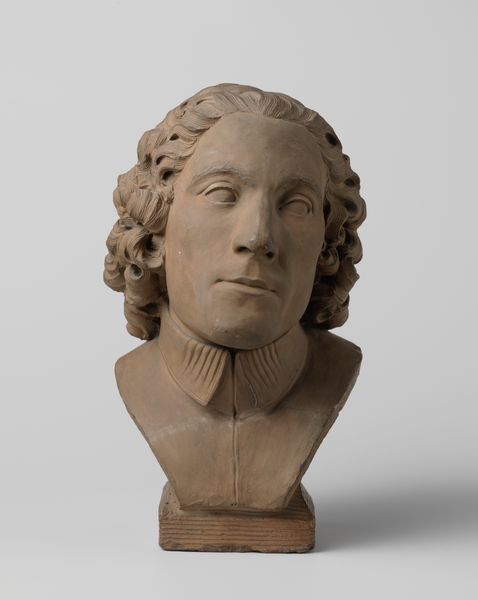
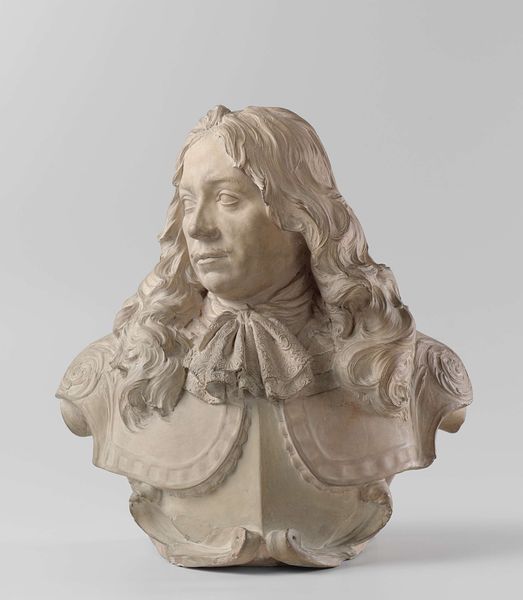
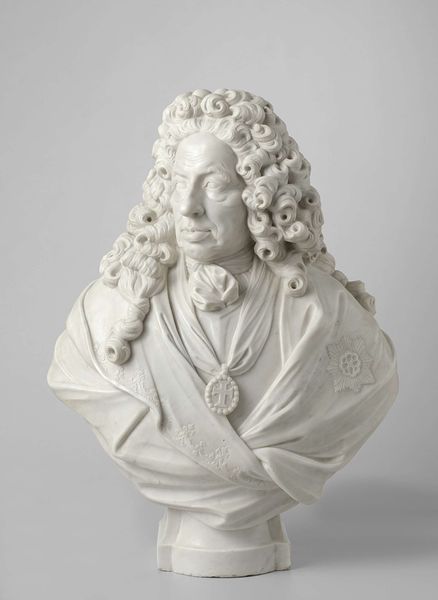
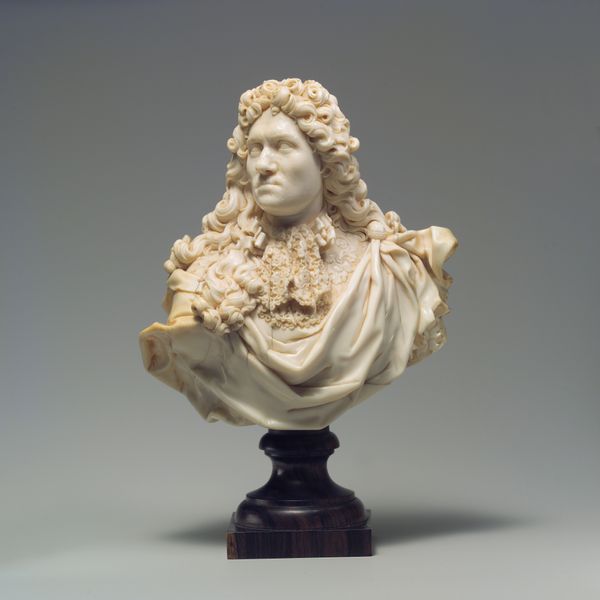
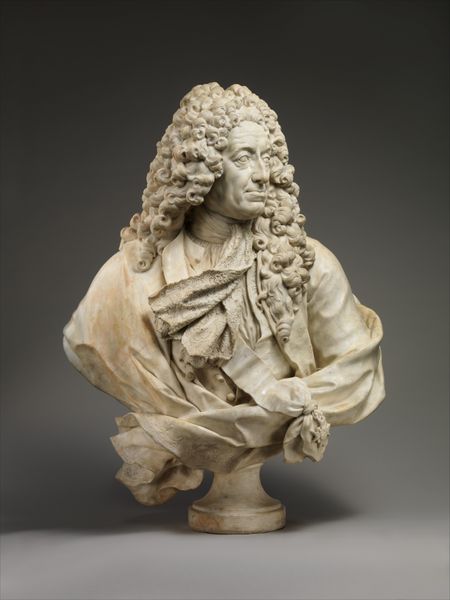
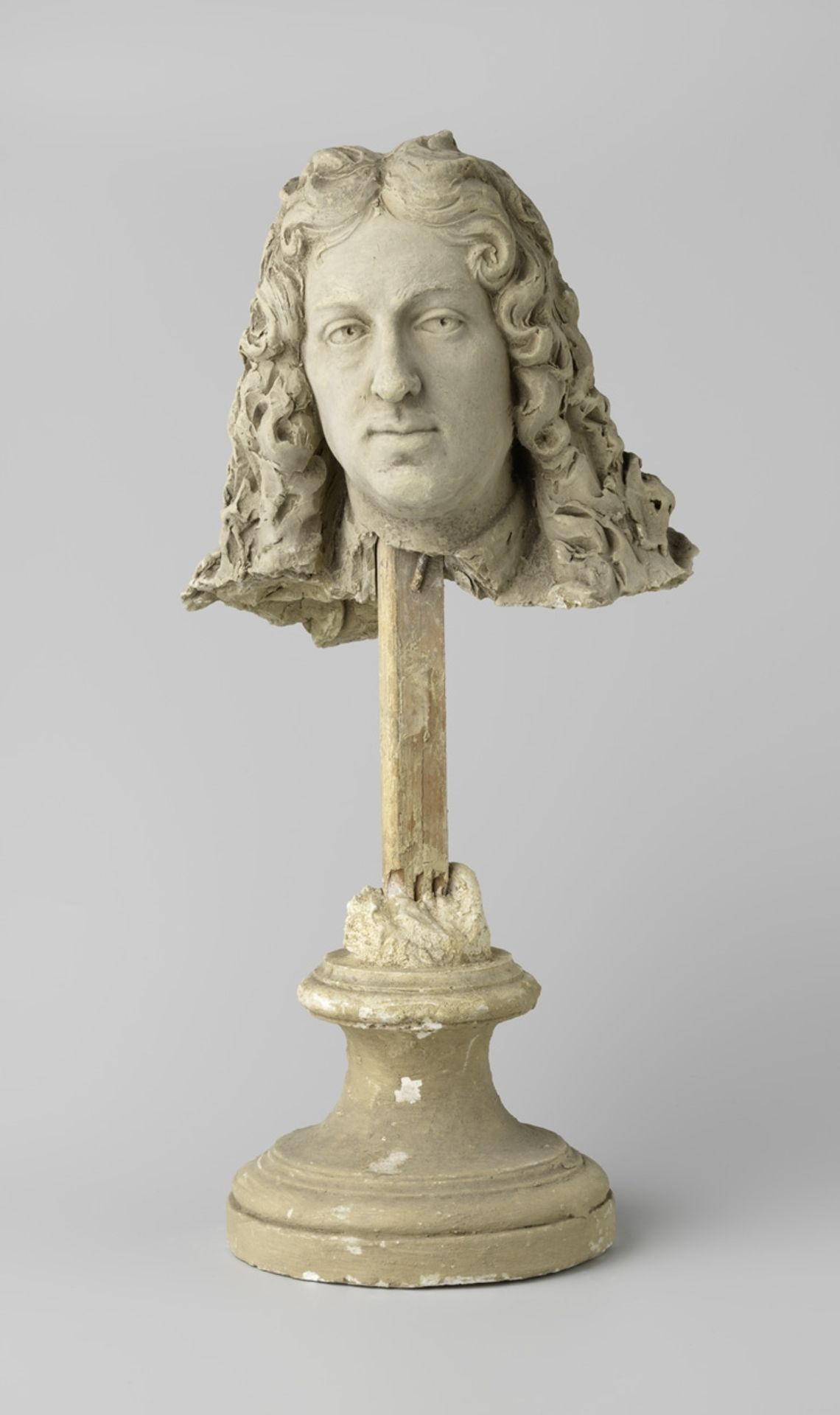
Borstbeeld van een man

Listen to curator's interpretation
Curatorial notes
Eugène Lacomblé crafted this plaster sculpture, titled 'Bust of a Man', in the 19th century, a period marked by significant social stratification. Lacomblé, living amidst the shifting dynamics of industrializing Europe, likely found himself navigating a world where class distinctions were both pronounced and increasingly challenged. This bust, with its detailed rendering of aristocratic features and elaborate wig, speaks to the enduring fascination with the upper classes, a tradition that art has historically upheld. However, it's worth questioning who this man truly was and how his identity intersected with the socio-political landscape of the time. Does this work merely reinforce existing power structures, or does it offer a more nuanced commentary on identity? Consider the absence of color and the somewhat generic title. These choices may invite a more universal reflection on masculinity and representation. As you stand here, let this sculpture prompt a broader discussion about visibility, identity, and the stories we choose to immortalize through art.