About this artwork
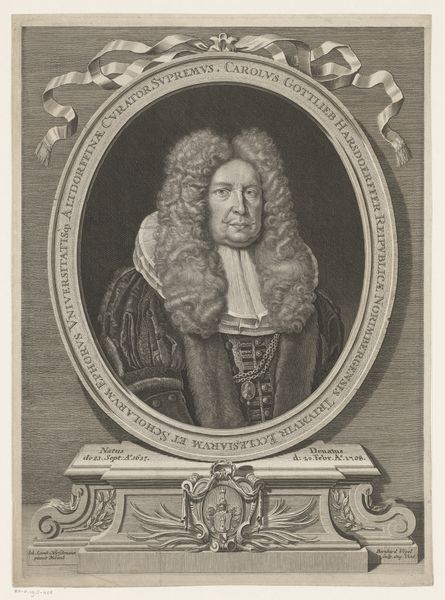
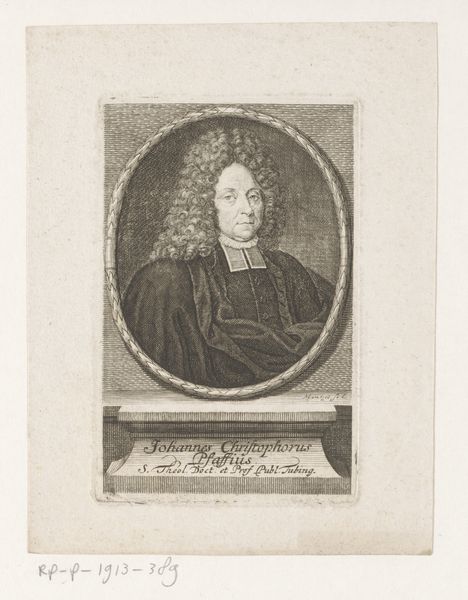
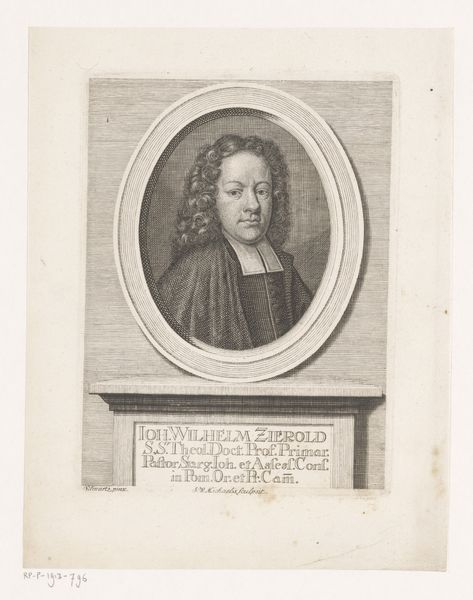
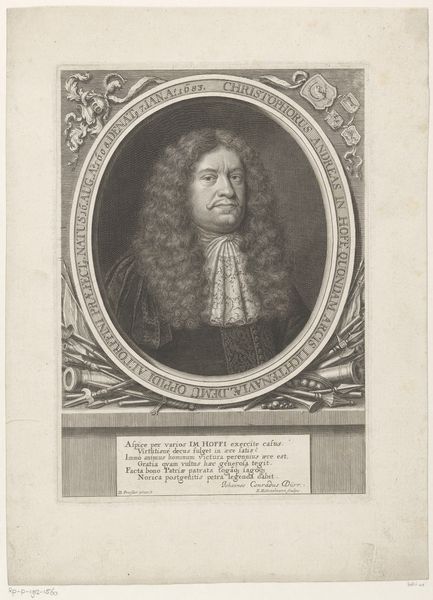
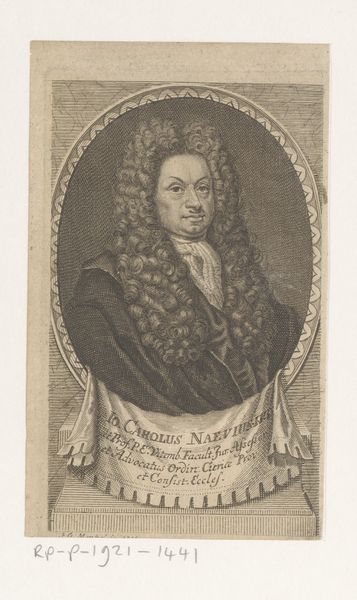
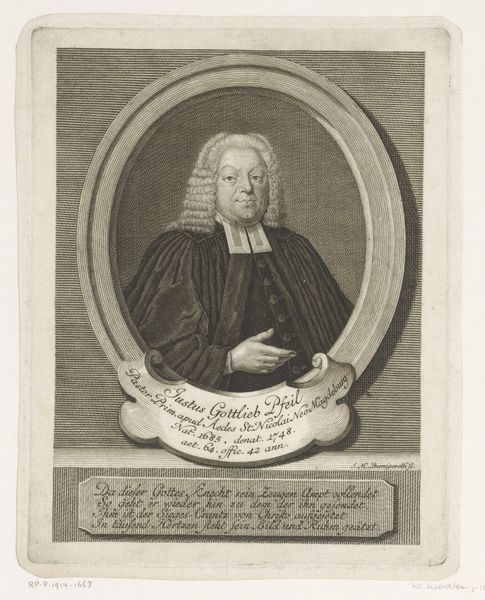
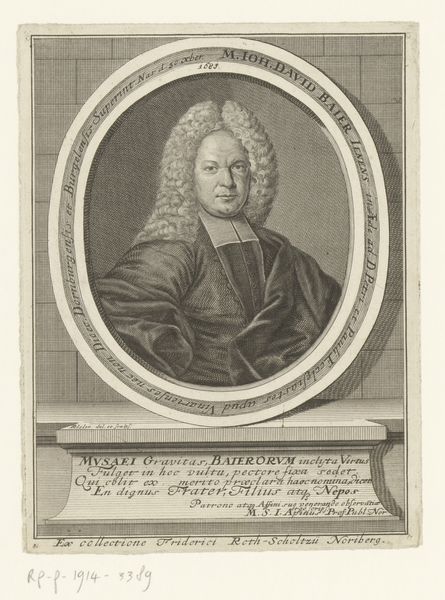
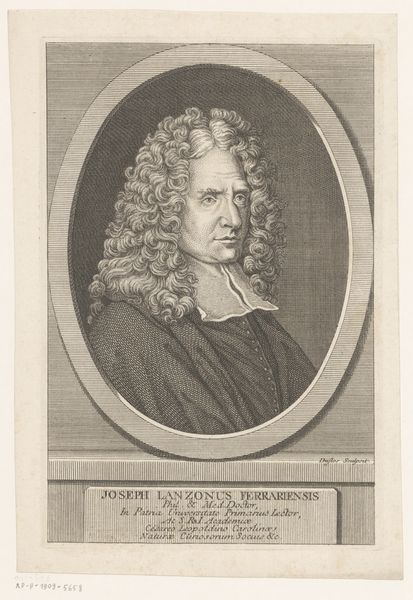
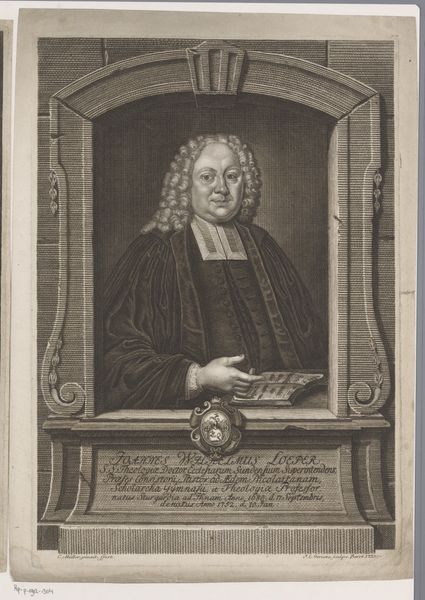
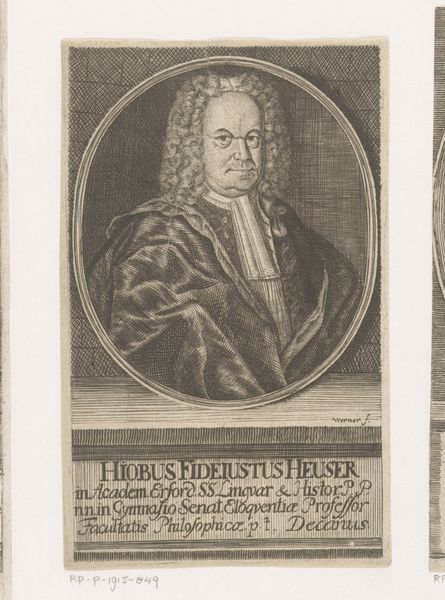
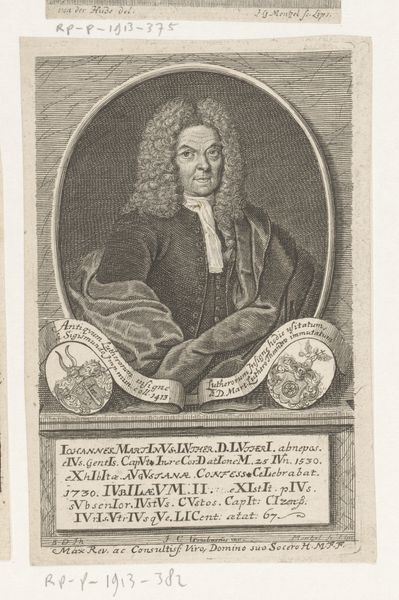
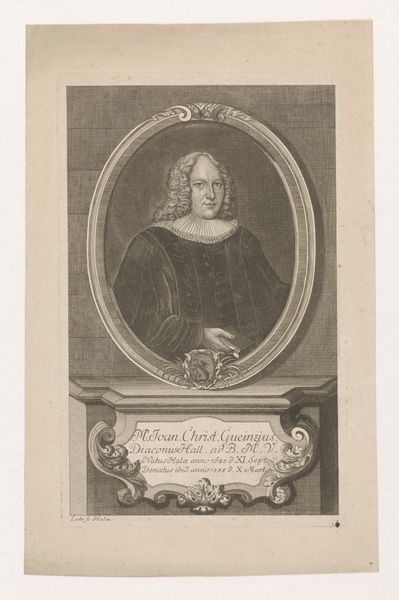
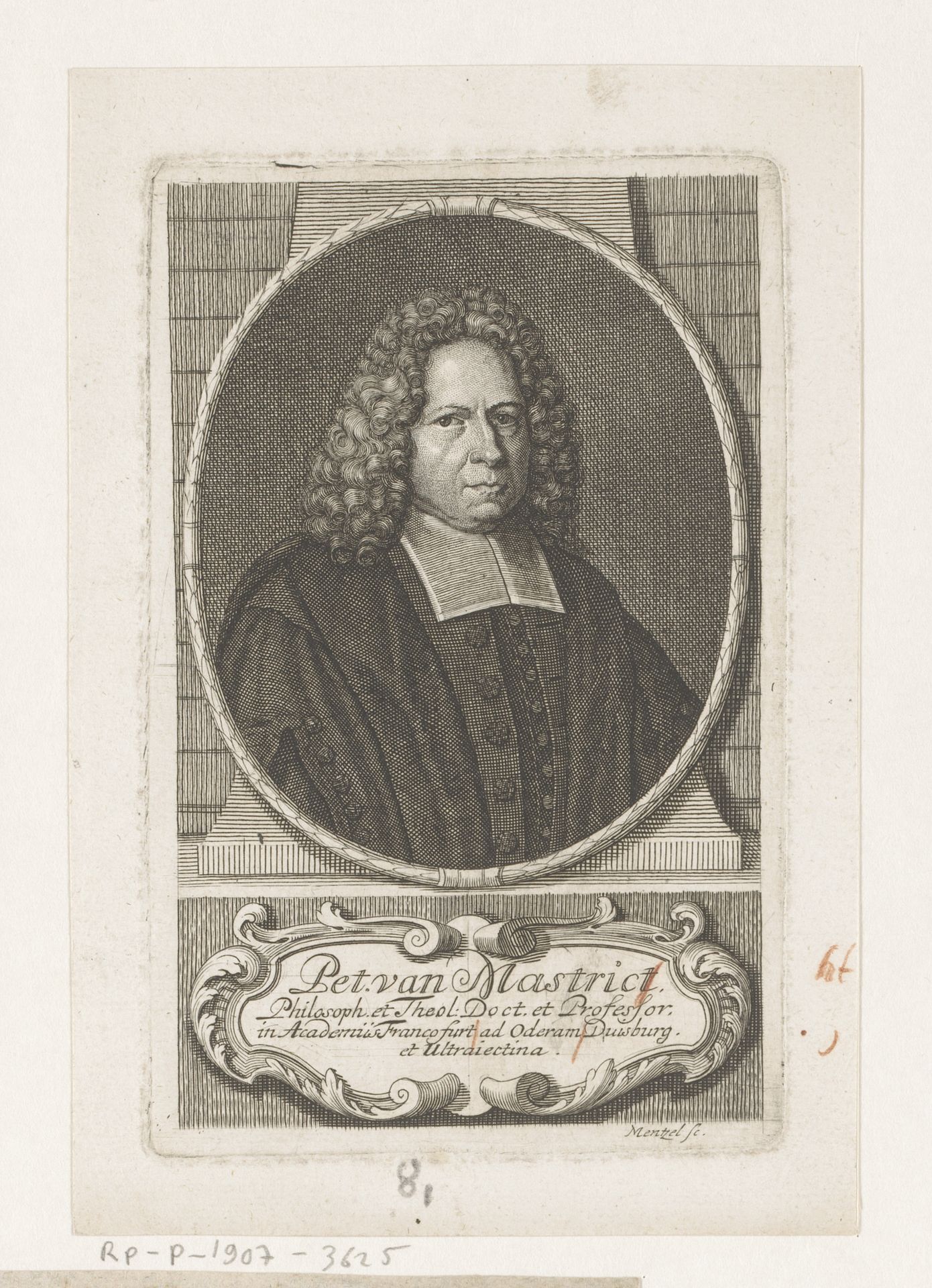
Johann Georg Mentzel etched this portrait of Petrus van Mastricht, likely during the height of his career. The oval frame and inscription plaque, symbols of prestige and scholarly identity, surround the man. Consider the significance of the portrait itself. From ancient Roman busts to Renaissance paintings, the portrait has served as a vessel for memory and legacy. It is a conscious act of preserving an image for posterity, a desire to transcend the ephemerality of existence. We see this echoed in earlier funerary masks and reliquaries. The wig, an emblem of status, paradoxically conceals the individual's natural features, creating a mask of social identity. It's a recurring motif that appears through history, evolving from religious headdresses to the elaborate hairstyles of the French court. This is a demonstration of how cultural symbols shift and adapt, carrying echoes of their past while acquiring new meanings. Here, the emotional resonance lies in the attempt to capture a sense of enduring presence, an effort to defy the relentless flow of time. It's a testament to our shared human desire to leave a mark on the world.

Artwork details
- Medium
- print, engraving
- Dimensions
- height 153 mm, width 99 mm
- Copyright
- Rijks Museum: Open Domain
Tags
portrait
baroque
form
line
history-painting
academic-art
engraving
realism
Comments
No comments
About this artwork
Johann Georg Mentzel etched this portrait of Petrus van Mastricht, likely during the height of his career. The oval frame and inscription plaque, symbols of prestige and scholarly identity, surround the man. Consider the significance of the portrait itself. From ancient Roman busts to Renaissance paintings, the portrait has served as a vessel for memory and legacy. It is a conscious act of preserving an image for posterity, a desire to transcend the ephemerality of existence. We see this echoed in earlier funerary masks and reliquaries. The wig, an emblem of status, paradoxically conceals the individual's natural features, creating a mask of social identity. It's a recurring motif that appears through history, evolving from religious headdresses to the elaborate hairstyles of the French court. This is a demonstration of how cultural symbols shift and adapt, carrying echoes of their past while acquiring new meanings. Here, the emotional resonance lies in the attempt to capture a sense of enduring presence, an effort to defy the relentless flow of time. It's a testament to our shared human desire to leave a mark on the world.
Comments
No comments