
Curatorial notes
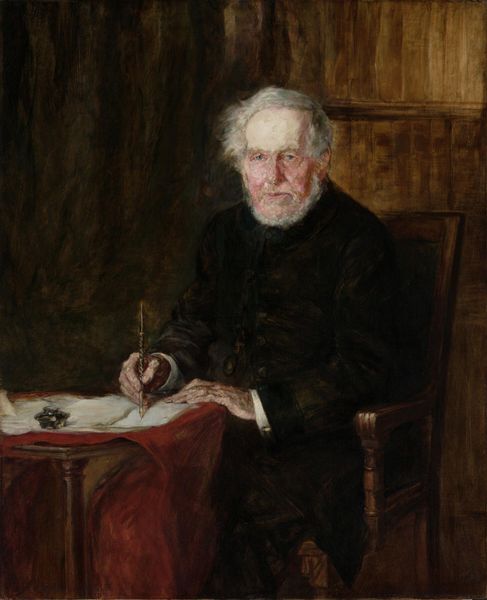
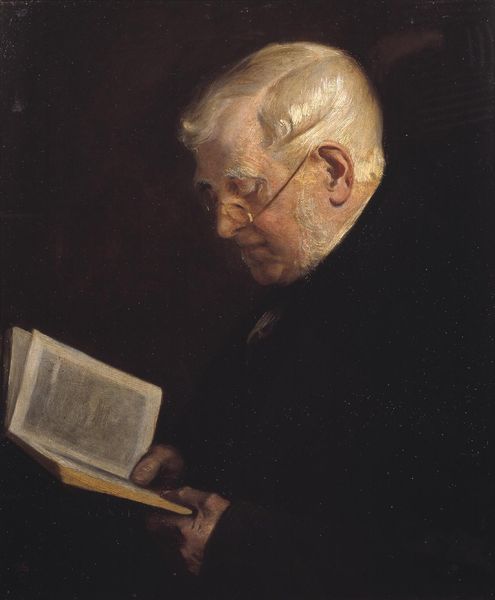
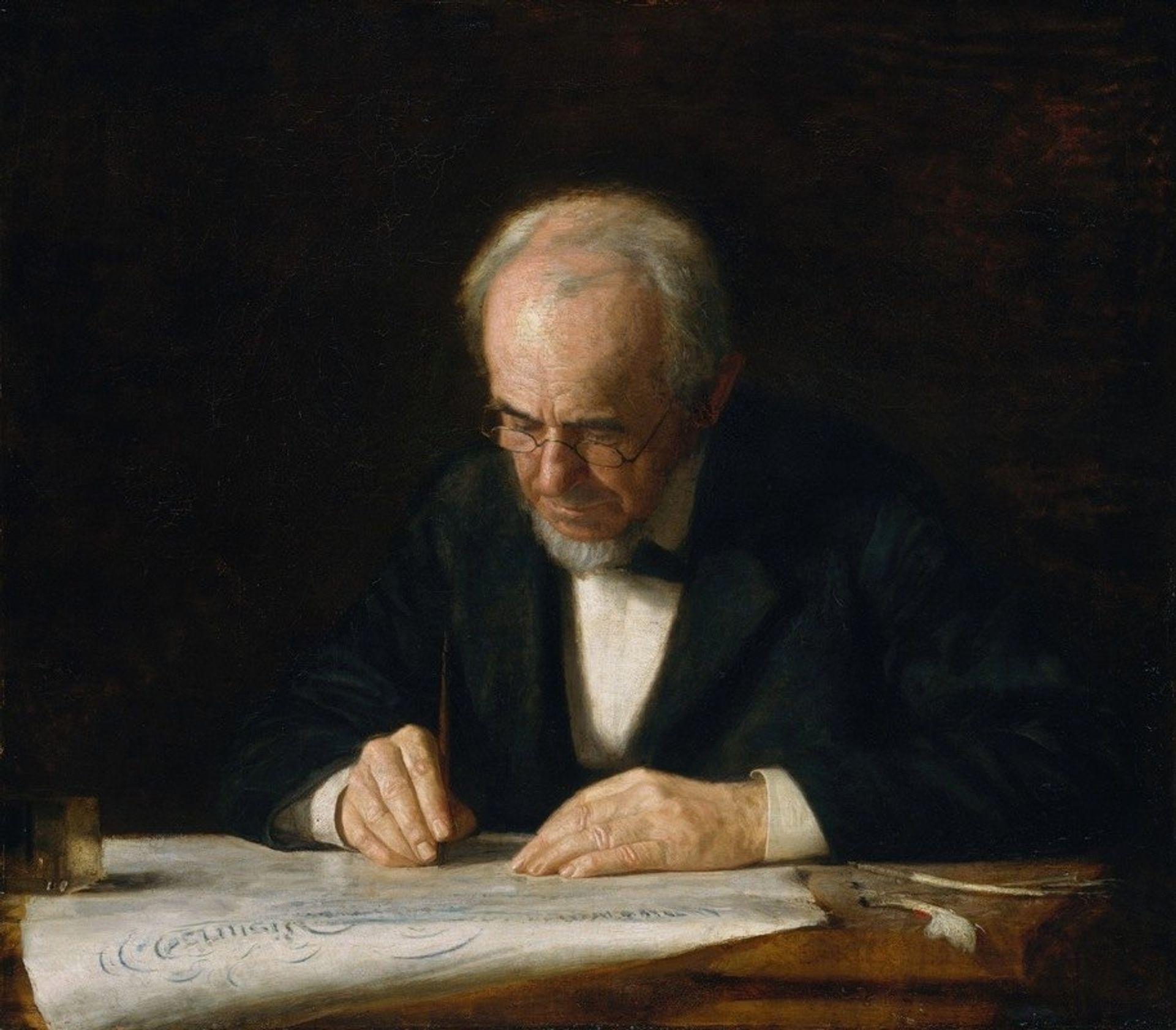
Editor: This is "The Writing Master" by Thomas Eakins, created in 1882, using oil paint. It strikes me as a really intimate portrait, the man so focused on his writing. What kind of stories can we find embedded in this piece? Curator: The act of writing itself carries significant weight, doesn't it? Eakins presents not just a man writing, but embodies the symbolic power of text itself. Notice how the composition directs our eye, leading us to question: what is he writing? Why this man, this scene? Editor: It almost feels like the writing itself is a character, an entity within the portrait, demanding this kind of scrutiny. But how did people understand this imagery then, and does that meaning change now? Curator: Absolutely. Handwriting, calligraphy specifically, conveyed social status, education, and personal character. The man's precise hand suggests authority, wisdom, a connection to tradition. What do we now know and have to reckon with when a painter depicts this mastery, but may or may not have shared this subject’s perspectives and lived experience? Is it a neutral portrayal or laden with the complexities of power? Editor: That’s a really interesting point; the power in writing and who wields it. So Eakins is highlighting both the skill and maybe even the implied social power of this man, a ‘writing master.’ Curator: Precisely. This piece acts as a historical and social marker. It showcases both the reverence for learning and the cultural weight carried by the written word at that time. It causes us to contemplate both permanence and temporality in visual and written communication. Editor: This has given me a whole new perspective on how to decode the layers within portraiture, seeing beyond just a likeness, but considering its cultural context and symbolism. Curator: And that’s how we keep art alive – by constantly re-evaluating what symbols meant, what they mean, and the legacy they imprint on us.