1545
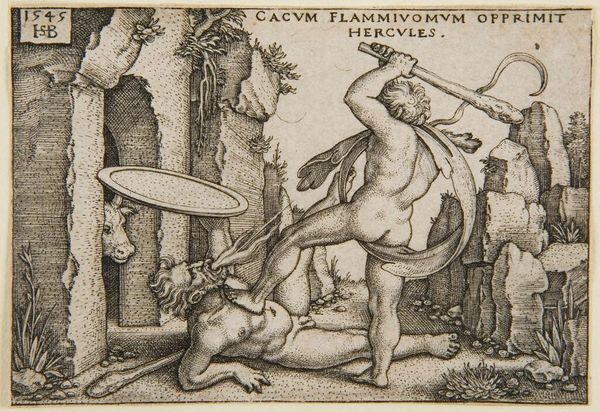
Hercules doodt Cacus

Sebald Beham
1500 - 1550Location
RijksmuseumListen to curator's interpretation
Curatorial notes
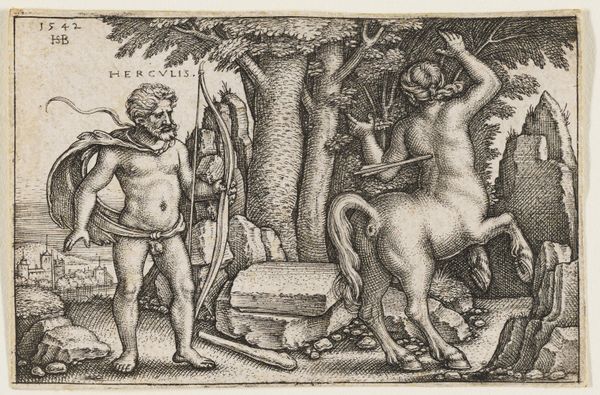
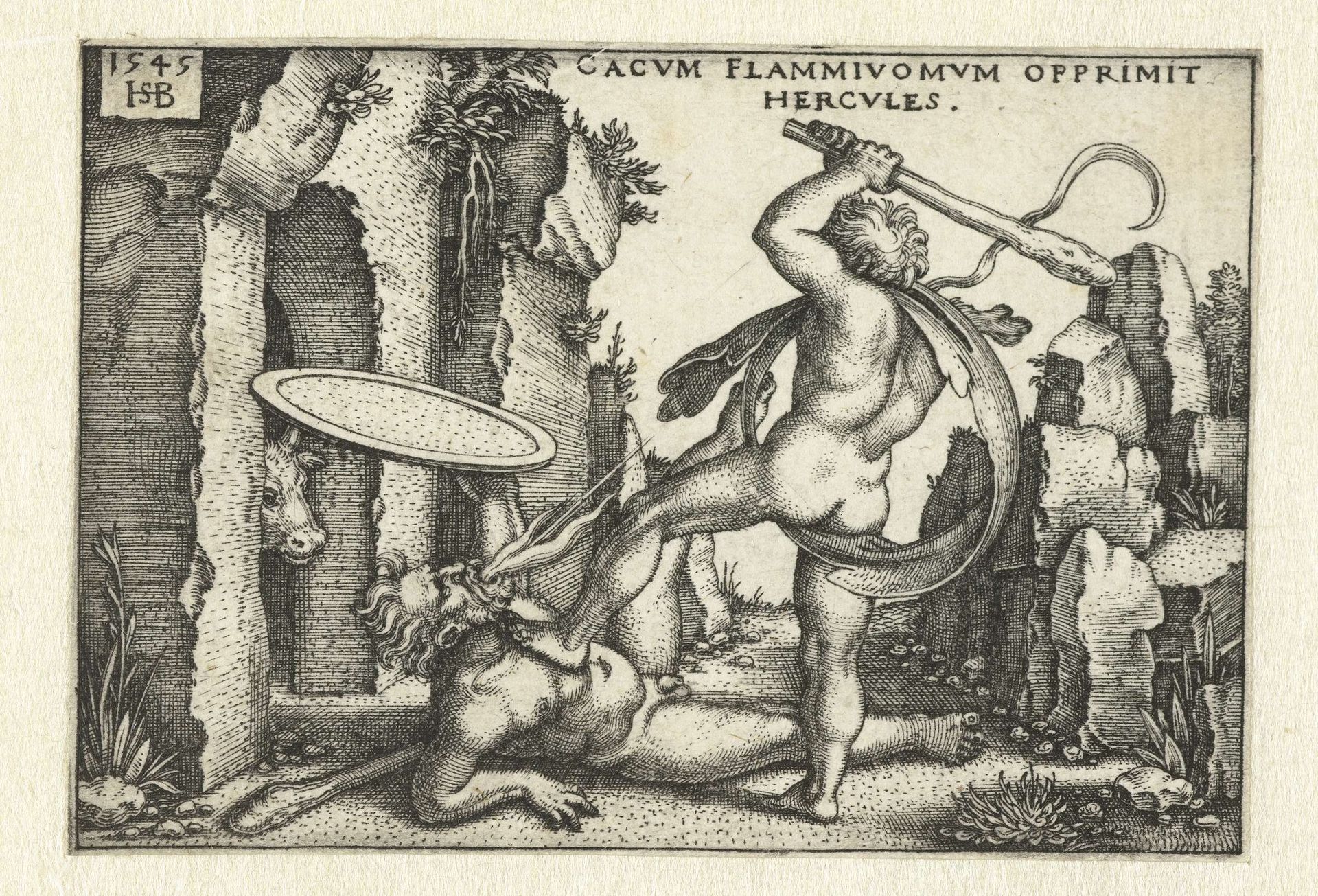
Sebald Beham etched "Hercules slays Cacus" in 1545, capturing a moment of raw power and symbolic triumph. Hercules, the epitome of virtue and strength, stands over the defeated Cacus, a fire-breathing monster who stole his cattle. Observe Hercules's club, a recurring symbol across cultures, from ancient Greece to Renaissance art, representing not just physical might, but also moral authority. His stance, foot firmly planted on Cacus, echoes the classical contrapposto, a posture suggesting controlled power and dominance, reminiscent of ancient sculptures of victorious athletes. Yet, it's the defeated Cacus that intrigues me most. A primal figure, his defeat mirrors humanity's struggle to control base instincts. This motif of man overcoming beast echoes through art history, appearing in depictions of St. George slaying the dragon and countless other allegories of good conquering evil. The enduring appeal lies in the subconscious recognition of this archetypal struggle, evoking a sense of catharsis and reaffirming our collective hope for the triumph of reason over chaos.