print, ink, color-on-paper, woodblock-print
#
portrait
# print
#
ukiyo-e
#
figuration
#
ink
#
color-on-paper
#
woodblock-print
#
naive art
#
genre-painting
#
watercolor
Dimensions: 9 3/16 × 14 15/16 in. (23.34 × 37.94 cm) (sheet, horizontal ōban)
Copyright: Public Domain
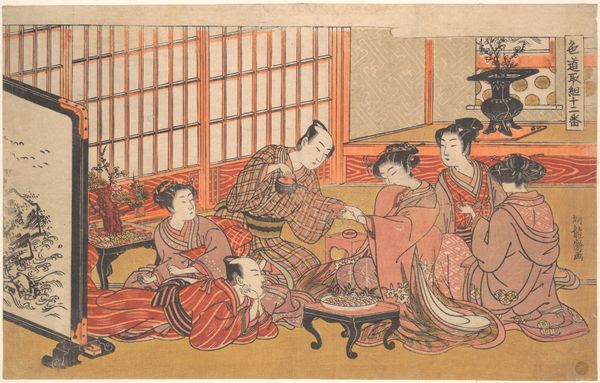
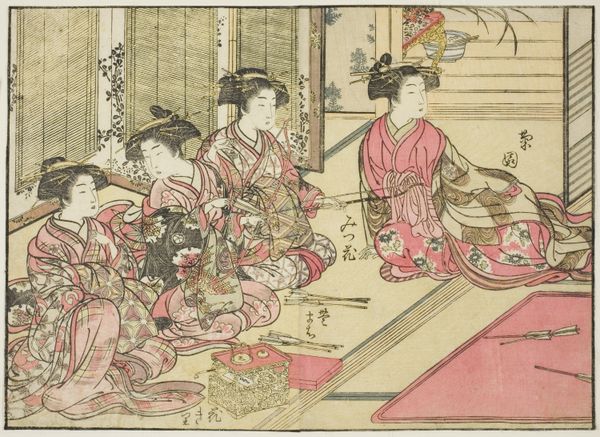
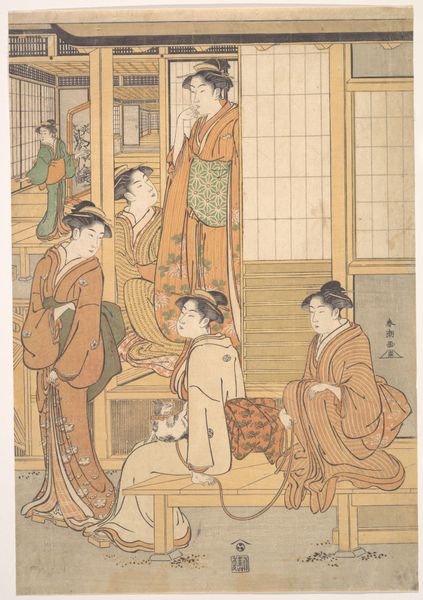
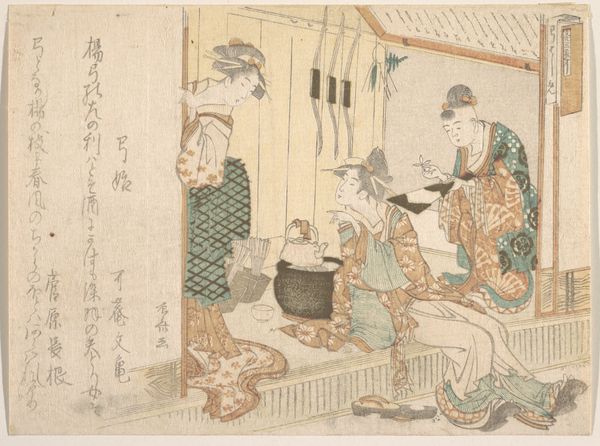
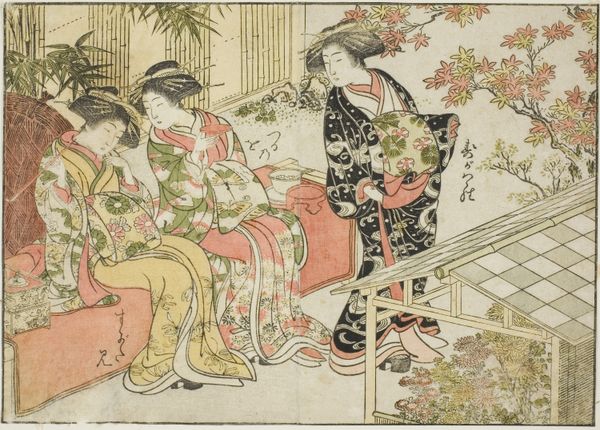
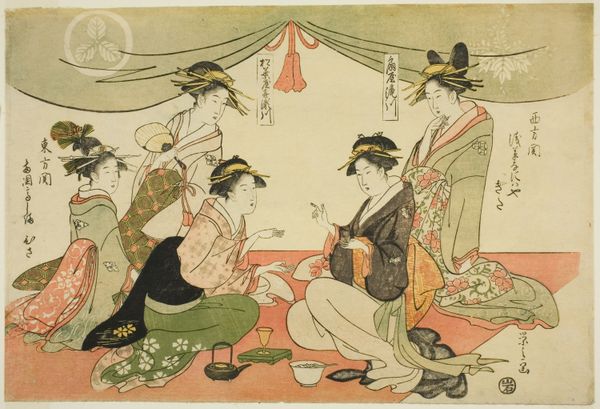
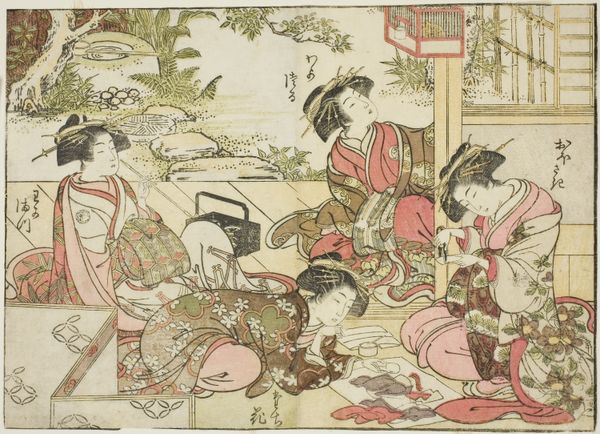
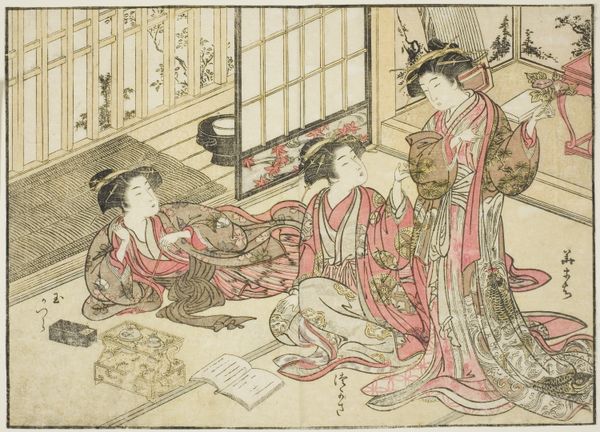
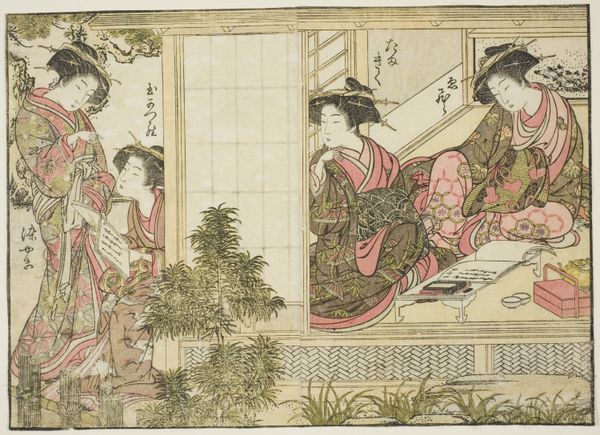
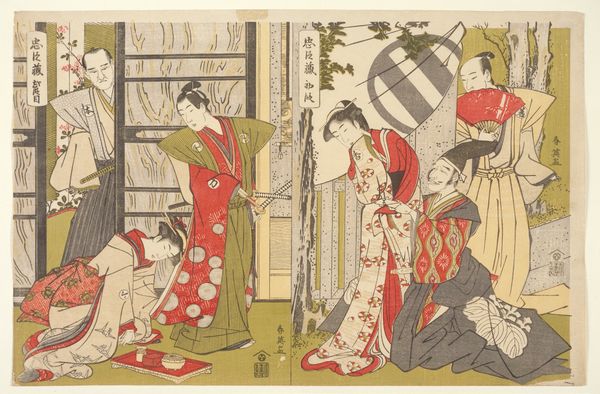
This print by Isoda Koryūsai was made in Japan using woodblock printing, a technique known as *ukiyo-e*. Look closely and you’ll notice the flat planes of color, the crisp outlines, and the intricate patterns on the figures' kimonos. These aren’t just aesthetic choices. They are all achieved through a labor-intensive process of carving separate blocks for each color, inking them, and then carefully pressing them onto paper. The registration had to be perfect to achieve the clean, crisp images we see. The *ukiyo-e* tradition was closely tied to the rise of a merchant class in Japan, catering to their tastes for images of fashionable life, and a kind of ‘floating world’ of pleasure. The production was a collaborative effort, involving the artist who designed the image, the woodblock carver, the printer, and the publisher. The commercial nature of *ukiyo-e* prints challenges traditional ideas about fine art, but it also speaks to the vibrant popular culture of the Edo period. Appreciating *ukiyo-e* means understanding the intricate dance between art, craft, and commerce.
Comments

minneapolisinstituteofart over 2 years ago
⋮
The series opens with three couples enjoying each other's company with food and drinks. The finely appointed room is decorated with a large standing screen, arrangements of flowers, and a hanging scroll on display in the tokonoma (alcove). The blossoming plum chosen for the decorations and the closed shōji panels suggest that it is a cold season.


Join the conversation
Join millions of artists and users on Artera today and experience the ultimate creative platform.
 Collect
More like this