About this artwork
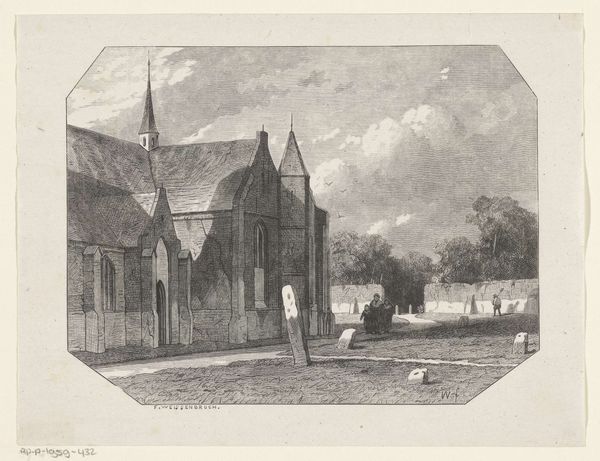
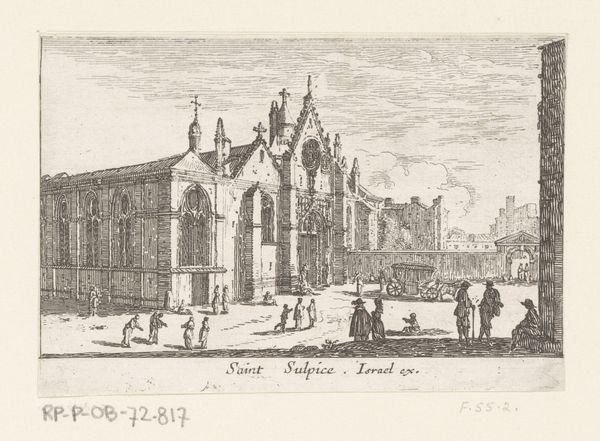
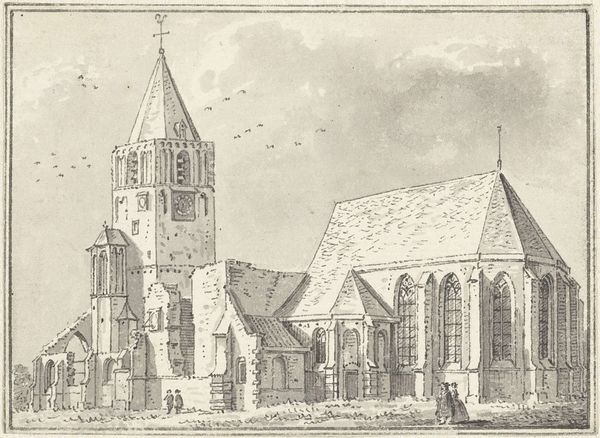
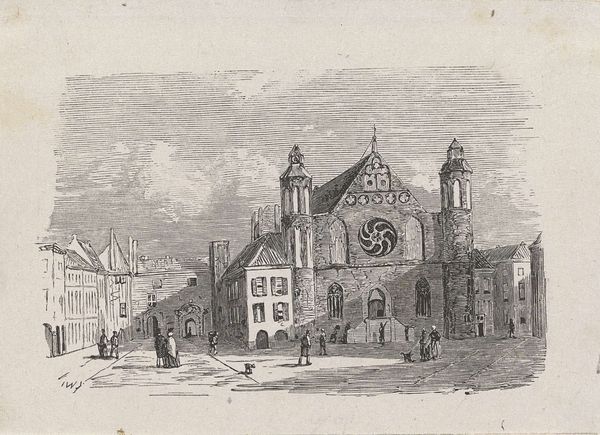
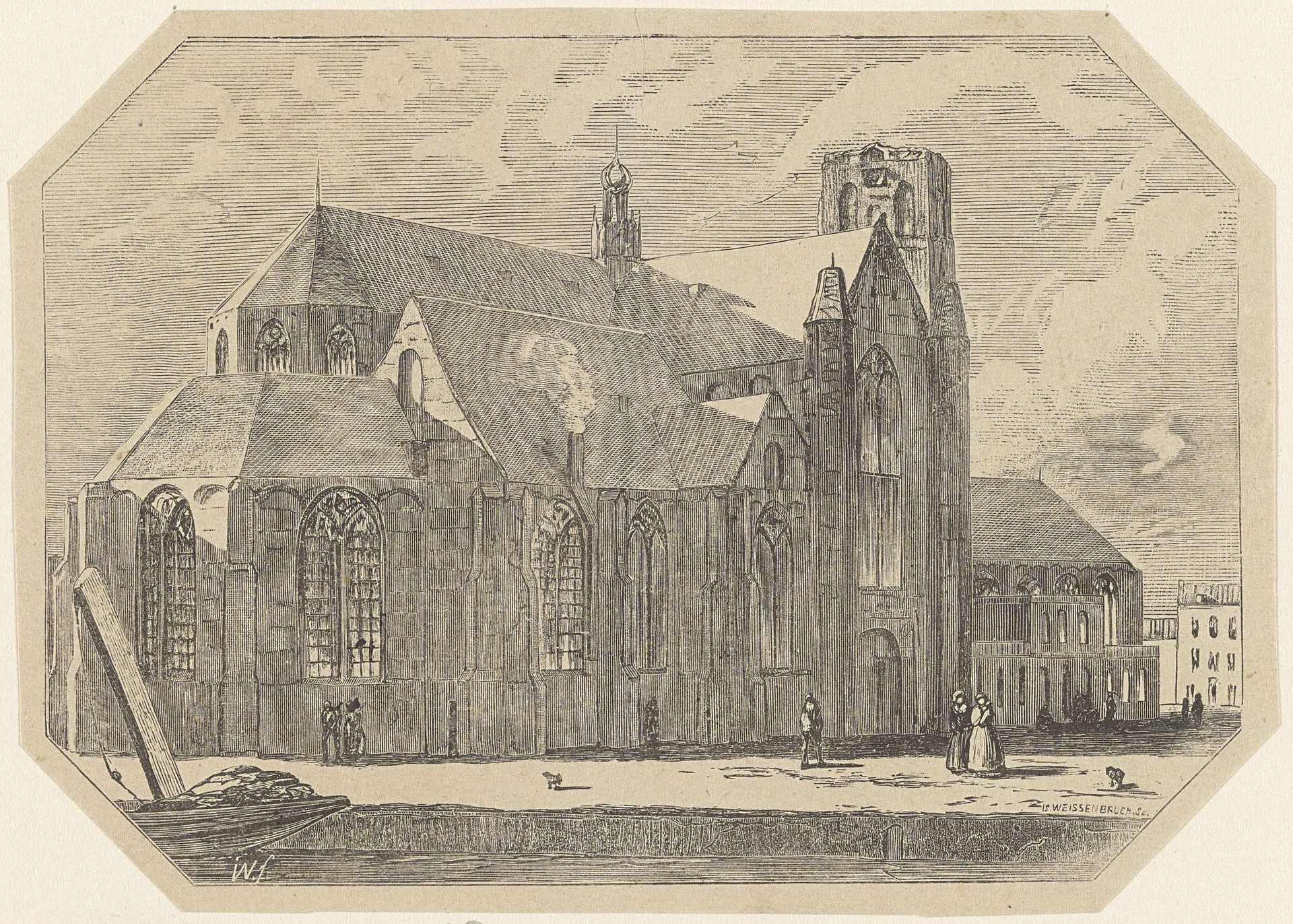
Isaac Weissenbruch made this print of a church with a square using etching, a printmaking technique dependent on acid. The artist would have coated a metal plate with a waxy, acid-resistant substance, then scratched an image into it with a needle, exposing the metal. Dipping the plate in acid would then bite away the exposed lines, creating grooves. The deeper the grooves, the more ink they would hold, and the darker they would appear in the print. Weissenbruch would have then inked the plate, wiped away the excess, and pressed paper against it, transferring the image. The resulting print is valued for its fine lines and subtle tonal variations. Consider that, while Weissenbruch was a skilled etcher, the labor was deeply collaborative. Metalworkers would have prepared the plate, and printers would have run off potentially hundreds of impressions. Understanding this division of labor is crucial to seeing the print for what it is: a material record of social cooperation.
Gezicht op een kerk met een plein
1836 - 1912

Isaac Weissenbruch
1826 - 1912Location
RijksmuseumArtwork details
- Medium
- print, engraving, architecture
- Dimensions
- height 105 mm, width 147 mm
- Location
- Rijksmuseum
- Copyright
- Rijks Museum: Open Domain
Tags
Comments
Share your thoughts
About this artwork
Isaac Weissenbruch made this print of a church with a square using etching, a printmaking technique dependent on acid. The artist would have coated a metal plate with a waxy, acid-resistant substance, then scratched an image into it with a needle, exposing the metal. Dipping the plate in acid would then bite away the exposed lines, creating grooves. The deeper the grooves, the more ink they would hold, and the darker they would appear in the print. Weissenbruch would have then inked the plate, wiped away the excess, and pressed paper against it, transferring the image. The resulting print is valued for its fine lines and subtle tonal variations. Consider that, while Weissenbruch was a skilled etcher, the labor was deeply collaborative. Metalworkers would have prepared the plate, and printers would have run off potentially hundreds of impressions. Understanding this division of labor is crucial to seeing the print for what it is: a material record of social cooperation.
Comments
Share your thoughts