Copyright: Public Domain: Artvee
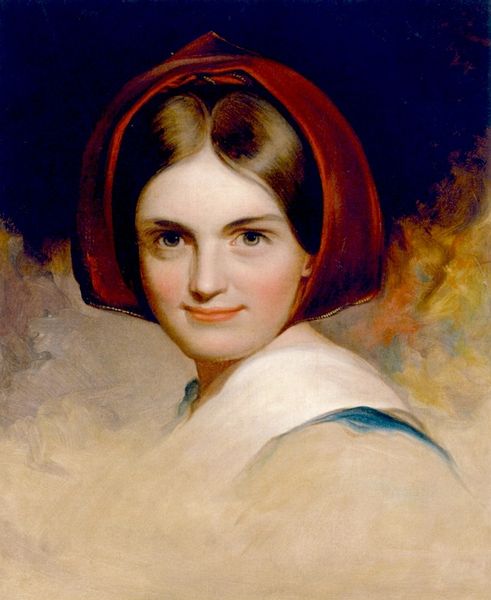
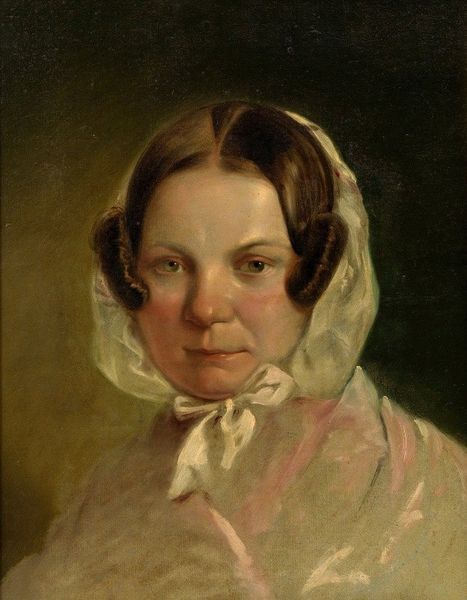
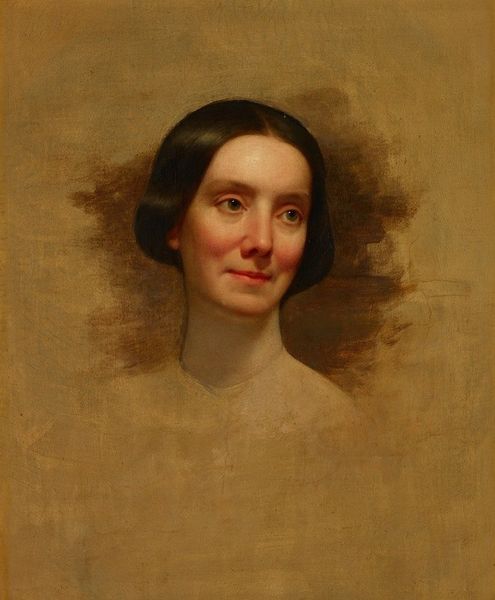
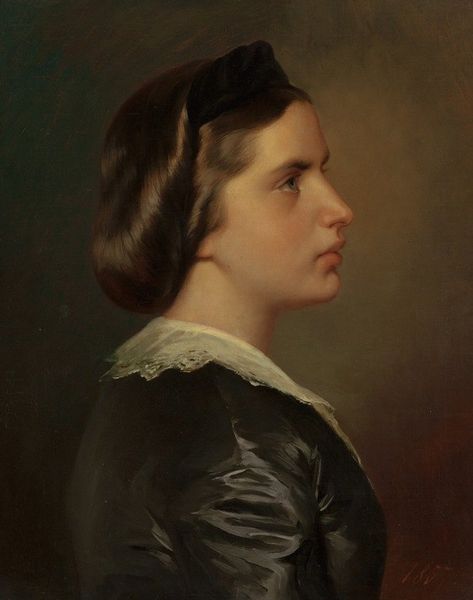
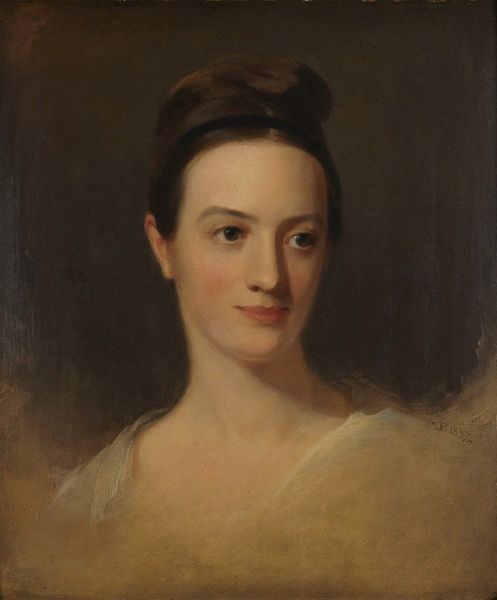
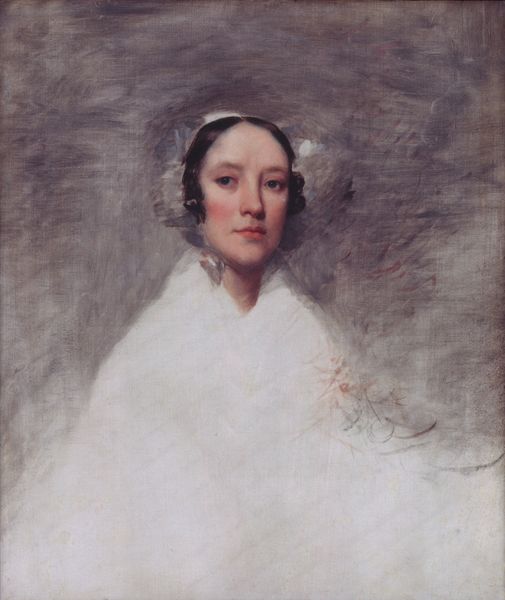
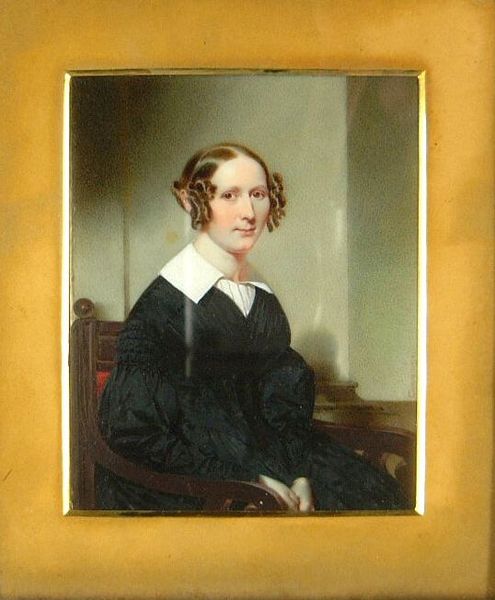
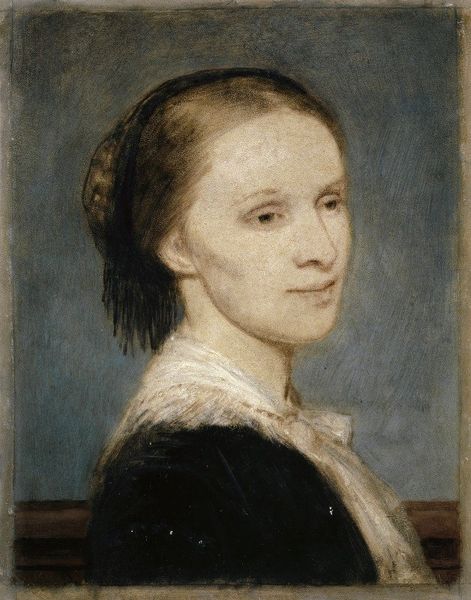
Curator: Here we have Thomas Sully’s “Portrait of Mrs. George H. Crossman,” painted in 1861. Editor: My first thought is how restrained the color palette is. A harmony of browns and creams creates a sense of tranquility, almost melancholy. Curator: Precisely! Sully was a master of capturing the Romantic ideal. Notice the subject's direct gaze, yet there’s a sense of inwardness, as if we're seeing her public self and a more private reflection simultaneously. Her clothing suggests status but remains modest. Editor: I’m struck by the soft brushwork, creating a sense of depth in the figure, while the background fades almost into abstraction. The stark white collar adds a crucial visual element drawing the viewer in towards her face. Curator: White, traditionally symbolizing purity and innocence. This, combined with her placid expression, adheres to the 19th-century representation of women as domestic goddesses. It speaks of cultural ideals tied to domestic harmony. Editor: Interesting how the focal point seems evenly balanced. Her gaze demands attention. But I almost read her as being not quite "real," existing as some symbolic stand-in for some cultural ideal more than just Mrs. Crossman. Curator: Yes, a flattening of lived experience into ideal representation—but her subtle expression also suggests a certain complexity. I mean, a flicker of self-awareness resists being fully subsumed by symbolism. Editor: Looking closely at her hair, I notice those playful, almost Botticelli-like curls, adding just a hint of rebelliousness against the otherwise formal presentation. This subtle play shows that perfection comes from something deeper than mere visual harmony, that is not something one paints in isolation. Curator: An apt reading! What an intimate encounter we've had exploring cultural ideals embedded in Mrs. Crossman's serene portrait. Editor: Indeed. A subdued, thought-provoking work!
Comments
No comments
Be the first to comment and join the conversation on the ultimate creative platform.
 React
React Comment