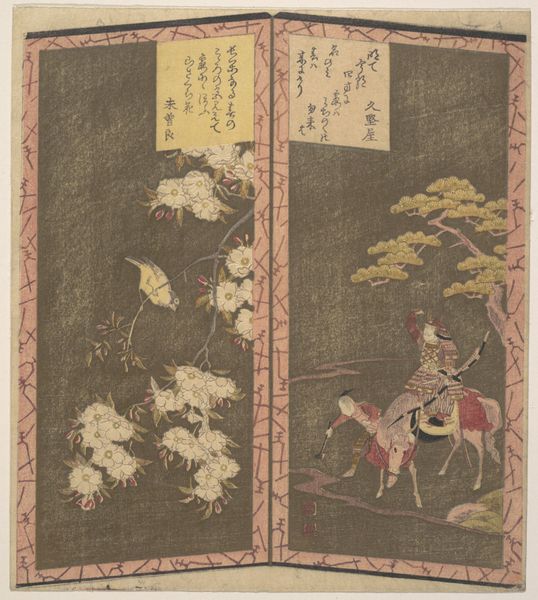
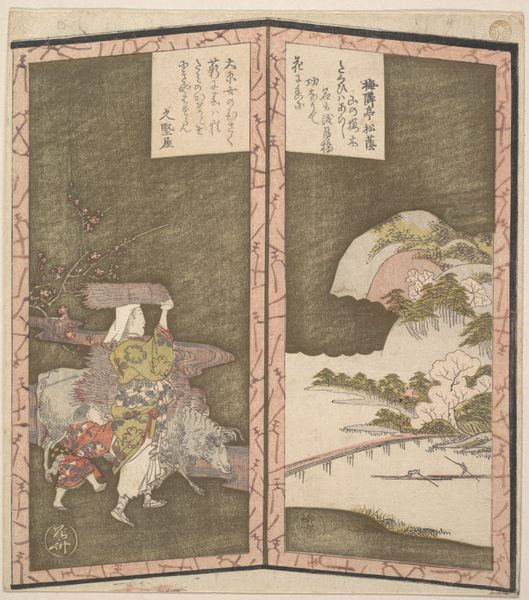
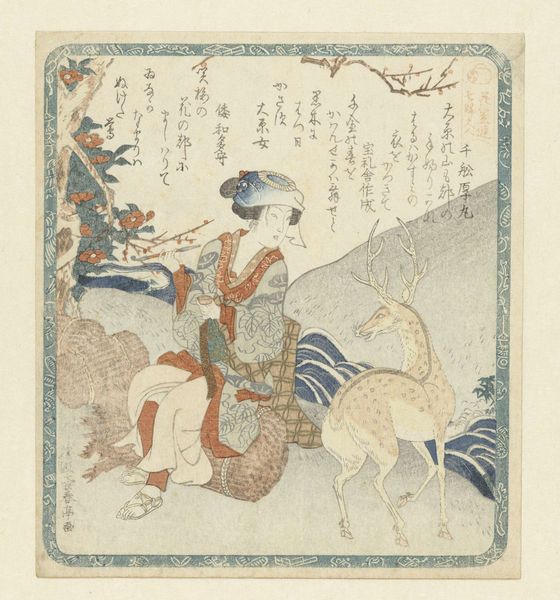
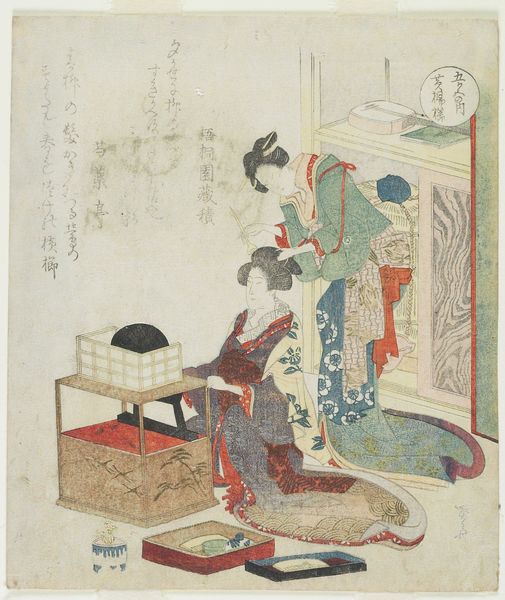
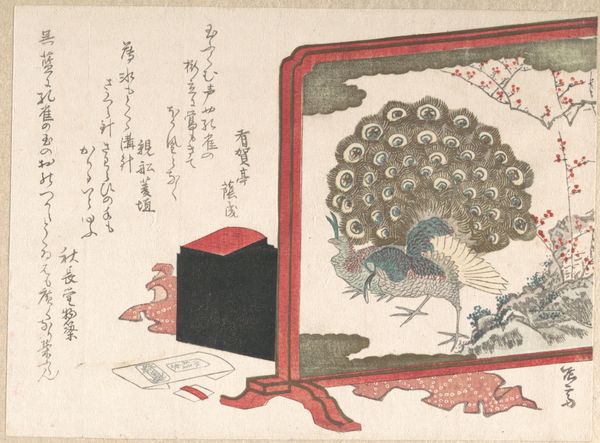
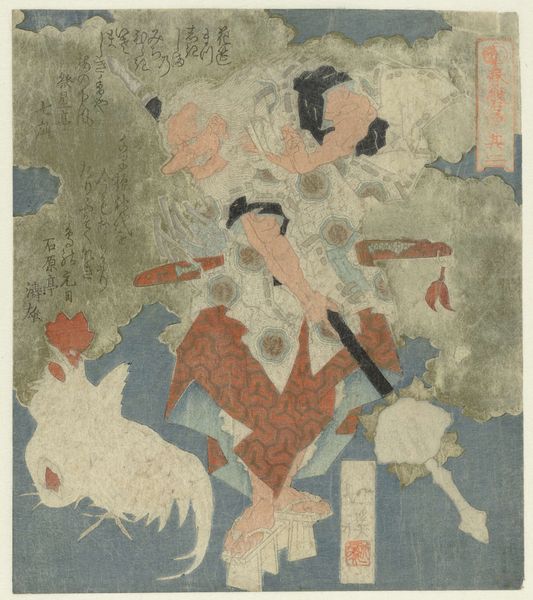
Plum blossoms and poet, from an untitled hexaptych depicting a pair of folding screens c. 1825
0:00
0:00


#
portrait
# print
#
asian-art
#
landscape
#
ukiyo-e
#
figuration
Dimensions: 21.1 × 18.8 cm
Copyright: Public Domain
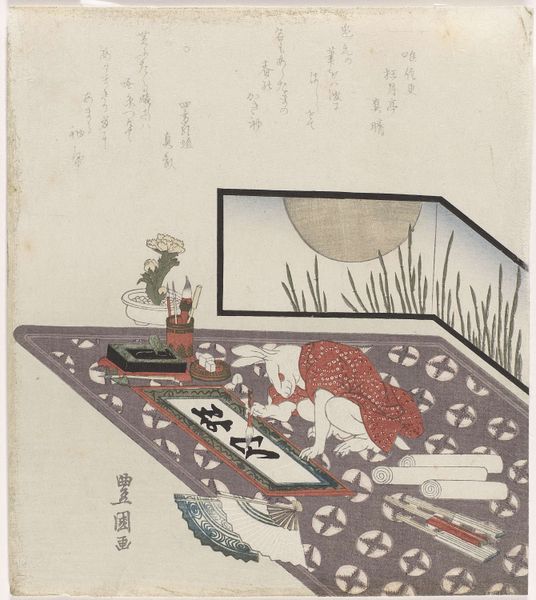
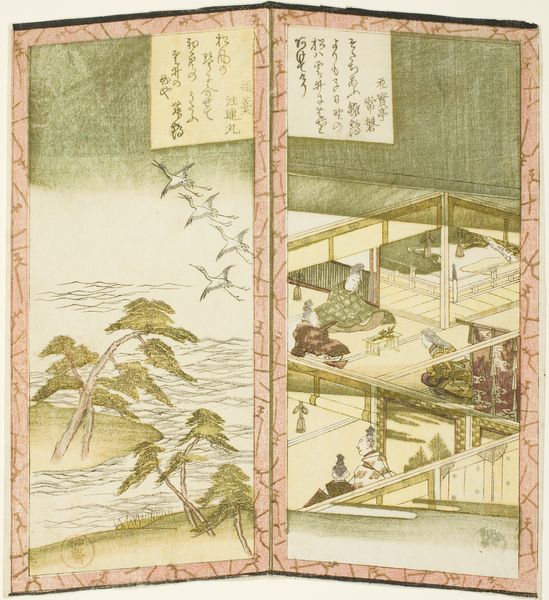
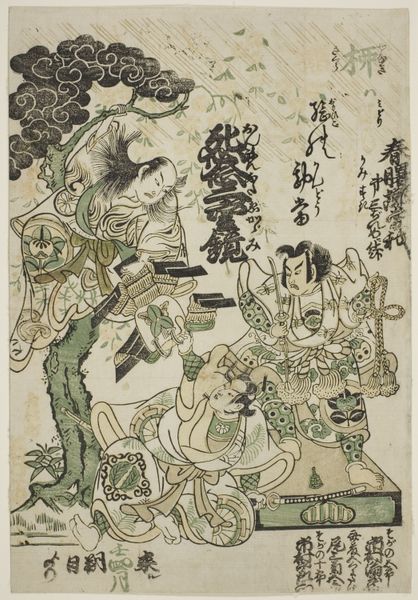
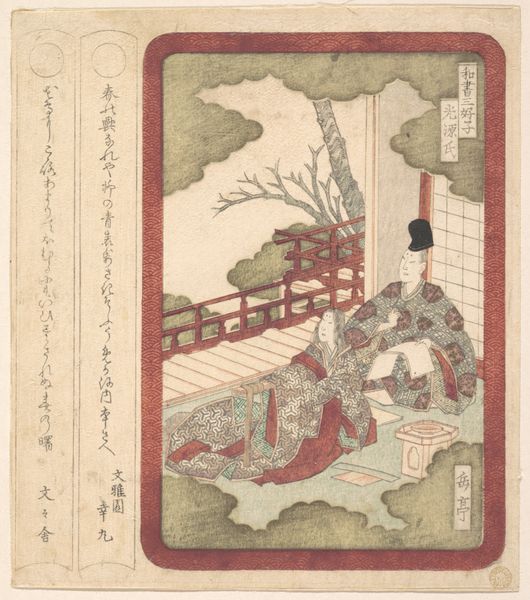
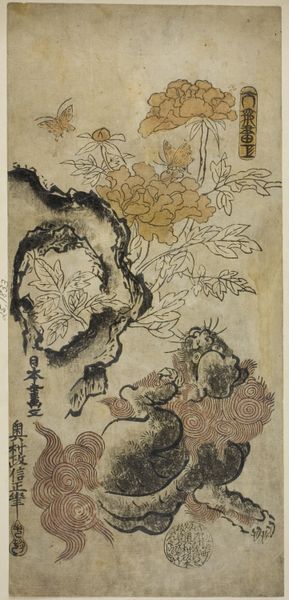
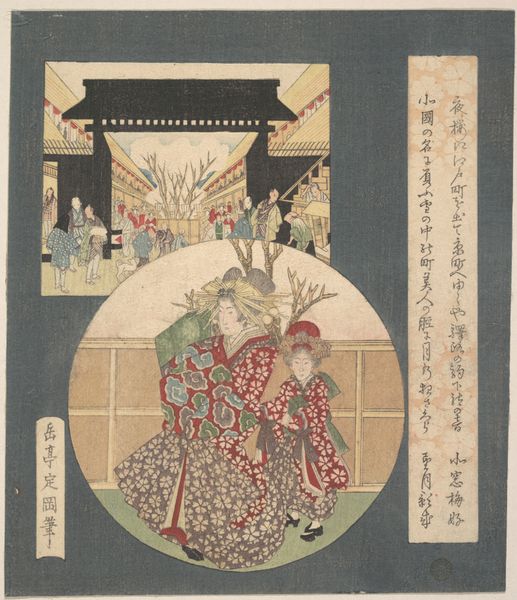
Ryūryūkyo Shinsai created this woodblock print, titled "Plum blossoms and poet," depicting a pair of folding screens, around the early 1800s. Woodblock printing, or *ukiyo-e*, was a painstaking process involving carving a design into wood, applying ink, and pressing paper onto the block. Each color required a separate block, demanding precise alignment. The final print possesses a delicate texture and subtle tonal variations, achieved through the inherent qualities of the wood and the pressure applied during printing. The social significance of *ukiyo-e* lies in its accessibility. Produced in multiples, these prints brought art to a wider audience during the Edo period, a departure from traditional art patronage. Consider the labor involved in carving the blocks, mixing the inks, and printing each impression. Shinsai, while an accomplished artist, was also part of a larger system of production involving skilled artisans and distributors. Appreciating the materiality and production of this print allows us to reconsider traditional distinctions between fine art and craft.
Comments
No comments
Be the first to comment and join the conversation on the ultimate creative platform.
 Collect
 React
React Comment
More like this