graphic-art, print, engraving
#
graphic-art
#
medieval
#
baroque
# print
#
old engraving style
#
pen-ink sketch
#
engraving
Dimensions: height 100 mm, width 64 mm
Copyright: Rijks Museum: Open Domain
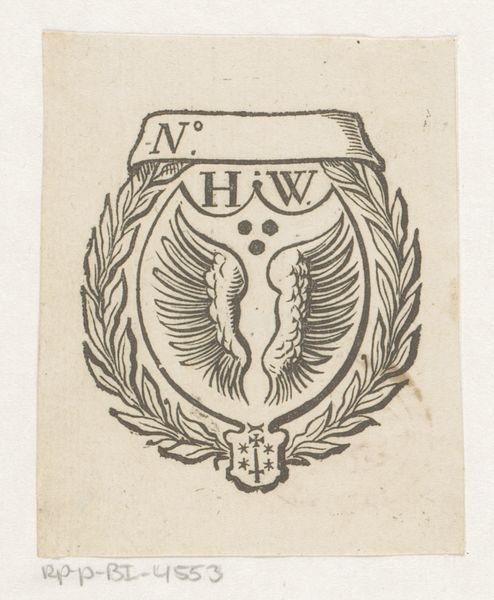
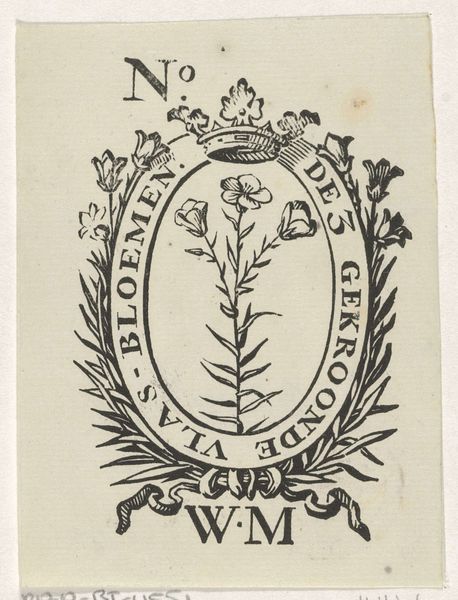
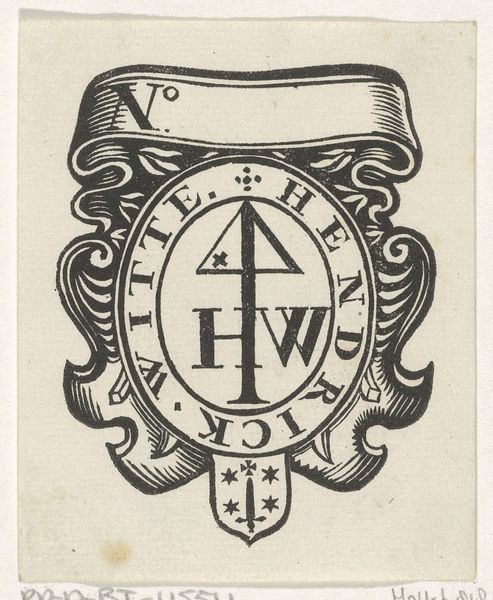
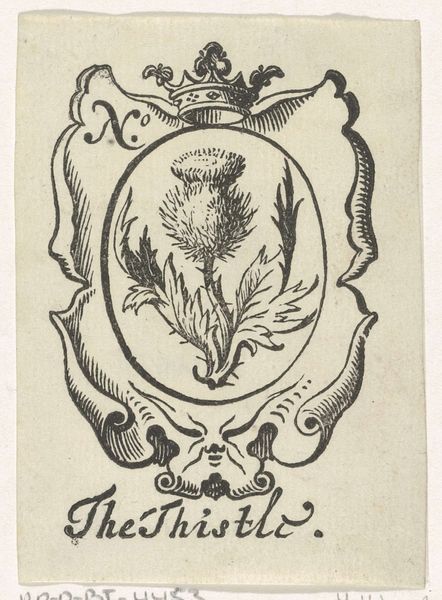
Editor: This engraving from the 17th century, "Vignet met het monogram HW en het wapen van de stad Haarlem" by an anonymous artist, is quite striking. I'm fascinated by how heraldry communicates identity and power, even now. How should we interpret such symbols within their historical context? Curator: That's a brilliant starting point! Heraldry wasn't just decorative; it was a visual language of social standing, lineage, and even political allegiances. Look at the composition itself – the placement of the Haarlem coat of arms above the monogram. What might that suggest about the relationship between individual identity and civic pride at the time? Editor: It implies that identity was probably closely tied to belonging and civic duty, doesn't it? The HW monogram, sitting inside this elaborate, almost baroque frame, is secondary to the Haarlem symbols on top. But who was Henry Witte? What social role was represented through prints such as these? Curator: Precisely. This piece points to the ways individual identity was often constructed and displayed through these public symbols of allegiance and social hierarchy. Was Henry Witte ascending into power? Was this a public affirmation of allegiance? Think about the power dynamics embedded in image production at this time. Whose stories were deemed worthy of being told, and whose were deliberately erased or silenced? Editor: I see what you mean. It makes you consider the untold stories, especially those of marginalized people. The contrast between the highly visible symbols and the relative obscurity of an individual makes one think. Curator: Exactly. And understanding those power dynamics – who had access to representation, who controlled the narrative – is key to decolonizing art history, to understanding how these historical works continue to shape our contemporary understanding of identity and power. We need to examine historical biases in the representation and production of art. Editor: This is really thought-provoking! Thanks, that puts everything into perspective. Curator: Indeed, recognizing whose voices are missing invites us to think critically about history's dominant narratives and their continuing impact on identity today.
Comments
No comments
Be the first to comment and join the conversation on the ultimate creative platform.
 Collect
 React
React Comment
More like this