1784
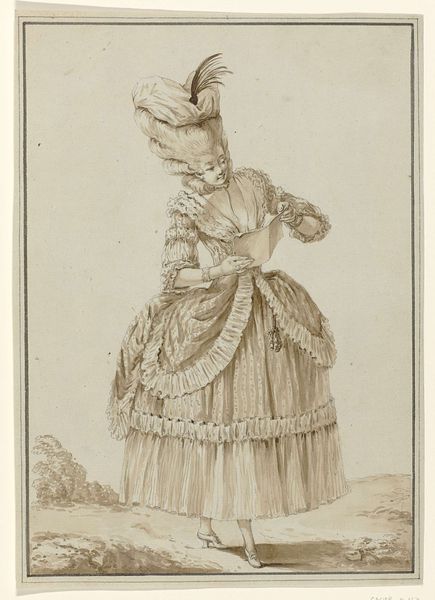
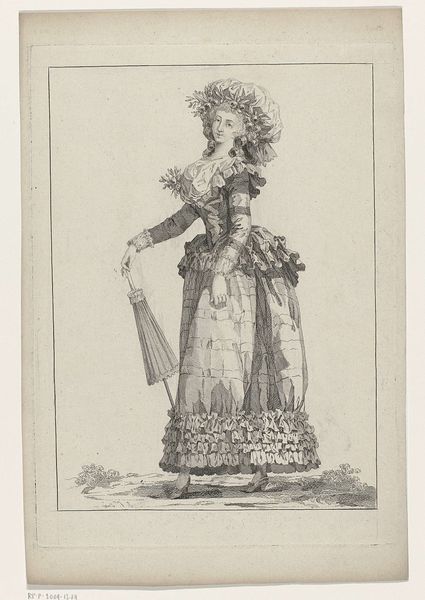
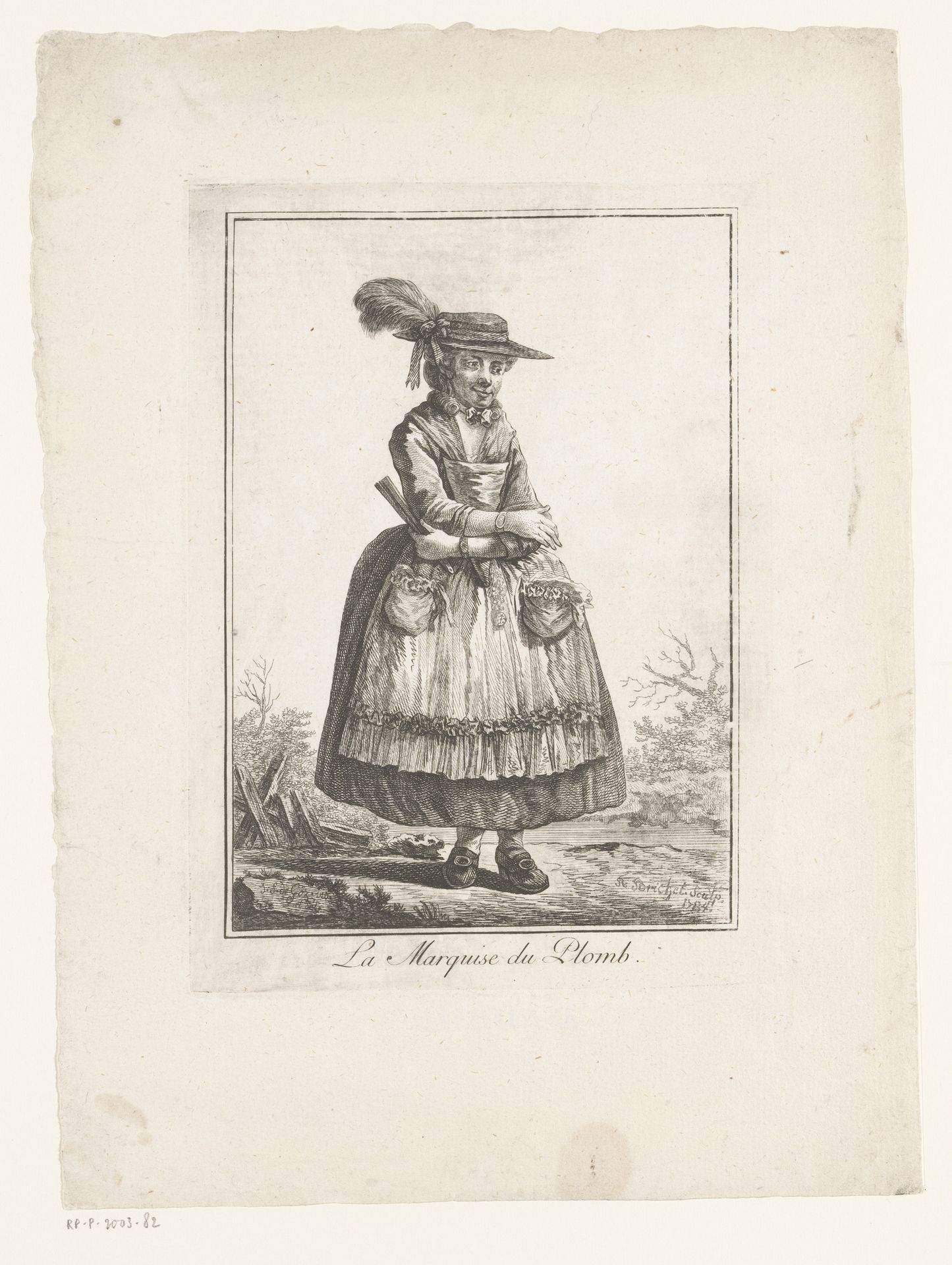
Staande vrouw met een waaier en schort in een landschap

Robert Brichet
1750 - 1850Location
RijksmuseumListen to curator's interpretation
Curatorial notes
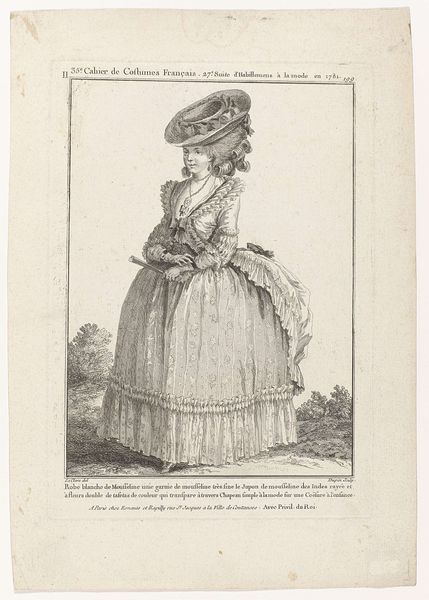
Curator: Before us, we have "Standing Woman with a Fan and Apron in a Landscape" from 1784. Robert Brichet created this intriguing engraving, which is now part of the Rijksmuseum's collection. Editor: She appears both playfully defiant and rather… cautious. Her stance is almost guarded, but the ruffled apron and feather in her hat suggest a different story. Curator: Yes, there's a wonderful tension. Her crossed arms certainly hint at a barrier, but consider the apron and pockets—a nod to everyday life, but adorned with lace and ribbons. And the fan; a symbol, wouldn’t you say, of the power held by women. Editor: Precisely! The Rococo era certainly loved its delicate accessories, but here, it almost feels subversive. Is Brichet making a point about the artifice of femininity, about the labor masked by elaborate display? She seems like a symbol for new emerging feminist views, or, in the very least, an argument for greater agency for women. Curator: Absolutely, and those pockets! So often hidden, here they are quite prominent. Pockets were becoming more important during this time. They represent self-sufficiency. That really lends itself to a message about women at the time. Editor: Note too the landscape, simple yet evocative, acting almost as a stage. It grounds her, gives her context. There’s a rural sensibility—uncommon in Rococo portraiture—that feels fresh, almost revolutionary. Curator: Yes, Brichet deviates from typical depictions of the time, it is this raw immediacy that elevates the print, capturing a moment, and perhaps a shift in societal perspectives. Editor: What I see now is an icon of quiet rebellion. Not in grand gestures, but in the subtle presentation of self, purpose, and understated dignity. Curator: Indeed, Brichet’s print is far more than just a portrait, but rather, a small, profound story etched in lines.