About this artwork
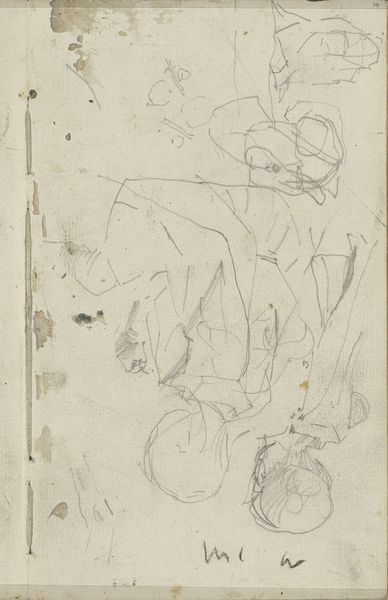
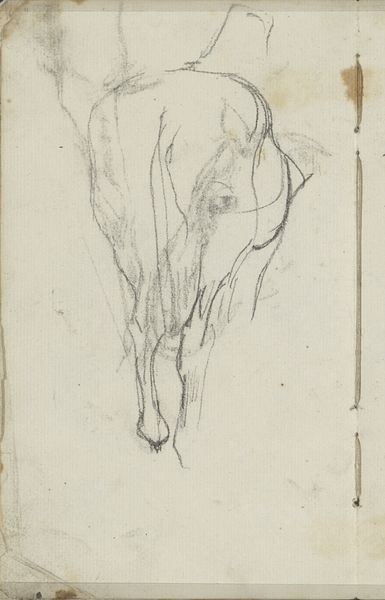
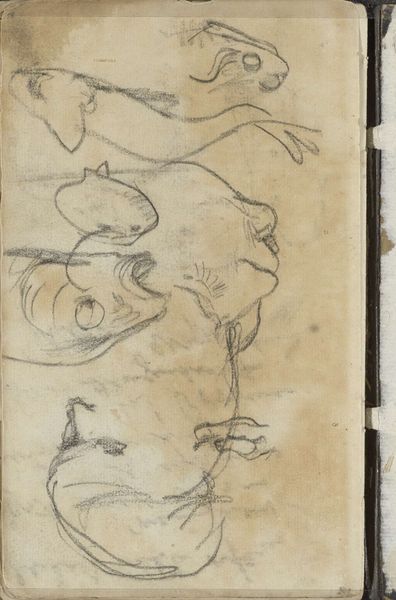
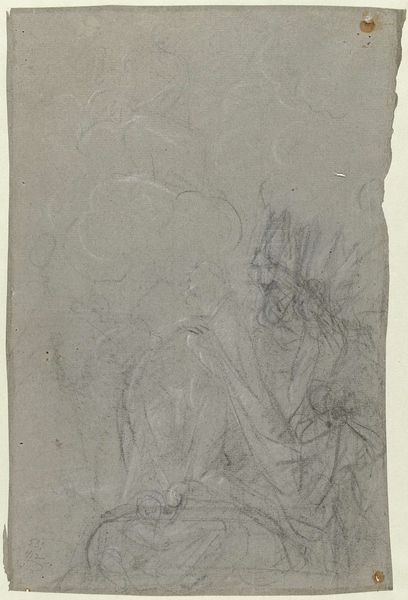
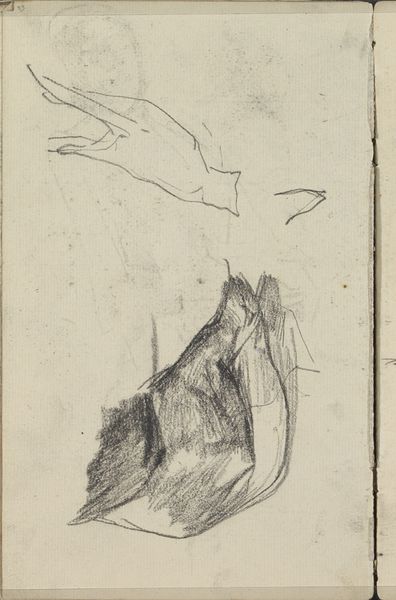
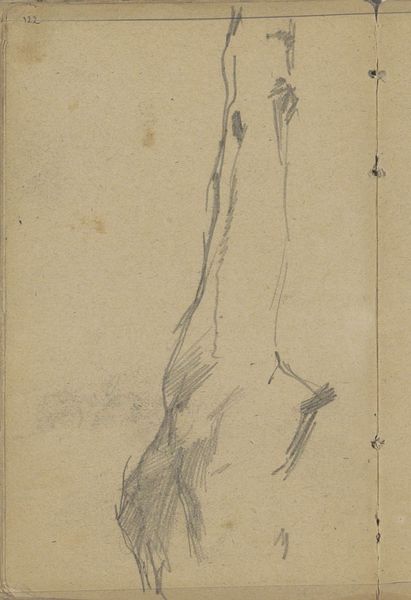
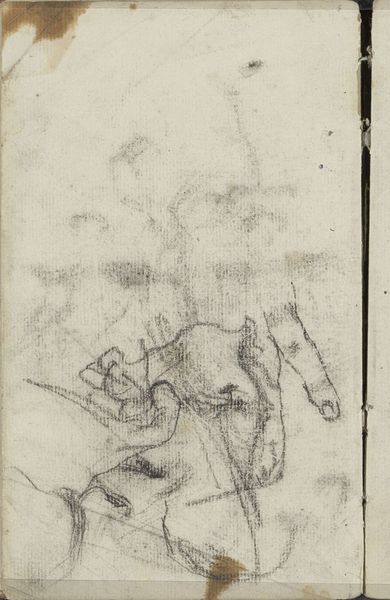
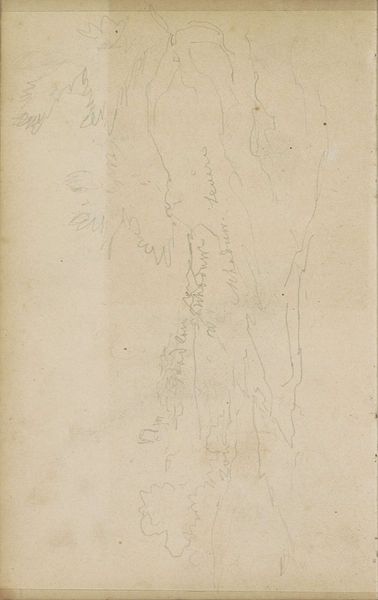
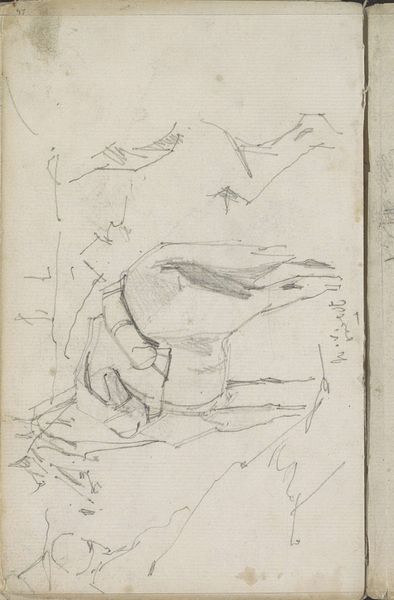
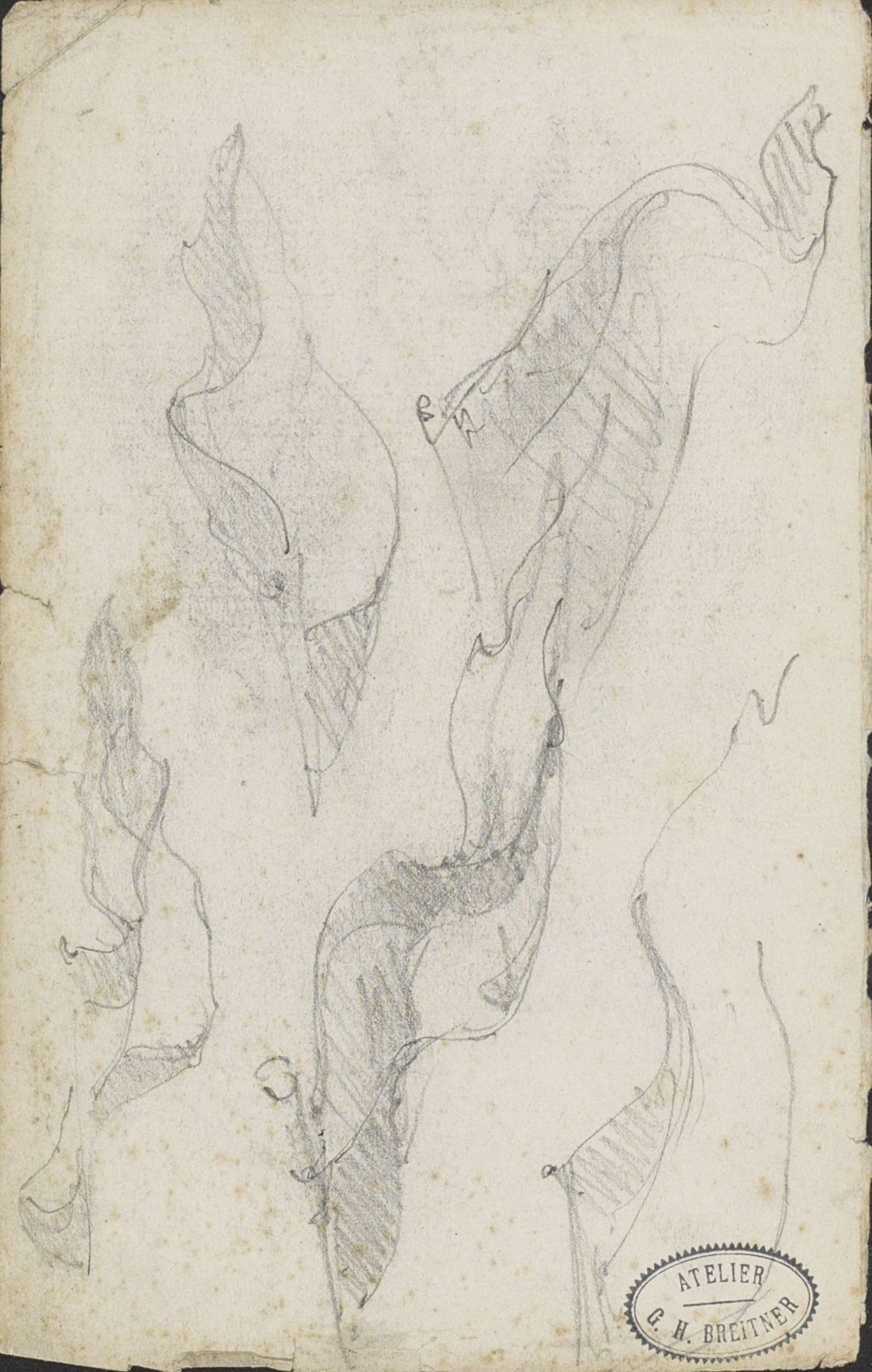
Editor: This is "Studieblad," a pencil drawing on paper by George Hendrik Breitner, dating roughly from 1886 to 1923. It's currently held at the Rijksmuseum. It feels like a very immediate sketch, almost like he’s capturing fleeting moments. What stands out to you? Curator: I’m drawn to the raw materiality of this "Studieblad". The paper itself, the type of pencil used, the visible pressure of the artist’s hand – these aren't just neutral supports. They are active agents in the creation of the work, reflecting Breitner's labor and artistic choices. Editor: Could you elaborate? Curator: Consider the availability of paper and pencils at that time. What social class would have access to these materials? How did the standardization of pencils, a product of industrialization, affect artistic production? These are important considerations. This wasn't some divinely inspired vision; it was work. How does seeing it as labor impact your perception of the artwork? Editor: I see your point. By looking at the materials, we’re not just admiring a sketch, but acknowledging the social and economic systems that allowed it to exist. Does the "atelier" stamp connect to these observations? Curator: Absolutely. That stamp is like a maker’s mark. It's not just branding; it hints at a larger workshop system, a specific context of artistic production. Understanding this challenges the romanticized notion of the solitary, inspired artist. What further details can you identify that speak to how Breitner was trained? Editor: It seems so simple on the surface, but analyzing the materials really opens up a richer understanding. I appreciate how that gives value to both "high" and "low" art through an acknowledgement of the artistic labor that goes into them. Curator: Precisely. And recognizing those systems allows us to question them, to see the connections between art, labor, and social power.

Artwork details
- Dimensions
- height 102 mm, width 161 mm
- Location
- Rijksmuseum
- Copyright
- Rijks Museum: Open Domain
Comments
Share your thoughts
About this artwork
Editor: This is "Studieblad," a pencil drawing on paper by George Hendrik Breitner, dating roughly from 1886 to 1923. It's currently held at the Rijksmuseum. It feels like a very immediate sketch, almost like he’s capturing fleeting moments. What stands out to you? Curator: I’m drawn to the raw materiality of this "Studieblad". The paper itself, the type of pencil used, the visible pressure of the artist’s hand – these aren't just neutral supports. They are active agents in the creation of the work, reflecting Breitner's labor and artistic choices. Editor: Could you elaborate? Curator: Consider the availability of paper and pencils at that time. What social class would have access to these materials? How did the standardization of pencils, a product of industrialization, affect artistic production? These are important considerations. This wasn't some divinely inspired vision; it was work. How does seeing it as labor impact your perception of the artwork? Editor: I see your point. By looking at the materials, we’re not just admiring a sketch, but acknowledging the social and economic systems that allowed it to exist. Does the "atelier" stamp connect to these observations? Curator: Absolutely. That stamp is like a maker’s mark. It's not just branding; it hints at a larger workshop system, a specific context of artistic production. Understanding this challenges the romanticized notion of the solitary, inspired artist. What further details can you identify that speak to how Breitner was trained? Editor: It seems so simple on the surface, but analyzing the materials really opens up a richer understanding. I appreciate how that gives value to both "high" and "low" art through an acknowledgement of the artistic labor that goes into them. Curator: Precisely. And recognizing those systems allows us to question them, to see the connections between art, labor, and social power.
Comments
Share your thoughts