c. 16th century
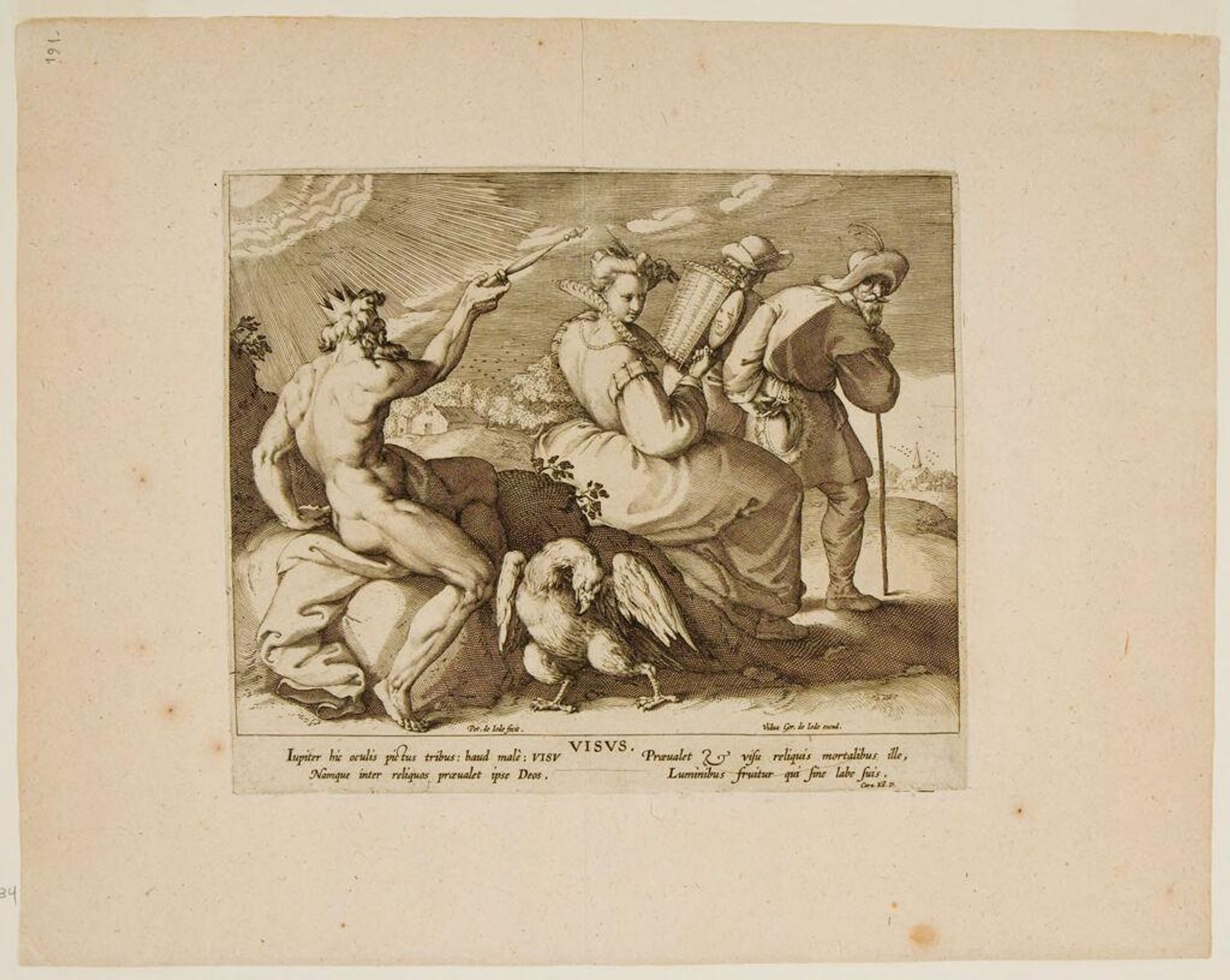
Sight

Listen to curator's interpretation
Curatorial notes
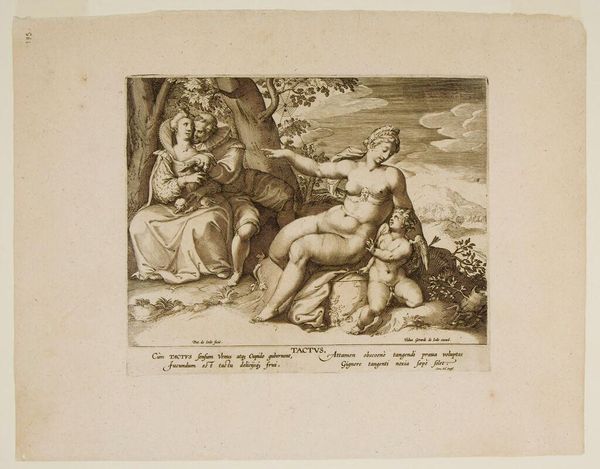
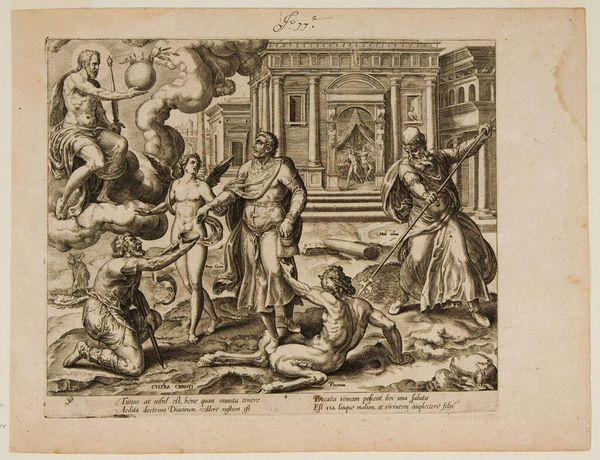
Curator: Pieter de Jode the Elder's engraving, "Sight," presents a fascinating allegorical scene. The plate measures roughly 19 by 22 centimeters and is part of the Harvard Art Museums' collection. Editor: It's strange. The figure on the left seems to be creating light to illuminate the path of those on the right, but the two figures look away. Curator: Indeed. It reflects a common Renaissance theme: the importance of sight, not just physically, but as a path to understanding and divine truth. The seated man could be Zeus, creating light for humanity. Editor: The seated figure's gaze is intense; the swan could symbolize light, grace, and purity. The other figures could be metaphors for sight, perhaps seeking enlightenment? Curator: Exactly! It's intriguing to see how the visual vocabulary of the era combines classical and Christian symbolism. Editor: It's a powerful reminder of the layers of meaning embedded in art, reflecting the human quest for light. Curator: Agreed, a reminder that art, like sight itself, requires interpretation.