1919
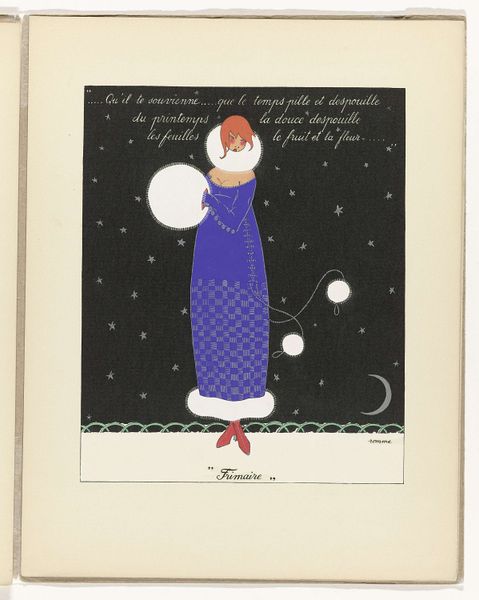
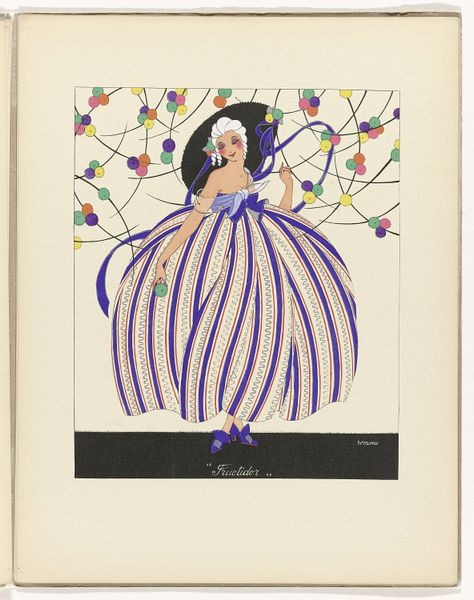
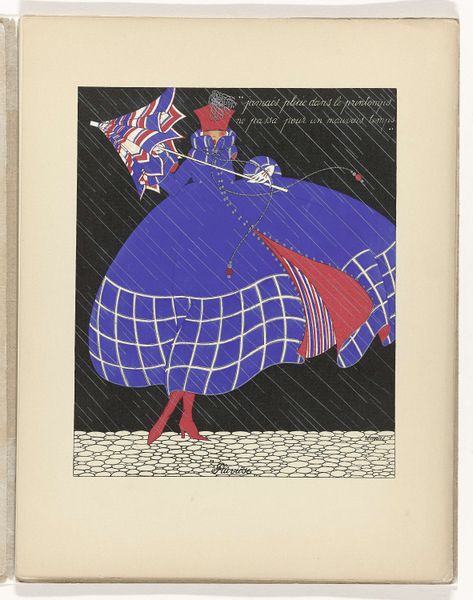
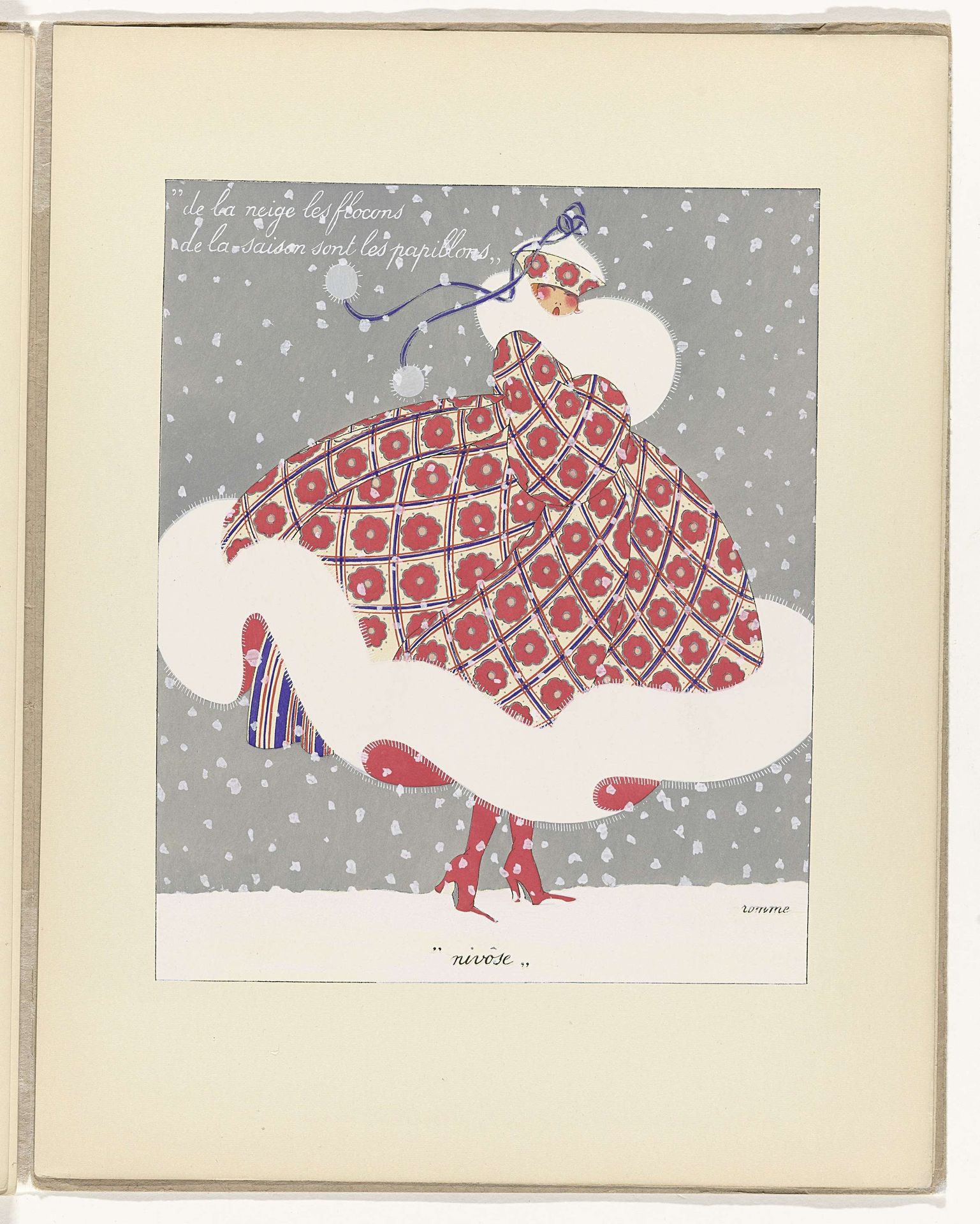
Les Douze Mois de l'Année: Nivose

Listen to curator's interpretation
Curatorial notes
Editor:"Les Douze Mois de l'Année: Nivôse" is a print by Marthe Romme from 1919, showcasing Art Nouveau influences. The image, dominated by a figure clad in winter garments, evokes a peculiar blend of warmth and whimsical isolation. What visual narratives and symbols can we uncover in this illustration? Curator:The title itself, "Nivôse," refers to a month in the French Republican calendar associated with winter and snow. This calendar was used during the French Revolution, a period of radical societal change. The image, then, carries the weight of a specific cultural memory. Editor: So the calendar itself is symbolic, yes? Curator:Precisely. Notice how the snowflakes are rendered, not as individual unique forms, but as repetitive, almost geometric patterns. Even the figure’s clothing is patterned. Does this repetition, in your eyes, reflect the order the Revolution was intended to bring, or perhaps critique its ambition? Editor: That's interesting... the idea of order, or forced order. The figure’s pose also suggests movement despite the snow, resisting stillness? Curator:Yes. This figure carries both tradition and hints at rebellion. The poem at the top further enriches this interplay. How do those words connect, for you, to this tension? "De la neige les flocons de la saison sont les papillons," so "snowflakes are the butterflies of the season..." Editor:I hadn't noticed that! It turns the cold, hard snow into something beautiful and transformative, and ties the image closer to Art Nouveau's celebration of nature, even within a rigid structure. I can see the depth of the image a little better now. Curator:Indeed. These layered symbols build toward an aesthetic representation of that period in French history, using memory to tie nature to cultural shift. The piece uses symbolism in very subtle ways.