1796 - 1797
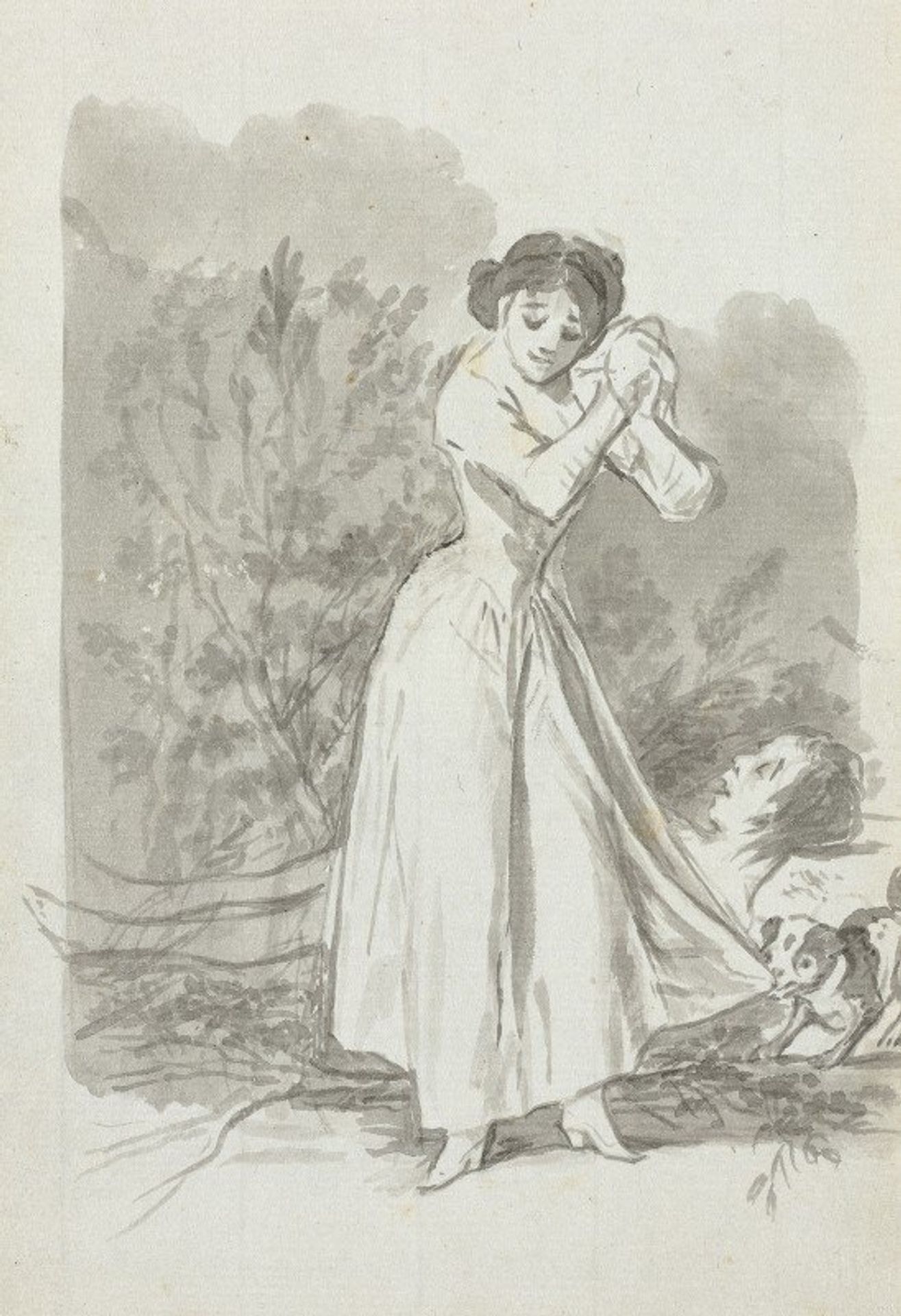
Young Woman Wringing Her Hands over a Man’s Naked Body

Listen to curator's interpretation
Curatorial notes
Editor: Here we have Goya’s pencil drawing, “Young Woman Wringing Her Hands over a Man’s Naked Body,” created between 1796 and 1797. It feels so dramatic, almost theatrical in its starkness. What can you tell me about it? Curator: For me, this piece screams process. Think about Goya, wrestling with the limitations and possibilities of pencil on paper. He's not just depicting a scene, but engaging in a material dialogue. Look at the wringing hands, not just expressing grief, but almost kneading the paper itself. It brings up the social context - what was the availability of paper, of pencils during this time? This wasn’t mass-produced art; each stroke has deliberate weight because of its scarcity. Editor: That’s fascinating. So the emphasis on materiality elevates what might seem like a simple drawing to a commentary on… resourcefulness, maybe? Curator: Exactly! It challenges the conventional hierarchy of art. Often, drawings like this are seen as preparatory, a step towards a ‘finished’ painting. But, within the scarcity and labour implied by the materials, it carries an importance which goes beyond sketch, but acts as the finalized outcome itself. Editor: So, seeing it as a product of labor rather than just an emotional scene shifts my entire perspective. Even the lack of color feels significant now, a deliberate choice rooted in material reality. Curator: Precisely. How the artistic creation process engages in the contemporary context is something crucial, I think, to consider. It allows the social implications of pencil production and availability to come into view. Editor: I will definitely be thinking more about material and its role in meaning-making when I look at art from now on. Thank you! Curator: Likewise; I appreciate having the chance to reflect upon what elements like production and materials brings into an artistic reading!