1846 - 1867
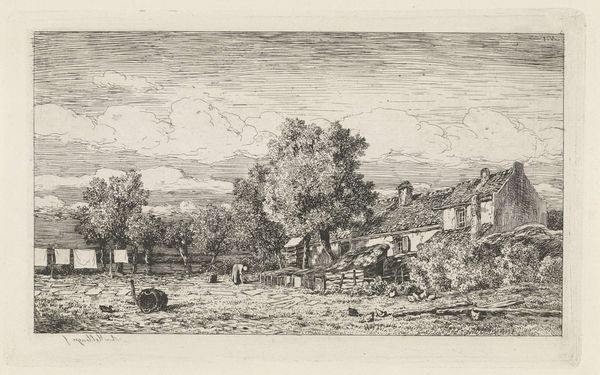
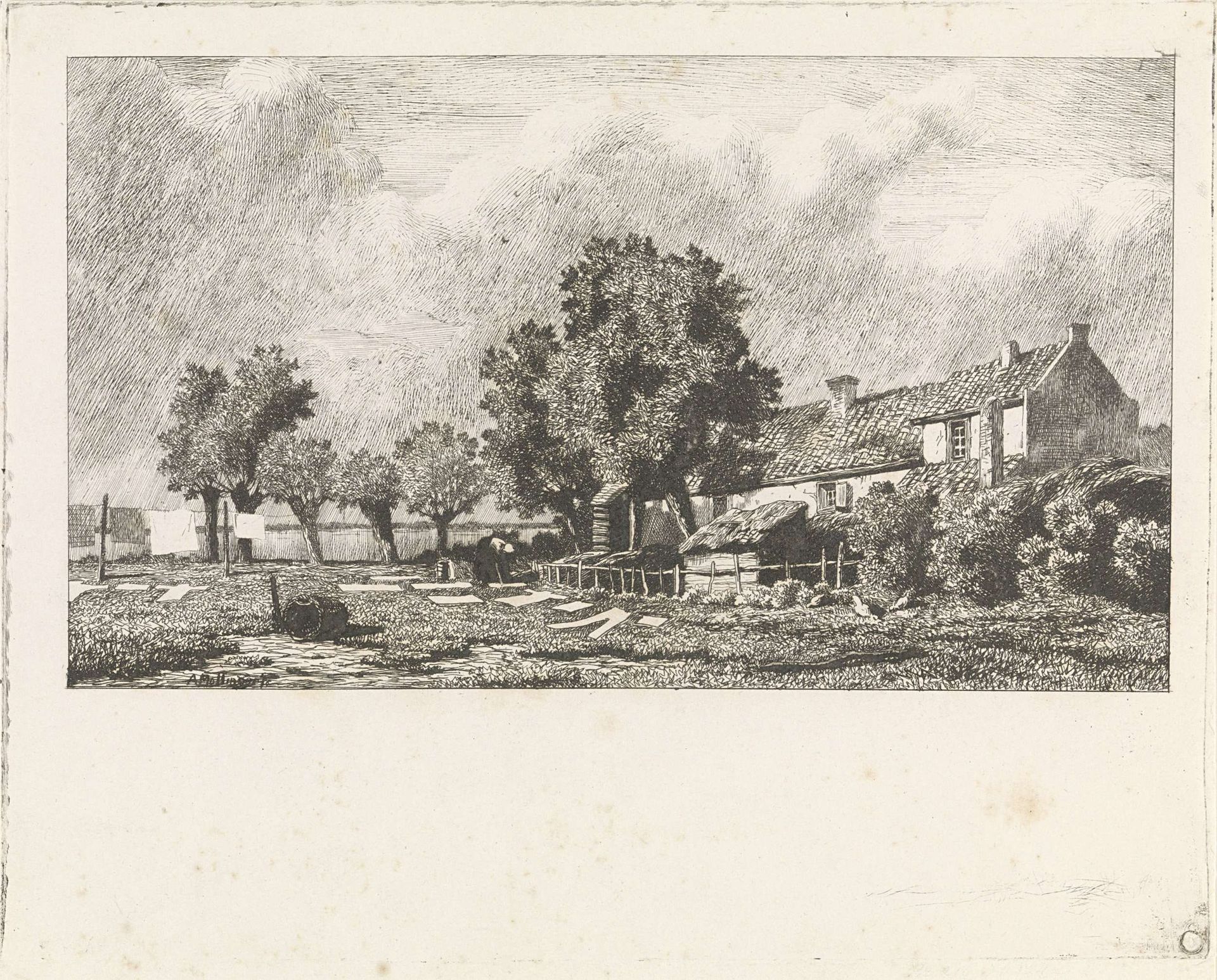
Bleekveld

Alexander Mollinger
1836 - 1867Location
RijksmuseumListen to curator's interpretation
Curatorial notes
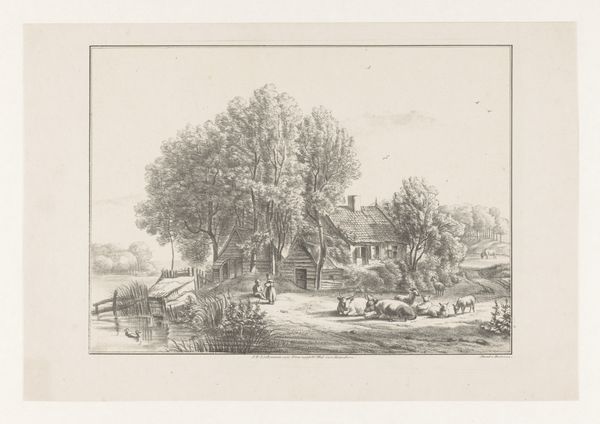
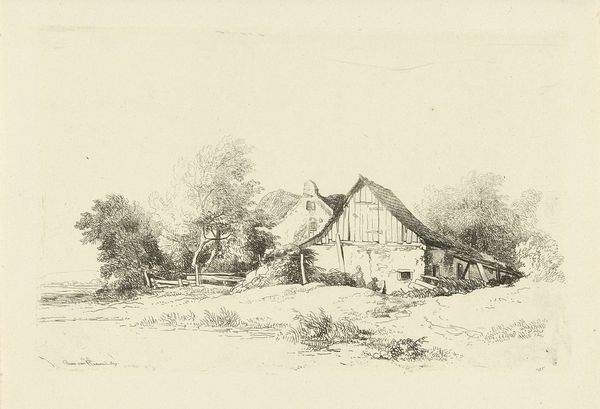
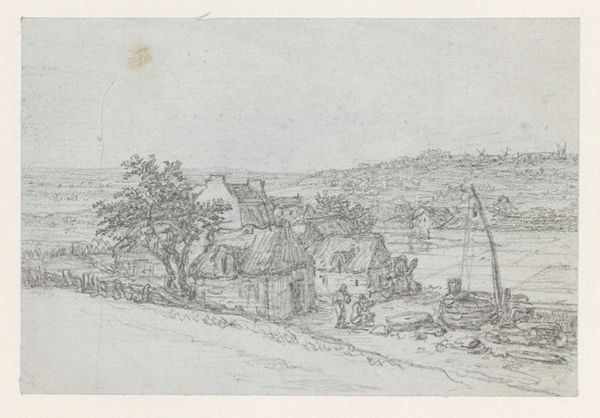
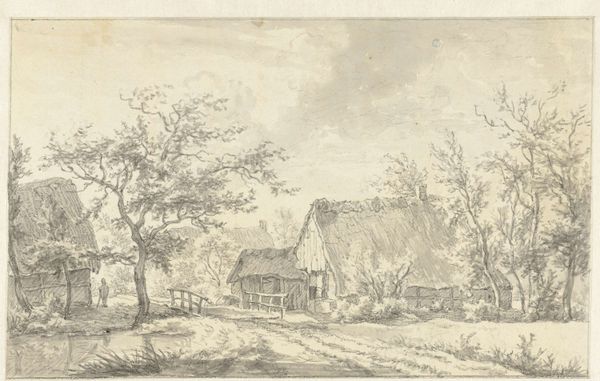
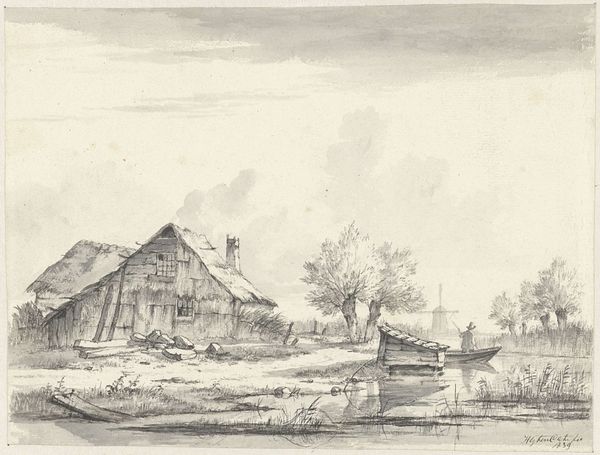
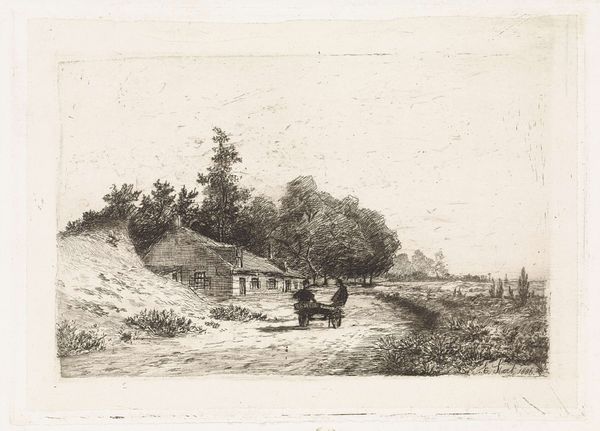
Alexander Mollinger created this etching, titled 'Bleekveld,' in the mid-19th century, using a copper plate and etching needle. The image depicts a bleaching field, a common sight in the Netherlands at the time. The etching process involves coating a metal plate with wax, then drawing through the wax to expose the metal. The plate is then immersed in acid, which bites into the exposed lines, creating grooves. Ink is applied to the plate, filling the grooves, and then the surface is wiped clean. Finally, the plate is pressed onto paper, transferring the ink and creating the print. The fine lines and subtle tonal variations achieved through etching lend themselves well to depicting the textures of the landscape and the details of the buildings and figures. The scene, seemingly bucolic, hints at the labor-intensive process of bleaching textiles, a vital industry in the Dutch economy. Mollinger's choice of etching as a medium reflects a broader interest in capturing everyday life. It challenges the traditional hierarchy between fine art and craft, inviting us to consider the social and economic context in which art is produced and consumed.