1766 - 1813
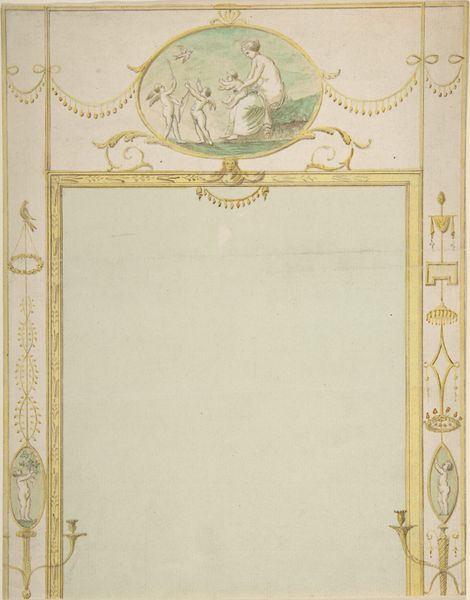
Design for a Mirror


Listen to curator's interpretation
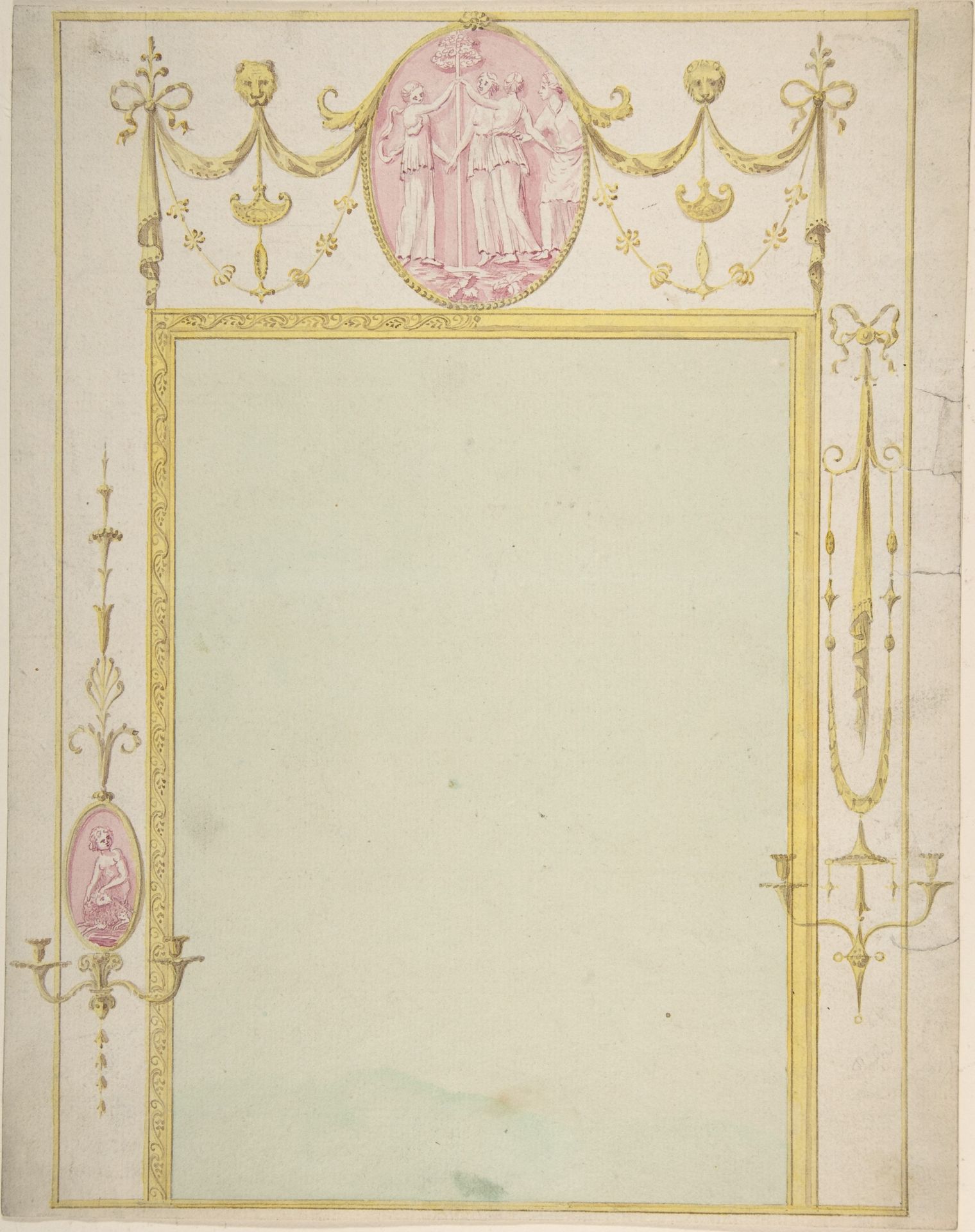
Curatorial notes
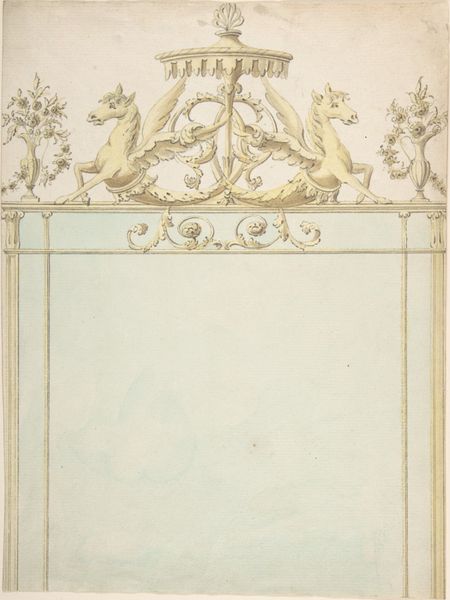
Editor: Here we have James Wyatt’s "Design for a Mirror," dating from sometime between 1766 and 1813. It's watercolor and pencil on paper and the work really gives me this restrained elegance with a touch of playfulness because of its ornate Neoclassical decoration around what I presume is supposed to be a mirror's surface. What captures your attention when you look at this, what details or stories do you imagine? Curator: Oh, isn't it just divine? It's a whisper of opulence from a bygone era. When I gaze at this, I don’t just see a mirror design; I see a portal to the late 18th century. The precise watercolor strokes and delicate embellishments remind me of leisurely afternoons, powdered wigs, and whispered secrets behind lace fans. I am completely enamored with that upper scene – doesn't it make you want to be there, amidst whatever stately pleasure they enjoy? Do you think Wyatt designed this for a specific location, a particular grand salon maybe? Editor: Perhaps! I was wondering about that, it feels almost too personalized for a mass production piece, given the classical figures. Though those might just be fashionable figures meant to evoke an aristocratic owner's classical education. Curator: Absolutely, you're spot-on! It probably was intended for a select audience who appreciated references to classical art and wanted to subtly signal that refinement. Though the lions seem like a delightful little subversion, almost as though they’re saying “don't take yourselves *too* seriously”. How fantastic! I adore art that doesn't completely take itself seriously. What do you think they mirror (if you’ll forgive the pun!) about the times? Editor: That the elite want to indulge, and Wyatt, even as he creates designs for this mirror, allows the elite to wink at themselves through the details like those lions. I can appreciate how art provides ways for different interpretations. Curator: Indeed, the winks and whispers, the overt grandeur…It all comes together, reflecting its moment and the ages that follow it.