drawing, pencil
#
portrait
#
drawing
#
pencil sketch
#
figuration
#
11_renaissance
#
pencil
#
christianity
#
italian-renaissance
#
christ
Dimensions: 366 x 286 cm
Copyright: Public domain
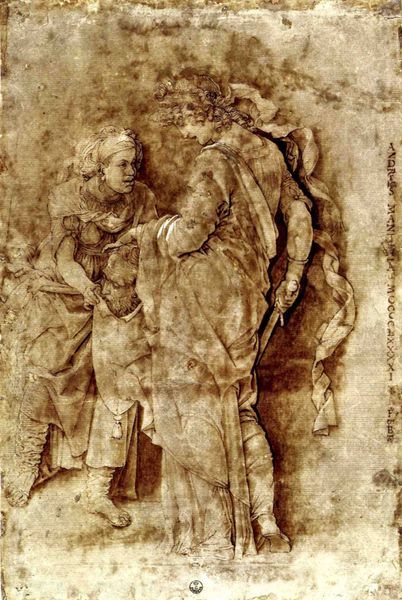
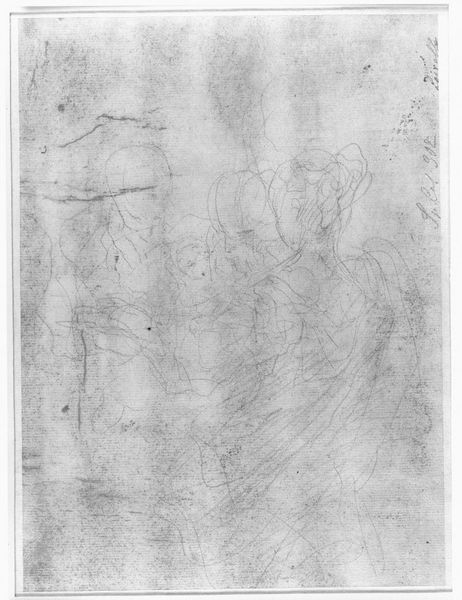
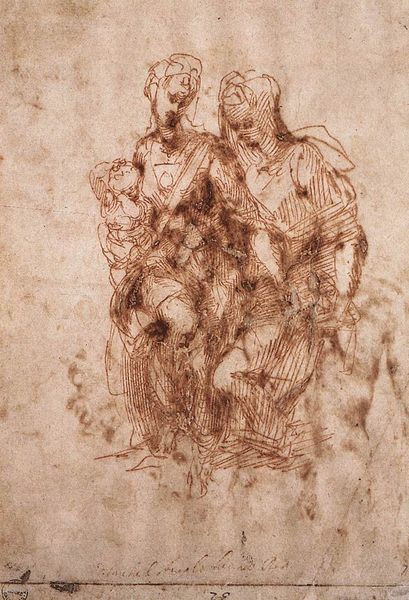
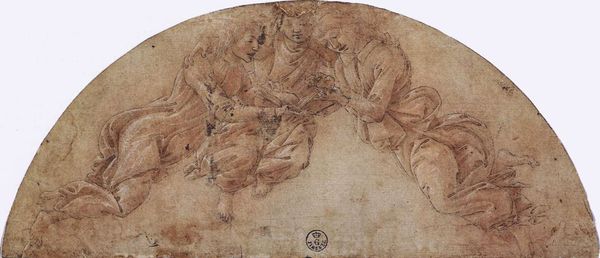
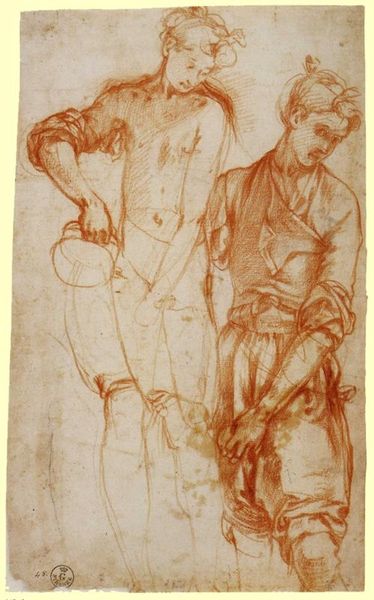
Editor: This delicate pencil drawing from 1515 is "Mary with the Child and Young St. John" by Matthias Grünewald. It’s beautiful, but something about the almost hidden nature of the lines feels melancholic. How do you interpret this work? Curator: I see an intimate meditation on family and destiny, heavy with symbolism. The Virgin, Christ Child, and young John the Baptist are iconic figures, but consider the artist's choice to render them in such a tender, almost fleeting manner. The soft lines and muted tones evoke a dreamlike state, hinting at the fragility of life and perhaps the impending sacrifice associated with Christ. Notice how the gazes don’t quite meet—does that separation convey a sense of isolation despite their closeness? Editor: Yes, the gaze feels crucial. Is it common to find John the Baptist depicted with Jesus as children? Curator: It’s a common visual representation emphasizing their intertwined fates. John's later role is prophesied but is innocent at this stage, linking anticipation with nostalgia. Their youth contrasts with the gravitas of their religious roles, creating a powerful visual tension. Think of the iconographic weight of these figures and how the drawing style alters our perception. Editor: So the medium itself carries a significant part of the meaning, playing against expectations. Curator: Exactly. A highly finished painting might convey authority; here, the sketch suggests vulnerability. It invites a more personal reflection on faith and the human condition. What’s most compelling is that we engage in Grünewald’s meditation rather than consume a statement. Editor: That makes sense. I hadn't considered the emotional impact of the pencil medium. This gives me a whole new perspective on Grünewald. Curator: Indeed. Every element is a conscious decision carrying layers of meaning that adds to our experience of the piece.
Comments
No comments
Be the first to comment and join the conversation on the ultimate creative platform.
 Collect
 React
React Comment
More like this