Copyright: Gerard Fromanger,Fair Use
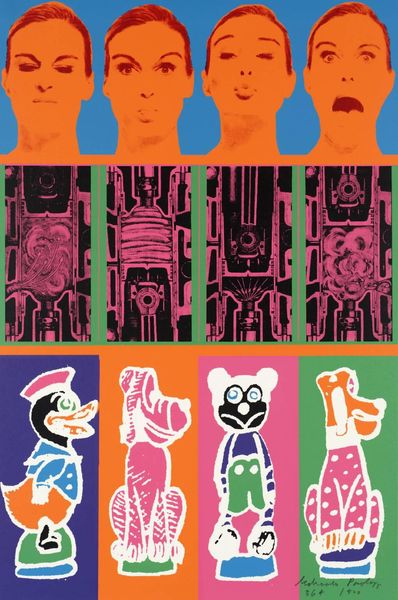
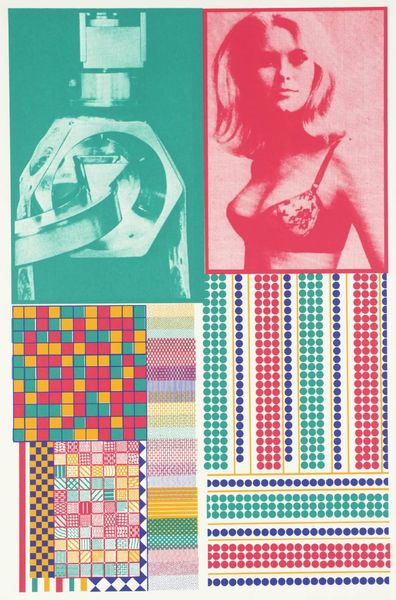
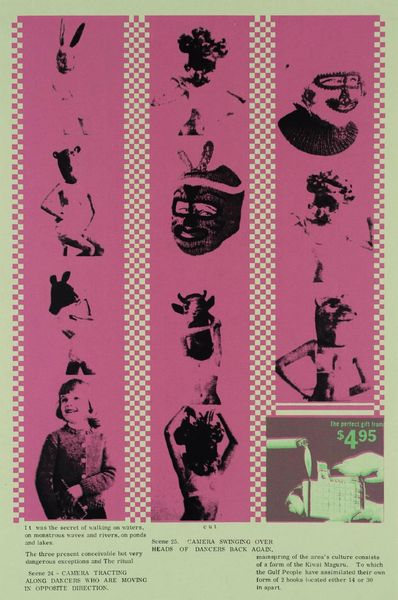
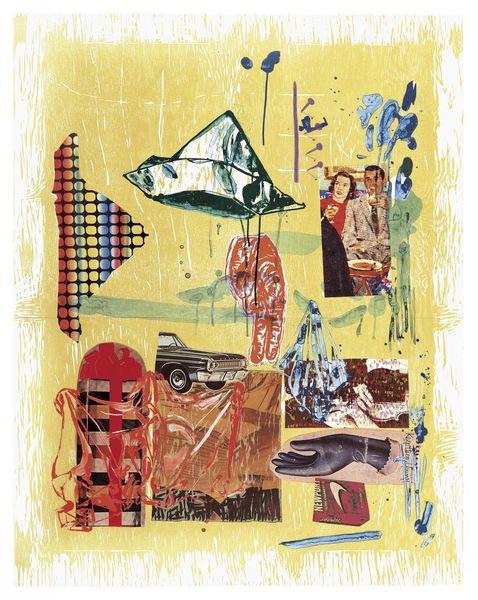
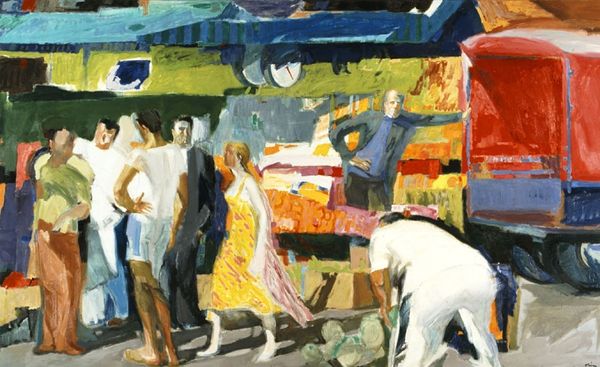
Curator: Gerard Fromanger's “Le Kiosque,” created in 1973, presents a captivating snapshot of urban life through the lens of Pop Art. The medium is listed as a print, employing photography to capture a moment in the city. Editor: It's strangely cheerful for what I assume is a bustling urban street scene. The colors are almost cartoonish, but something about the faceless figures also feels…unsettling. Curator: Exactly. Fromanger often used bold, simplified forms to address societal themes. Here, the newspaper kiosk anchors the scene, brimming with information and visual noise. Consider how the choice of pink flattens space and de-emphasizes depth, transforming a mundane cityscape into an emblem of contemporary media culture. Editor: The flattened perspective combined with the patterns blanketing the figures seems to drain individuality, portraying pedestrians more like consumerist drones than real people interacting within a public sphere. It almost feels like he’s questioning the role media plays in shaping, or perhaps overwhelming, personal identity. Curator: That's an insightful point. The faceless silhouettes in the saturated colors become types, stripped of individual narratives, each embodying the anonymity endemic in modern urban environments. Fromanger used the Pop Art style and its graphic sensibility as a visual commentary on consumerism and its effect on society. Editor: Looking closer, I find the contrast almost satirical. The kiosk overflows with headlines promising knowledge, even enlightenment. Meanwhile, the public is reduced to colorful shells walking through it. In some sense, maybe he hints that the overwhelming volume of information hinders our perception of social reality, leaving us empty despite appearances. Curator: That’s where the power of politically charged art lies—its ability to provoke precisely such reflections on our collective social existence. Fromanger captured not only the vibrant surface of a particular time, but also planted some probing questions beneath the facade. Editor: A successful blend of commentary and medium makes you see the street scene as both documentary and constructed narrative. There is almost an element of surrealism that challenges the viewers to think about the connection between public spaces and the inhabitants occupying them.
Comments
No comments
Be the first to comment and join the conversation on the ultimate creative platform.
 Collect
 React
React Comment
More like this