drawing, pencil
#
portrait
#
drawing
#
landscape
#
pencil
#
realism
Copyright: Public Domain: Artvee
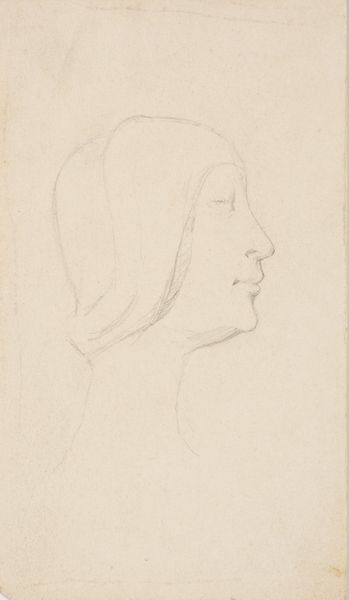
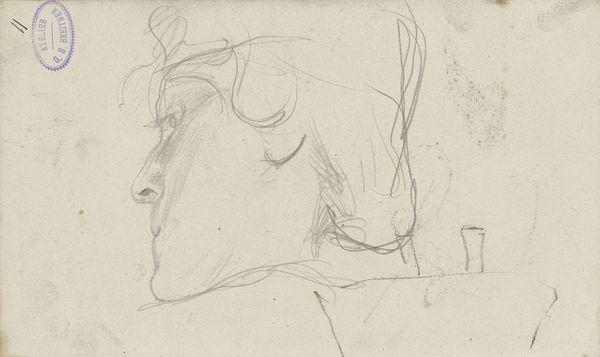
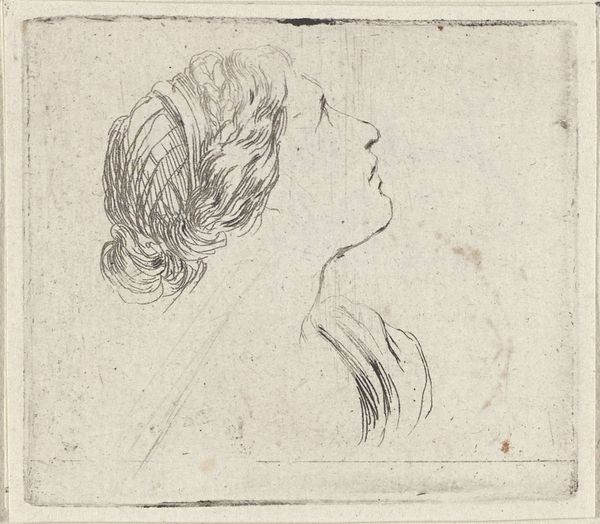
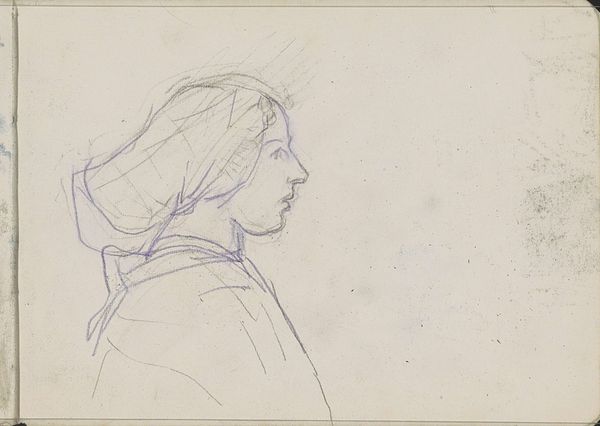
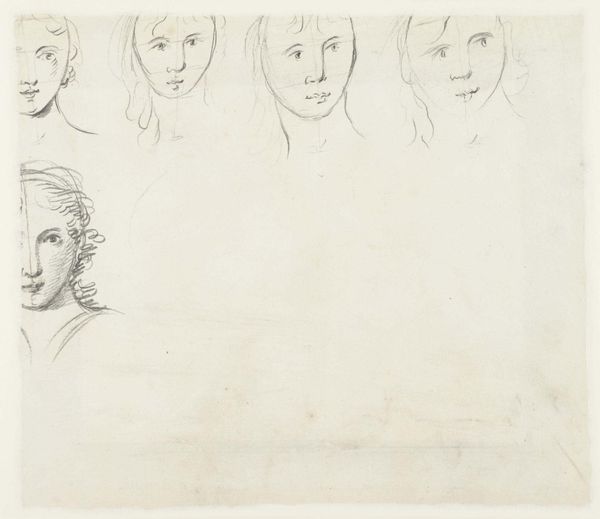
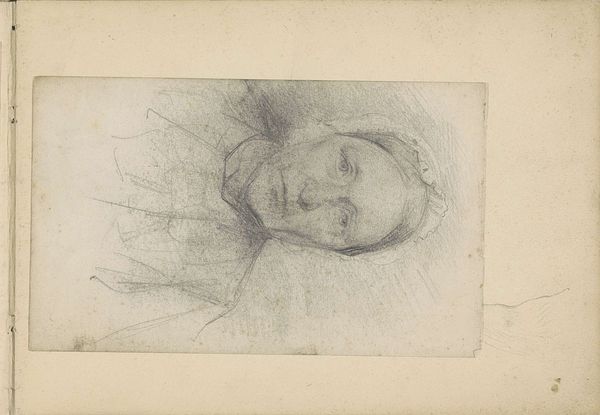
Curator: Immediately striking, isn't it? A dual composition, spare, and full of light. Editor: Indeed. Let’s look at "Profil de femme à droite et schéma de paysage," a pencil drawing by Narcisse-Virgilio Diaz. It pairs a delicate profile with what seems to be the barest suggestion of a landscape. It gives the impression of quick study or note. What stands out to you? Curator: The contrast is so direct – on the left, the face, a stark representation, almost mournful; on the right, an echo of nature, indistinct and floating. The pairing forces a consideration of the artist's state of mind and perhaps larger dialogues concerning the role of women, social identity and their placement within often romanticized visions of nature. Editor: Interesting reading. I am struck more directly by Diaz's hand and the means through which they explored and consumed material. The pencil strokes forming the face, tight and controlled, and in the landscape loose, scattered. We see Diaz directly exploring form and place with a specific material that enabled portable practices in open air settings. Curator: Absolutely, materiality matters. It suggests freedom and spontaneity, sure. But look closer. Are both explorations entirely free, or do social constraints impose themselves subtly? For example, this woman is turned to the right which creates tension; perhaps reflecting social expectation to stay back or quiet. And does this constraint directly impact what materials the artist can engage with and how? Editor: That is quite an interpretative turn! Still, the use of pencil allows a directness and efficiency and we could reasonably surmise that it enabled them to practice art outside of their established painting practice in this moment, no? This reminds me, this pencil is such an ordinary item and is not frequently discussed within art. And its relative worth impacts the worth we, the spectators, now bestow upon this drawing? Curator: Perhaps. Ultimately, both forms—portrait and landscape—serve as cultural mirrors reflecting social inequalities within both representation and the tools that create them, whether consciously or unconsciously on the artist's part. The piece serves as an investigation into a relationship between people and place. Editor: Well, for me, Diaz presents us with material possibilities and shows that the simple union of material and the land produce equally resonant images, together on the page. Curator: Thank you for emphasizing Diaz's practice of making. It makes the experience for both art appreciators and makers accessible and profound.
Comments
No comments
Be the first to comment and join the conversation on the ultimate creative platform.
 Collect
 React
React Comment
More like this