About this artwork
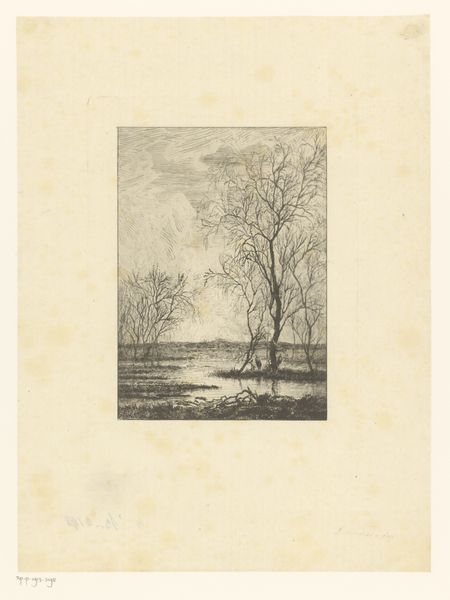
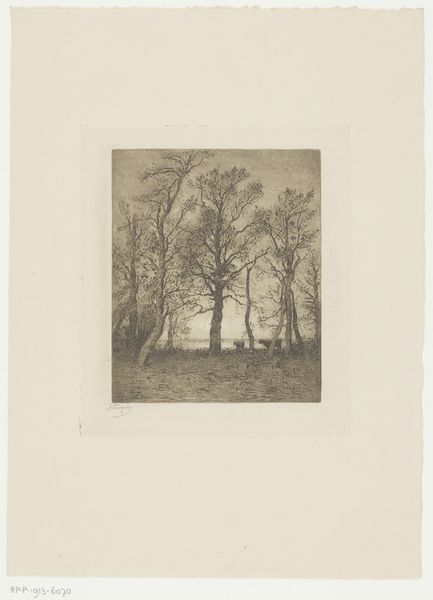
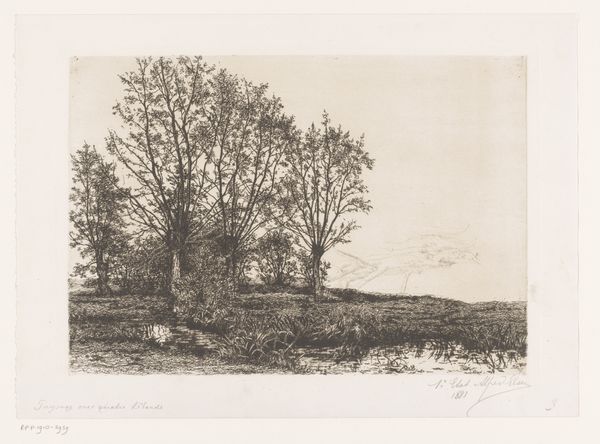
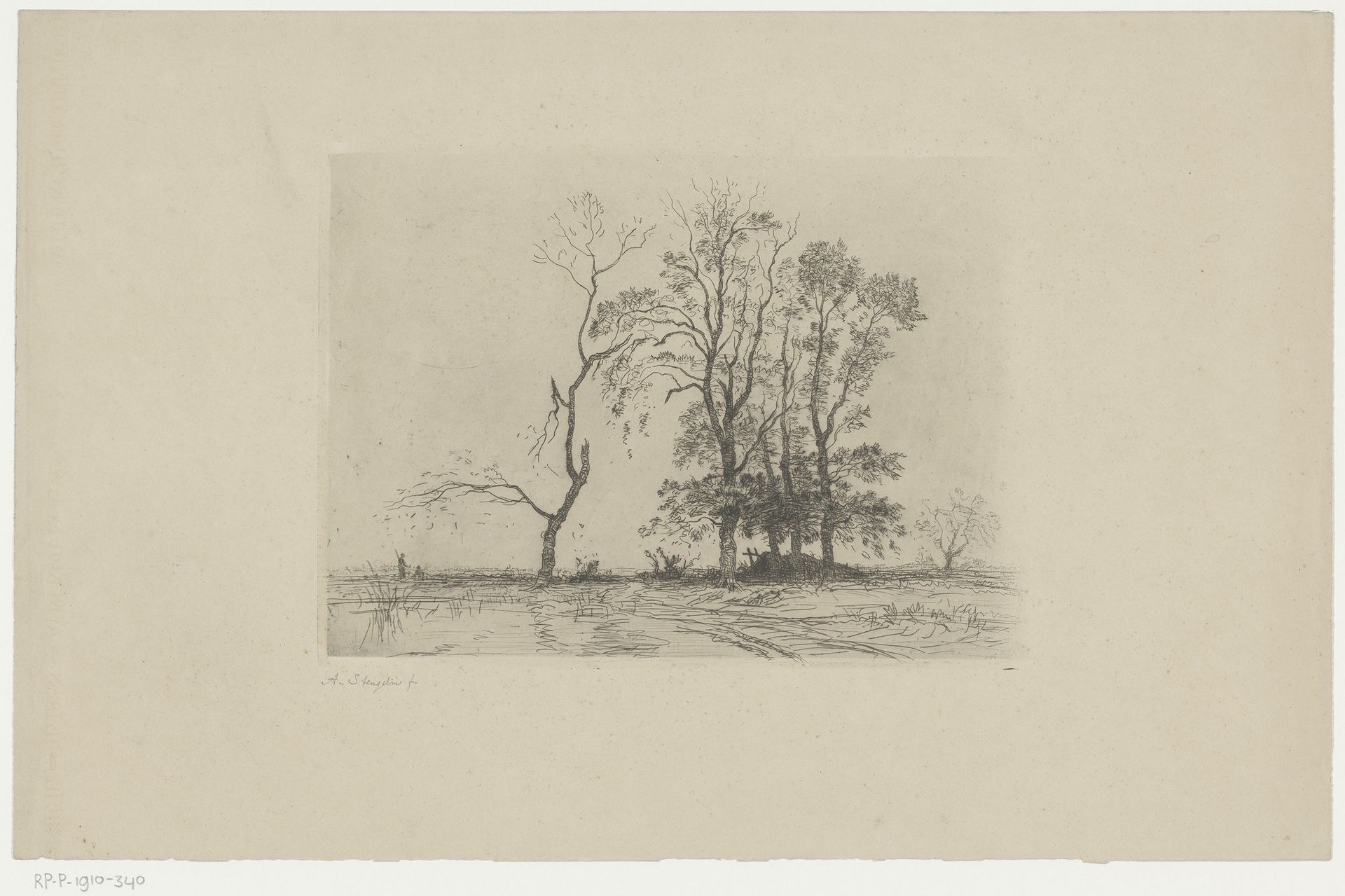
Alphonse Stengelin made this etching called 'Vijf bomen aan een plas' or 'Five trees at a pool.' Stengelin lived through a period of immense social change, including the Franco-Prussian War and the rise of industrialization. Here, Stengelin presents us with a landscape reminiscent of the Barbizon school, yet he renders it with a stark realism that diverges from romanticized depictions of nature. This choice reflects a broader shift in artistic and social consciousness towards representing the world as it is experienced. There is an overwhelming sense of isolation. Barely perceptible figures at the horizon of the scene add to that feeling. The quietness of the scenery is a reminder of the need for solitude and contemplation. The artwork seems to ask us what our relationship is to the environment. How can we appreciate its beauty while acknowledging the changes it faces? Stengelin invites us to consider how our understanding of nature and identity are intertwined, and how art can provide a space for reflection on these complex relationships.

Artwork details
- Medium
- etching
- Dimensions
- height 195 mm, width 270 mm
- Copyright
- Rijks Museum: Open Domain
Tags
Comments
Share your thoughts
About this artwork
Alphonse Stengelin made this etching called 'Vijf bomen aan een plas' or 'Five trees at a pool.' Stengelin lived through a period of immense social change, including the Franco-Prussian War and the rise of industrialization. Here, Stengelin presents us with a landscape reminiscent of the Barbizon school, yet he renders it with a stark realism that diverges from romanticized depictions of nature. This choice reflects a broader shift in artistic and social consciousness towards representing the world as it is experienced. There is an overwhelming sense of isolation. Barely perceptible figures at the horizon of the scene add to that feeling. The quietness of the scenery is a reminder of the need for solitude and contemplation. The artwork seems to ask us what our relationship is to the environment. How can we appreciate its beauty while acknowledging the changes it faces? Stengelin invites us to consider how our understanding of nature and identity are intertwined, and how art can provide a space for reflection on these complex relationships.
Comments
Share your thoughts