conceptual-art
minimalism
postmodernism
geometric
abstraction
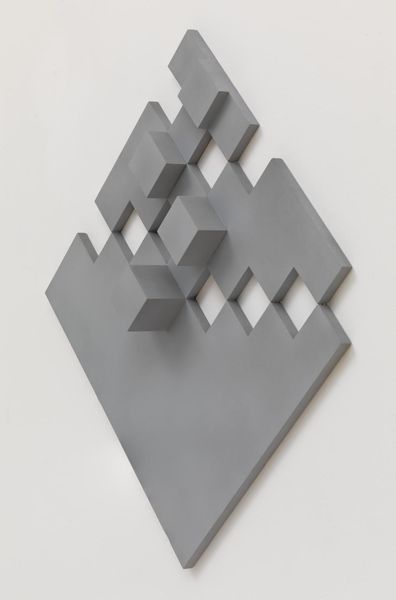
Copyright: Grazia Varisco,Fair Use
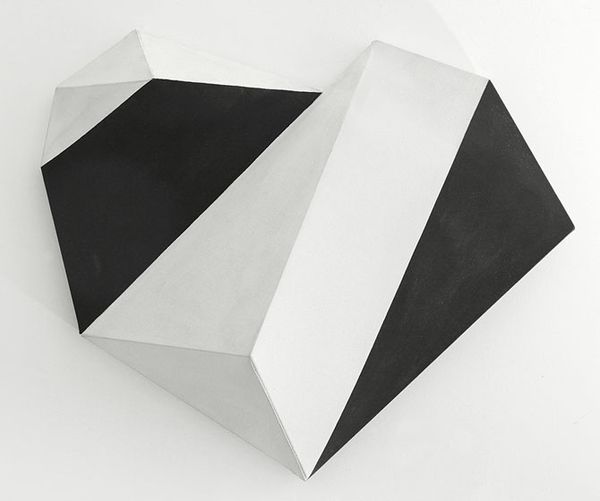
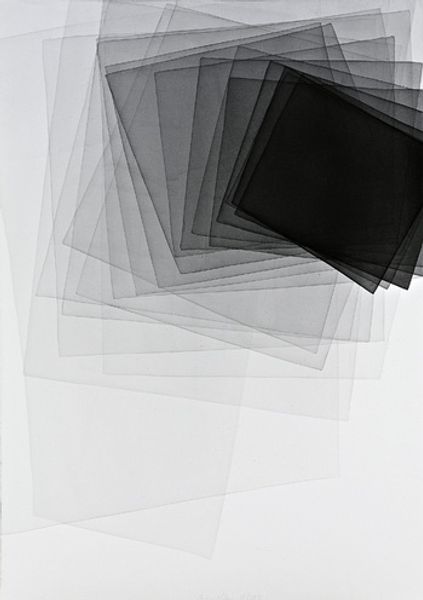
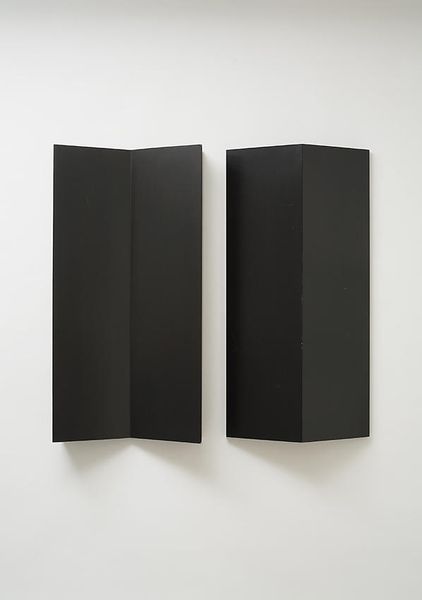
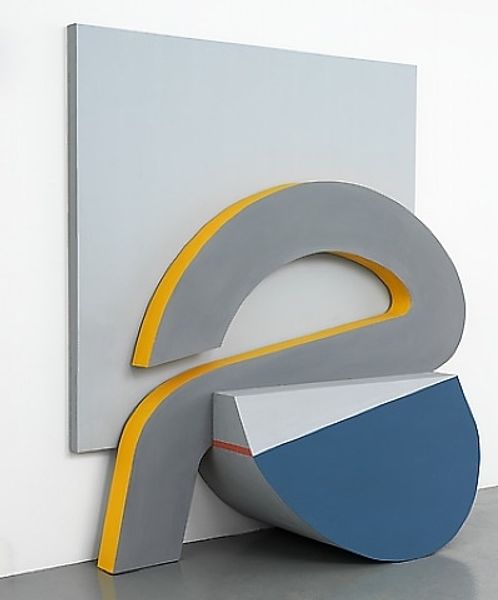
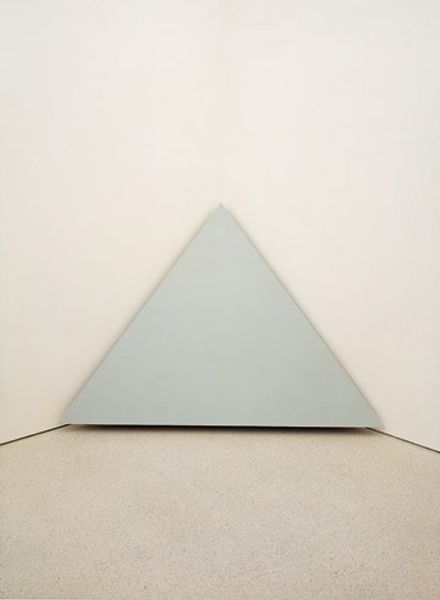
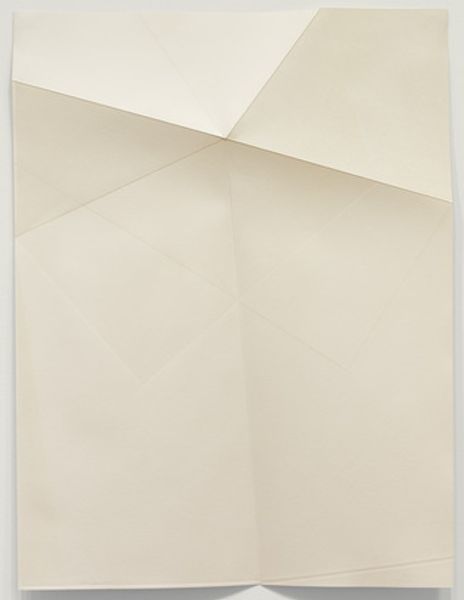
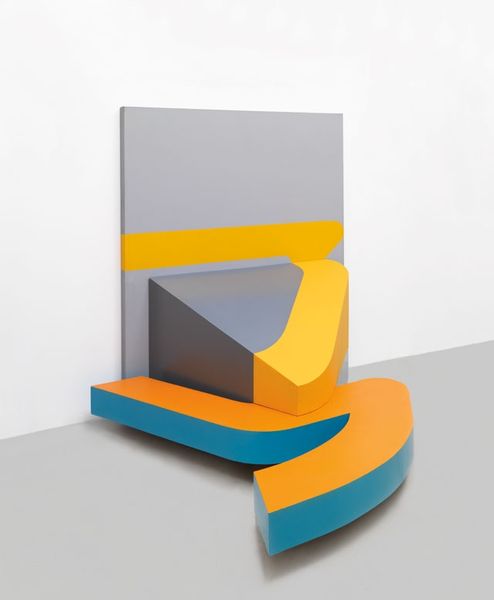
Editor: Here we have Grazia Varisco's "Extrapagina BN" from 1983. At first glance, I'm struck by its deceptive simplicity – a monochrome square, seemingly folded to reveal a contrasting plane. What can you tell me about its composition and impact? Curator: The immediate appeal lies in its structural clarity. Notice the stark dichotomy of tones: the interplay of the matte grey surface against the revealed black interior. This juxtaposition creates an optical tension. We are forced to confront the object as both a flat plane and a three-dimensional form. How does that dichotomy affect your perception of the artwork? Editor: It’s disorienting! My eye wants to flatten the image, to see it as a purely two-dimensional painting, but then the shadow and the fold pull me back into considering its sculptural qualities. Curator: Precisely. The artist manipulates our understanding of surface and depth. Observe the crisp lines, the precise angles. There is an almost mathematical elegance in its construction. This work encourages a deconstruction of form. Varisco compels us to examine the fundamental elements of shape, shadow, and space. Editor: So it’s not necessarily about what the fold reveals, but the act of revealing itself? The geometry and stark color contrast become the focus? Curator: Indeed. Consider the work not as a representation of something, but as a presentation of form itself. It explores the potential of minimal means to create perceptual complexity. Does your understanding of abstraction shift after considering these elements? Editor: Definitely! I was initially searching for a hidden meaning, but focusing on the composition itself reveals a new layer of intrigue. I was missing so much by focusing on "meaning" before understanding "making." Curator: Exactly. This piece epitomizes the rewards of close formal examination. We moved from representational thinking to concrete compositional understanding.
Comments
No comments
Be the first to comment and join the conversation on the ultimate creative platform.
 React
React Comment