Copyright: Modern Artists: Artvee
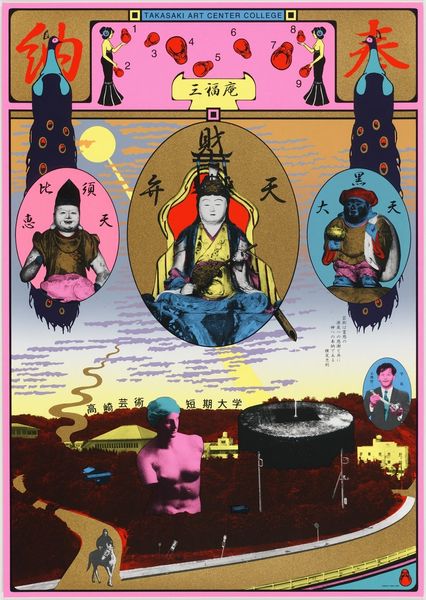
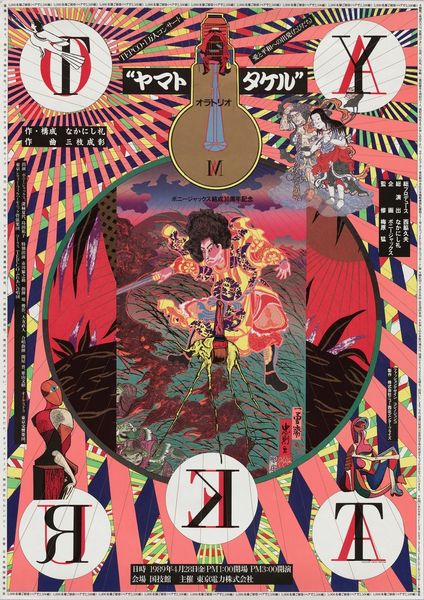
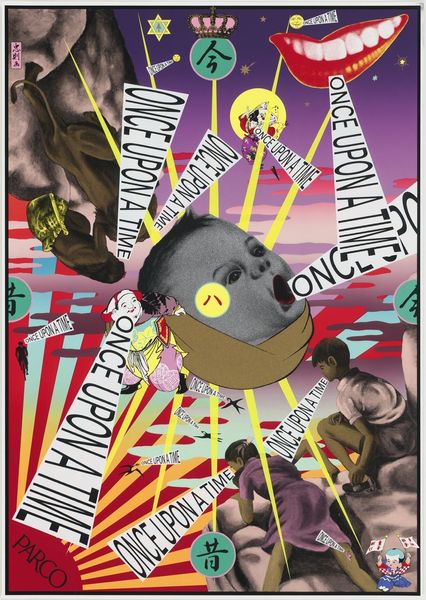
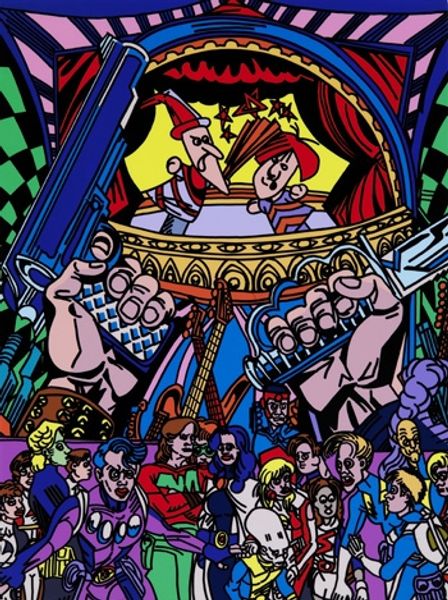
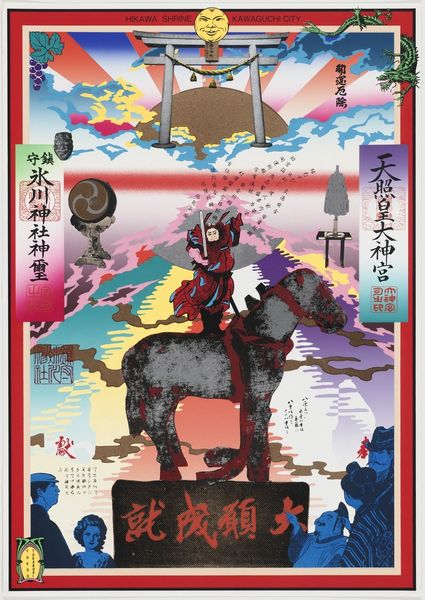
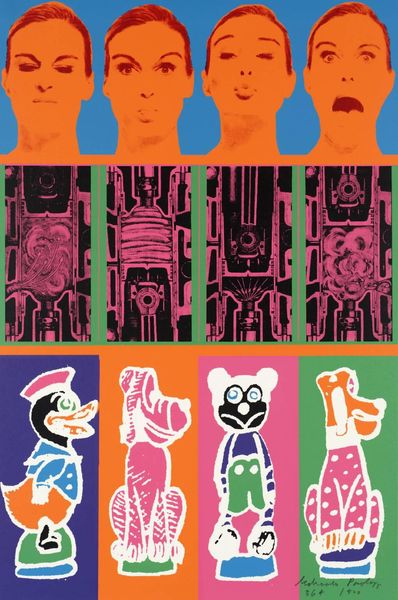
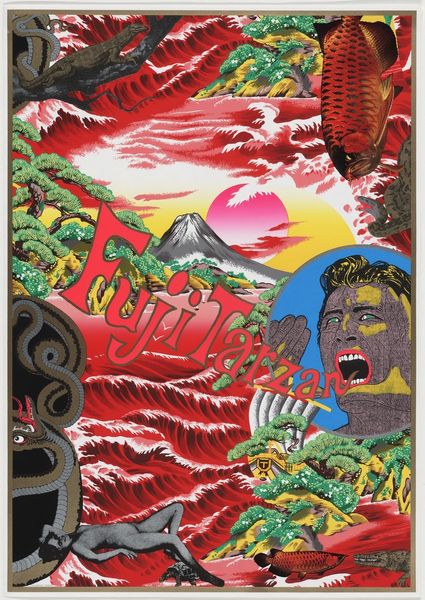
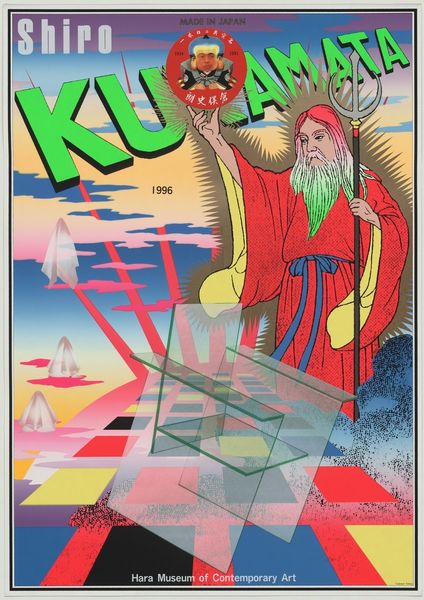
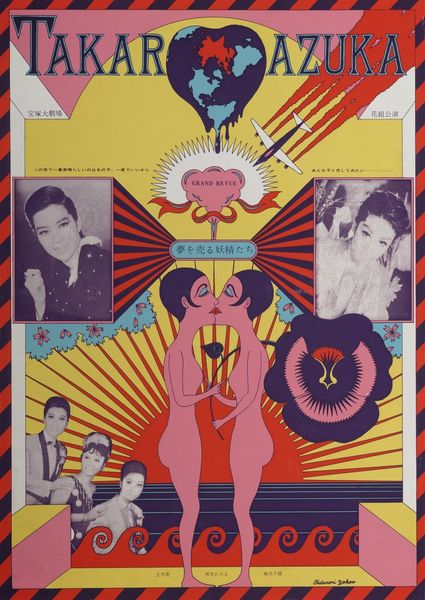
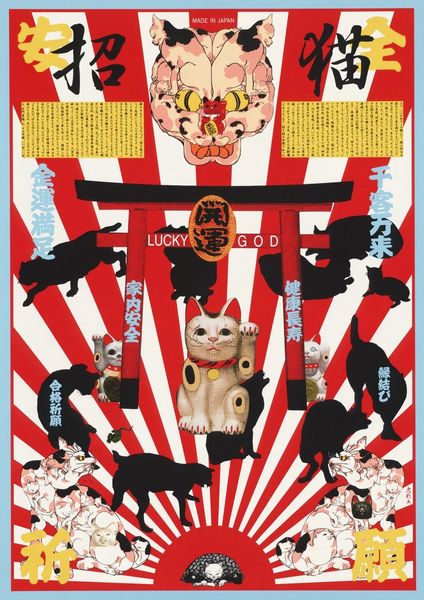
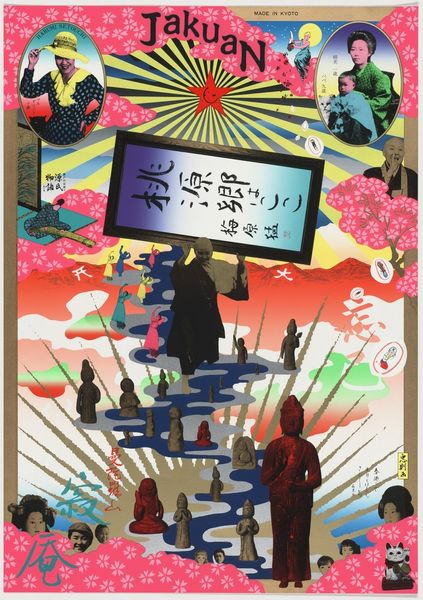
Curator: What a trip! Visually overloaded but incredibly compelling. This poster-like work strikes me immediately with its bold colors and almost aggressive layering of imagery. Editor: That's an apt description. The work, titled "Okera Kai," was created by Tadanori Yokoo in 1997, employing a fascinating blend of mixed media and graphic art techniques. It feels incredibly contemporary despite its almost collage-like construction. What stands out to you, materially speaking? Curator: Definitely the surface quality. It looks like a screenprint layered with, what, stenciled areas? The crispness of the hard edges juxtaposed with areas where the ink seems almost watered down is pretty remarkable, and look, he uses a border made from mahjong tiles. Editor: Yokoo's process often reflects the cultural and political milieu in Japan, a society grappling with rapid modernization and traditional values. The use of popular imagery and figures from both Western and Japanese culture creates a fascinating dialogue—a space to examine notions of national identity and the artist’s subjective experiences. The layering echoes, for me, the overload of images we encounter daily in a media-saturated world, wouldn’t you agree? Curator: Absolutely, and the repetitive faces—some seemingly photocopied—really drives home the sense of mass production and reproducibility, the core tenants of pop art with maybe a touch of commentary about personality. It’s interesting how he both embraces and seems to critique these commercial art processes. Editor: There’s a provocative critique, for sure. Also, notice how Yokoo positions gender? There's the one isolated woman lounging rather casually at the right. Overall, the way these figures are arranged disrupts expectations and prompts viewers to consider prevailing gender norms. He often seems to push against conformity. Curator: So much packed in here – a constant tension between handmade and mass-produced, Eastern and Western motifs. Makes you really consider the role of the artist in a culture constantly bombarded by imagery. Editor: Precisely. It challenges us to reflect on representation, the gaze, and our relationship to history. Food for thought indeed!
Comments
No comments
Be the first to comment and join the conversation on the ultimate creative platform.
 React
React Comment