About this artwork
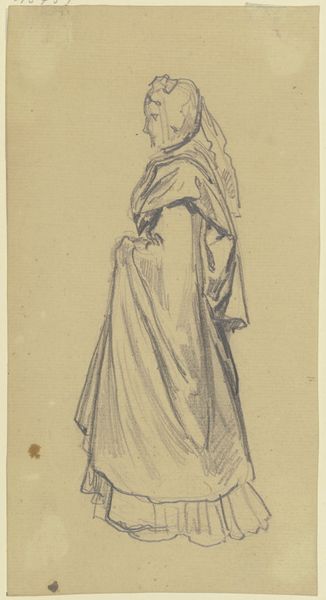
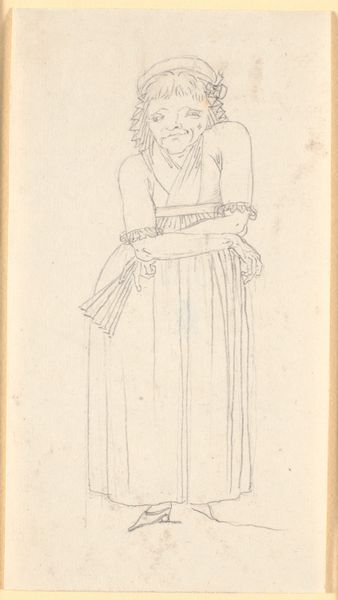
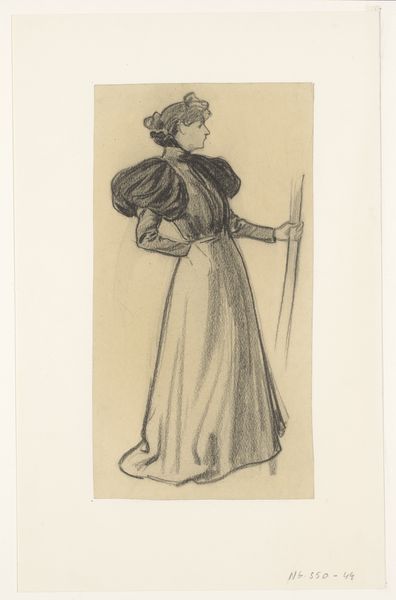
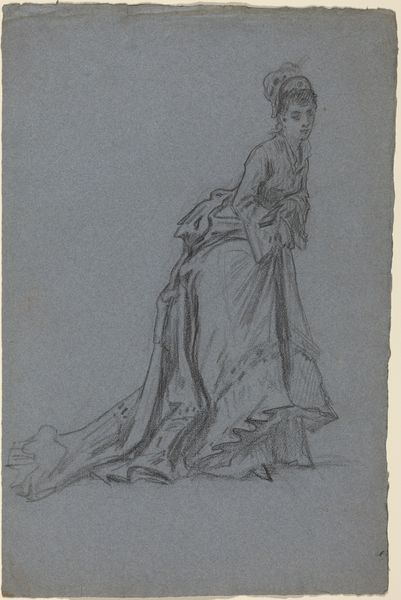
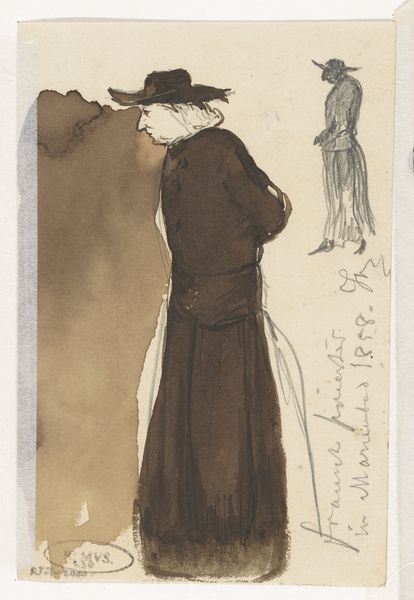
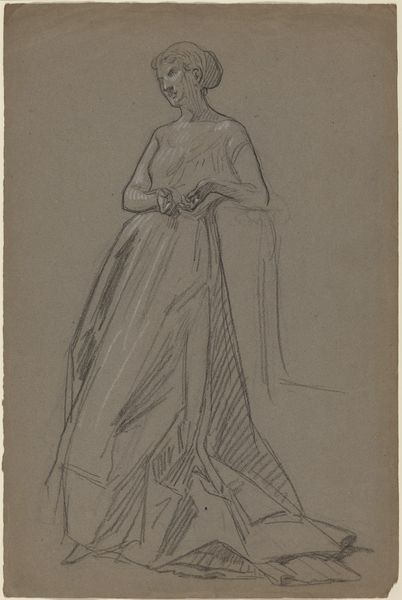
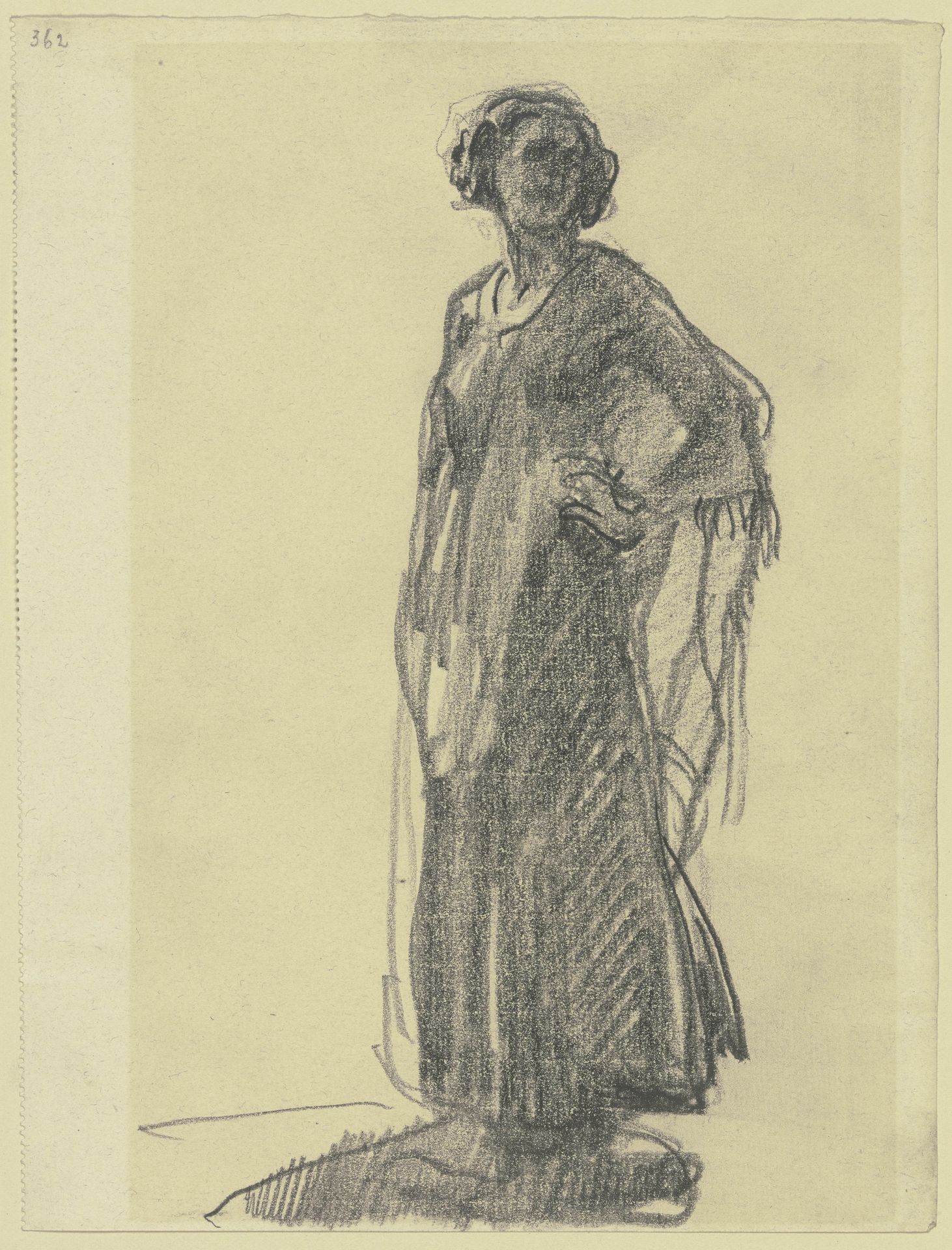
Editor: Here we have "Young Spanish Woman," a drawing, artist not stated, currently at the Städel Museum. It feels like a very fleeting image, a quick sketch, maybe a preparatory study. What catches your eye about this work? Curator: The directness of the line work is key. Note the artist’s choice of pencil and the varying pressure applied. Is it a commercially produced pencil? How does that materiality affect the marks they are able to make? And, importantly, how readily available was this material? Editor: That’s a different angle than I considered! I was thinking about the subject, trying to infer things about her from her pose. Curator: Her pose is also significant but understanding the means of production redirects us. The quick, almost utilitarian nature of the sketch suggests a moment captured—a study of form and shadow rather than a formal portrait meant for consumption. Who was this drawing for? Was it preparation for a larger painting? A personal record? Or a product intended for sale? The context of its creation dramatically shifts its meaning. Editor: So, looking at the lines, the shading… we’re not just seeing a woman, but an interaction between artist, subject, and the available materials of the time? Curator: Precisely. Consider also the social context: What opportunities would have existed for a German artist to observe and depict a Spanish woman? What are the power dynamics at play in that interaction? Editor: It makes me consider how easily we often detach art from the physical and social conditions that created it. Thank you for illuminating that for me! Curator: And thank you, your fresh perspective has me pondering on this work's function and dissemination beyond the studio.


Artwork details
- Medium
- drawing
- Location
- Städel Museum
- Copyright
- Public Domain
Tags
Comments
Share your thoughts
About this artwork
Editor: Here we have "Young Spanish Woman," a drawing, artist not stated, currently at the Städel Museum. It feels like a very fleeting image, a quick sketch, maybe a preparatory study. What catches your eye about this work? Curator: The directness of the line work is key. Note the artist’s choice of pencil and the varying pressure applied. Is it a commercially produced pencil? How does that materiality affect the marks they are able to make? And, importantly, how readily available was this material? Editor: That’s a different angle than I considered! I was thinking about the subject, trying to infer things about her from her pose. Curator: Her pose is also significant but understanding the means of production redirects us. The quick, almost utilitarian nature of the sketch suggests a moment captured—a study of form and shadow rather than a formal portrait meant for consumption. Who was this drawing for? Was it preparation for a larger painting? A personal record? Or a product intended for sale? The context of its creation dramatically shifts its meaning. Editor: So, looking at the lines, the shading… we’re not just seeing a woman, but an interaction between artist, subject, and the available materials of the time? Curator: Precisely. Consider also the social context: What opportunities would have existed for a German artist to observe and depict a Spanish woman? What are the power dynamics at play in that interaction? Editor: It makes me consider how easily we often detach art from the physical and social conditions that created it. Thank you for illuminating that for me! Curator: And thank you, your fresh perspective has me pondering on this work's function and dissemination beyond the studio.
Comments
Share your thoughts