About this artwork
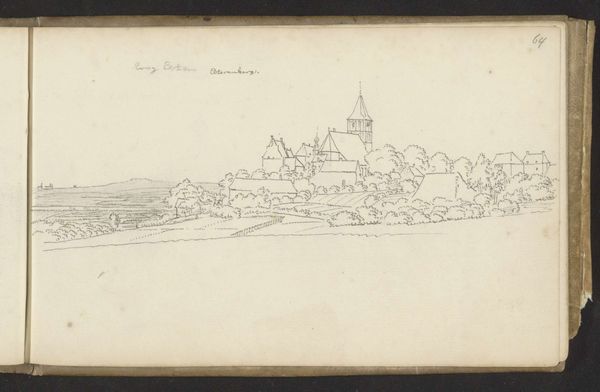
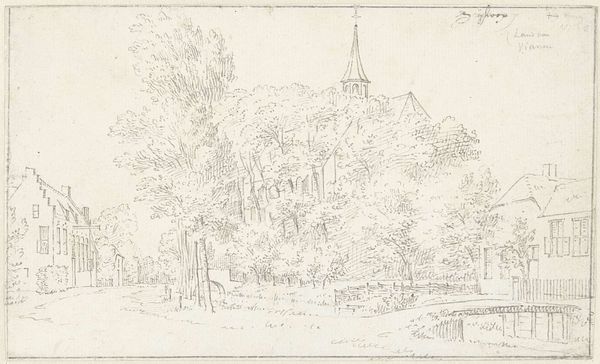
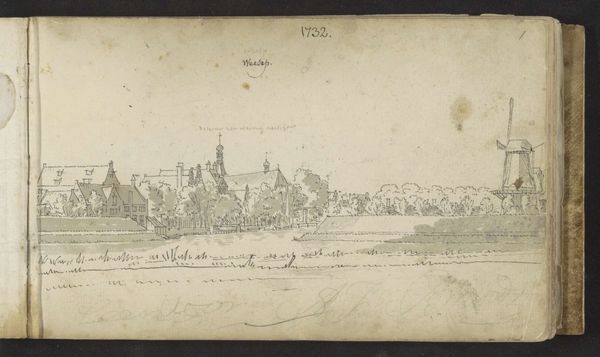
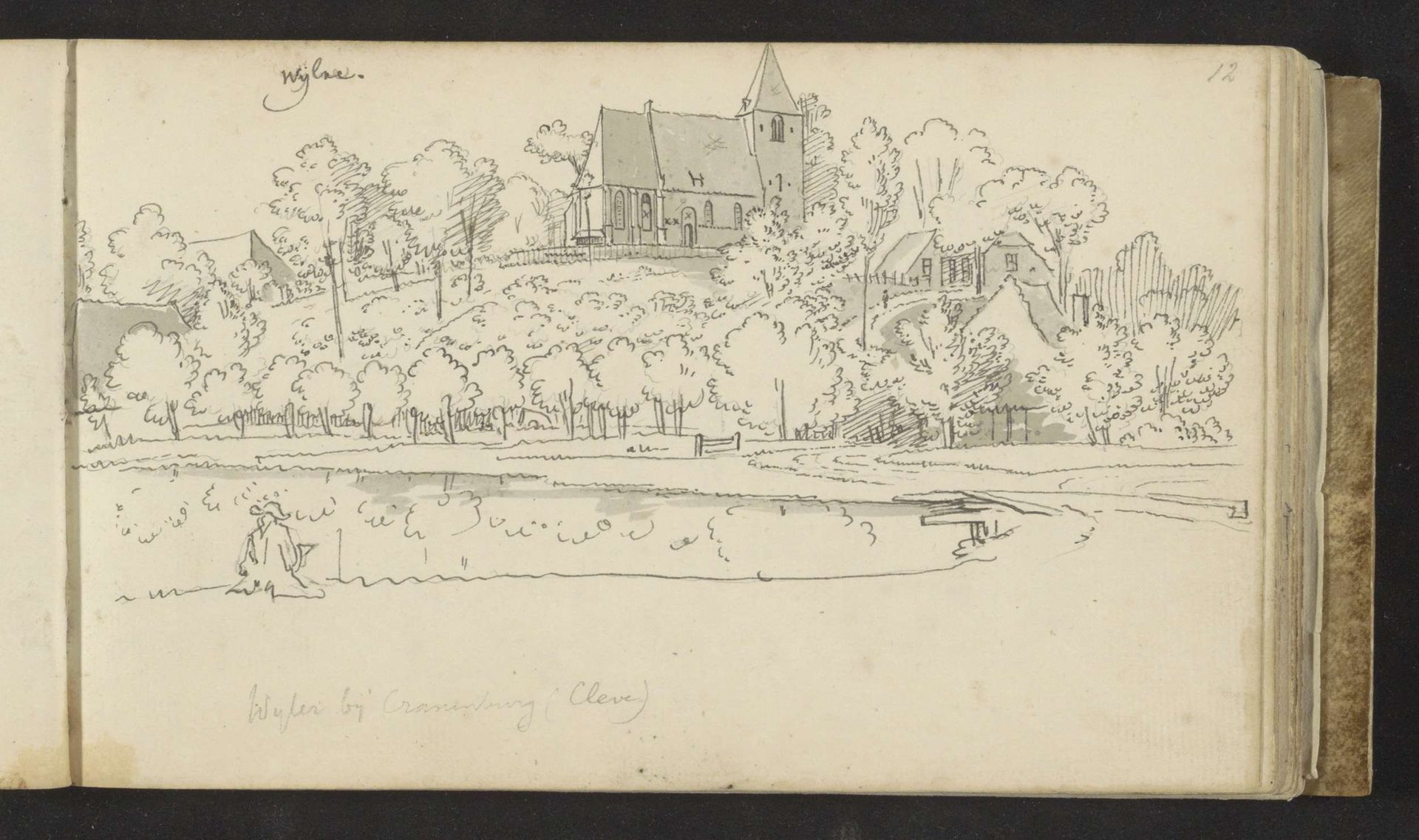
This is Abraham de Haen the Younger's sketch of Wyler, made with pen and gray ink. Dominating the composition is the church atop the hill, a beacon of stability. The church isn't merely a building; it's a symbol deeply rooted in our collective consciousness. Across cultures and epochs, we see similar structures rising towards the heavens, be it the ziggurats of ancient Mesopotamia or the cathedrals of Europe. Each pointing, in its own way, to the divine. Notice how the church, as it sits upon the hill, becomes a point of convergence in the landscape. This motif has reappeared throughout history, reflecting our innate yearning to establish a connection between the earthly and the celestial. It echoes in the placement of temples on mountains, a recurring theme in art and architecture. It is a testament to the enduring human need for spiritual grounding.

Artwork details
- Medium
- drawing, paper, ink, pen
- Location
- Rijksmuseum
- Copyright
- Rijks Museum: Open Domain
Tags
drawing
quirky sketch
baroque
pen sketch
sketch book
landscape
paper
personal sketchbook
ink
sketchwork
pen-ink sketch
pen work
sketchbook drawing
pen
storyboard and sketchbook work
sketchbook art
Comments
Be the first to share your thoughts about this work.
About this artwork
This is Abraham de Haen the Younger's sketch of Wyler, made with pen and gray ink. Dominating the composition is the church atop the hill, a beacon of stability. The church isn't merely a building; it's a symbol deeply rooted in our collective consciousness. Across cultures and epochs, we see similar structures rising towards the heavens, be it the ziggurats of ancient Mesopotamia or the cathedrals of Europe. Each pointing, in its own way, to the divine. Notice how the church, as it sits upon the hill, becomes a point of convergence in the landscape. This motif has reappeared throughout history, reflecting our innate yearning to establish a connection between the earthly and the celestial. It echoes in the placement of temples on mountains, a recurring theme in art and architecture. It is a testament to the enduring human need for spiritual grounding.
Comments
Be the first to share your thoughts about this work.