About this artwork
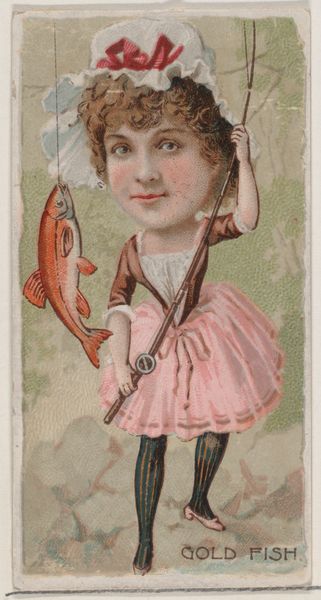
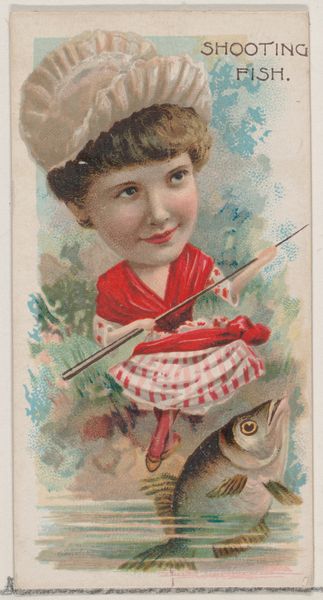
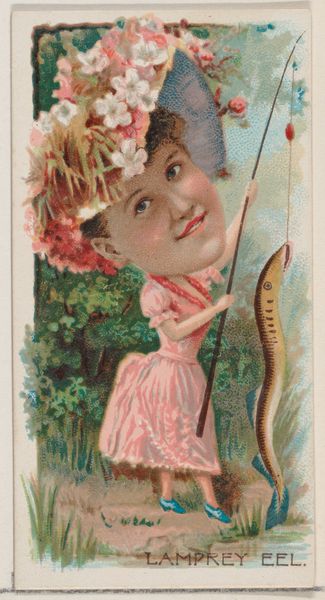
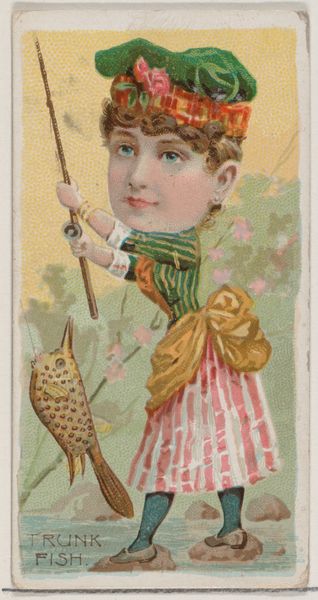
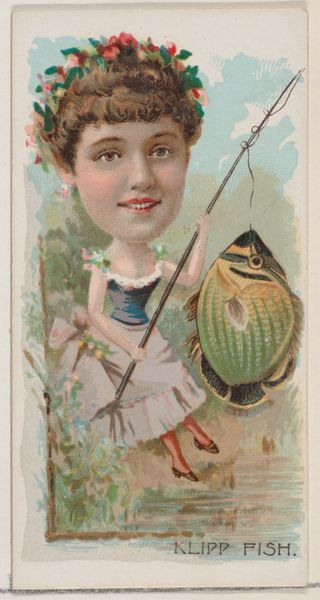
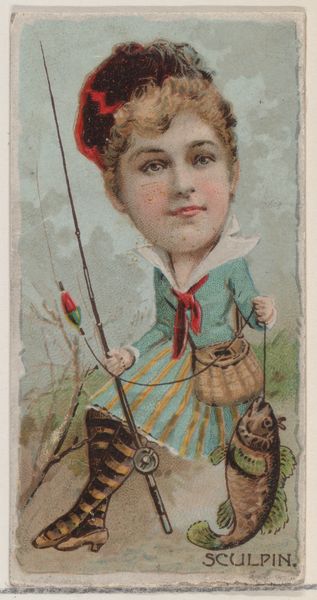
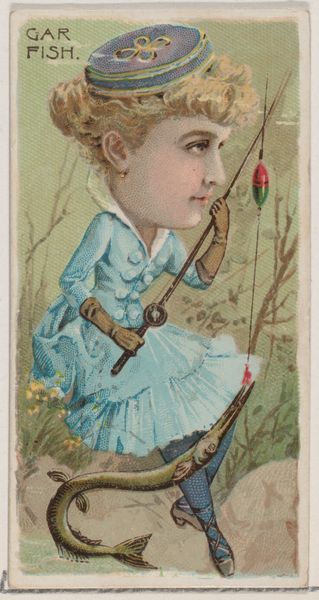
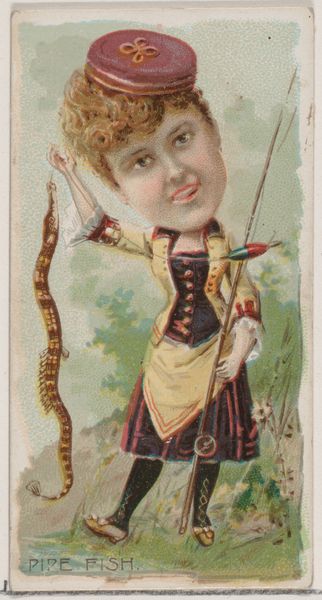
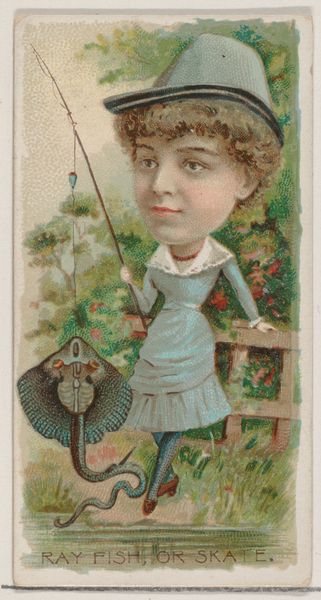
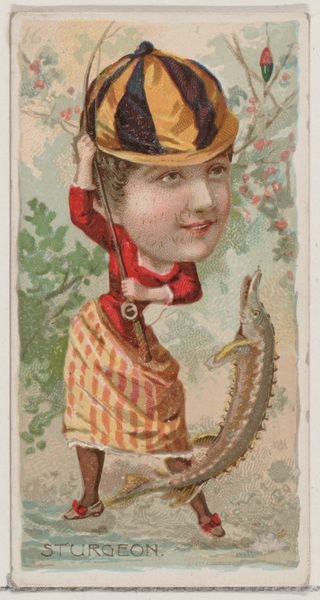
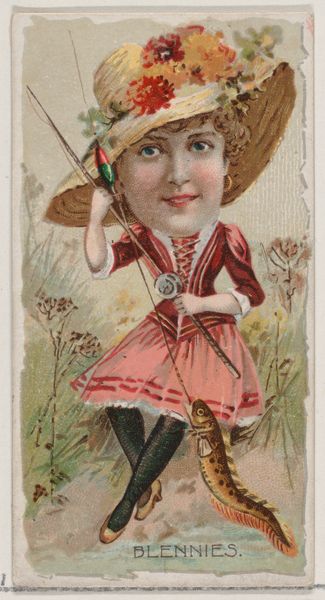
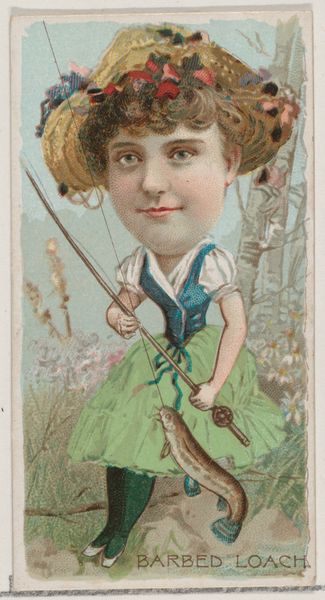
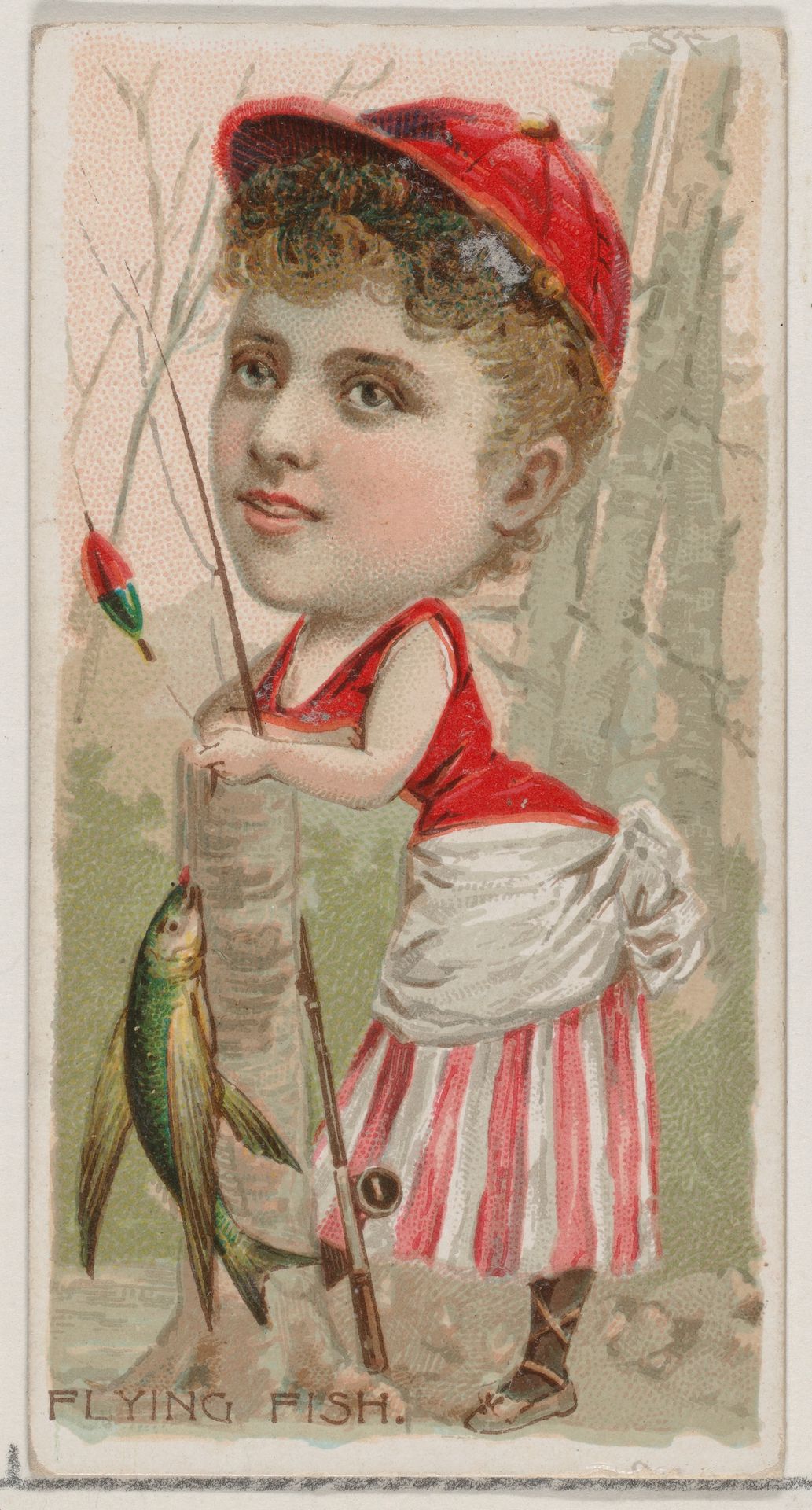
"Flying Fish" from the series "Fishers and Fish," was created by Knapp & Company as an advertisement for Duke brand cigarettes. This small card participates in the late 19th-century phenomenon of the trading card, which often featured idealized images of women in various roles. Here, we see a woman in traditionally masculine attire and an out-door setting, fishing. Yet, the hyper-feminine style in which she is rendered and the fact that she is 'performing' masculinity for a male audience complicate traditional narratives of gender. This image exists at a moment when the rise of consumer culture allowed for new representations and performances of gender, yet often reinforced existing power structures. Her exaggerated, doll-like features and fashionable dress act as an uncanny reminder that she exists to sell cigarettes. Consider the tension between empowerment and commodification present in this image, and how it might reflect the complex realities of women's lives then, and now.
Flying Fish, from the series Fishers and Fish (N74) for Duke brand cigarettes
1888


Artwork details
- Dimensions
- Sheet: 2 3/4 × 1 7/16 in. (7 × 3.6 cm)
- Location
- Metropolitan Museum of Art, New York, NY
- Copyright
- Public Domain
Comments
Share your thoughts
About this artwork
"Flying Fish" from the series "Fishers and Fish," was created by Knapp & Company as an advertisement for Duke brand cigarettes. This small card participates in the late 19th-century phenomenon of the trading card, which often featured idealized images of women in various roles. Here, we see a woman in traditionally masculine attire and an out-door setting, fishing. Yet, the hyper-feminine style in which she is rendered and the fact that she is 'performing' masculinity for a male audience complicate traditional narratives of gender. This image exists at a moment when the rise of consumer culture allowed for new representations and performances of gender, yet often reinforced existing power structures. Her exaggerated, doll-like features and fashionable dress act as an uncanny reminder that she exists to sell cigarettes. Consider the tension between empowerment and commodification present in this image, and how it might reflect the complex realities of women's lives then, and now.
Comments
Share your thoughts