About this artwork
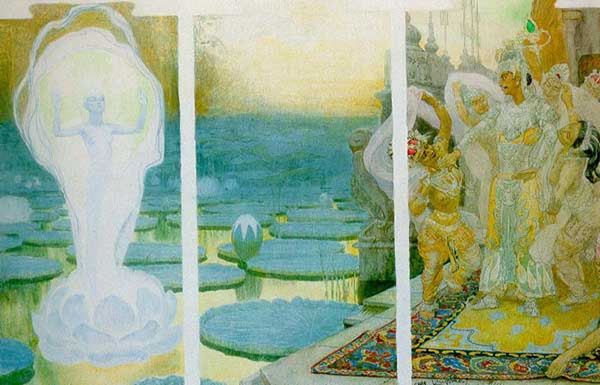
Edmund Dulac, working in the early 20th century, painted this scene from "The Little Mermaid," capturing a moment of profound cultural fascination with tales of transformation and identity. Dulac, an artist of French origin, brings to life the mermaid's liminal state, caught between two worlds. The image reflects a broader anxiety present in the early 20th century, a period marked by shifting social roles and the questioning of traditional identities. The mermaid, perched at the edge of the sea, is the quintessential outsider. She embodies the era’s complex relationship with the feminine ideal – a woman sacrificing her voice and very nature for love. The prince’s orientalist attire invites us to consider his privileged perspective. Is he a rescuer or another obstacle in her path? Dulac's illustration poignantly captures the mermaid’s longing and her tragic choice, mirroring society's often painful negotiation of identity and belonging. It is a reminder of the personal cost of transformation and the inherent desire for acceptance.

Artwork details
- Medium
- gouache, watercolor
- Copyright
- Edmund Dulac,Fair Use
Tags
Comments
Share your thoughts
About this artwork
Edmund Dulac, working in the early 20th century, painted this scene from "The Little Mermaid," capturing a moment of profound cultural fascination with tales of transformation and identity. Dulac, an artist of French origin, brings to life the mermaid's liminal state, caught between two worlds. The image reflects a broader anxiety present in the early 20th century, a period marked by shifting social roles and the questioning of traditional identities. The mermaid, perched at the edge of the sea, is the quintessential outsider. She embodies the era’s complex relationship with the feminine ideal – a woman sacrificing her voice and very nature for love. The prince’s orientalist attire invites us to consider his privileged perspective. Is he a rescuer or another obstacle in her path? Dulac's illustration poignantly captures the mermaid’s longing and her tragic choice, mirroring society's often painful negotiation of identity and belonging. It is a reminder of the personal cost of transformation and the inherent desire for acceptance.
Comments
Share your thoughts