About this artwork
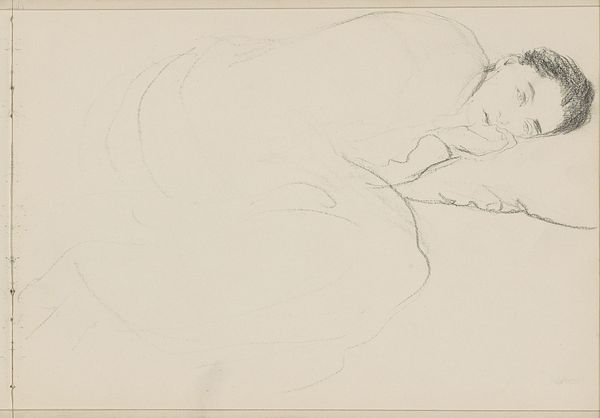
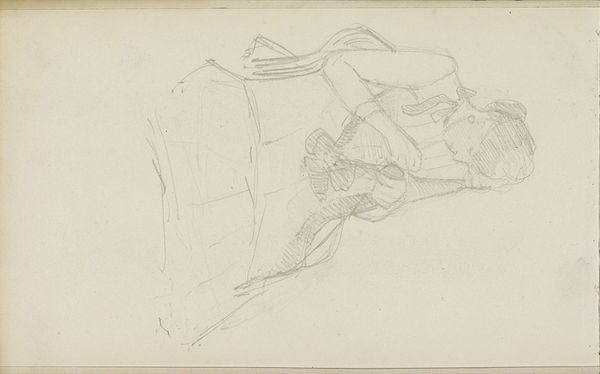
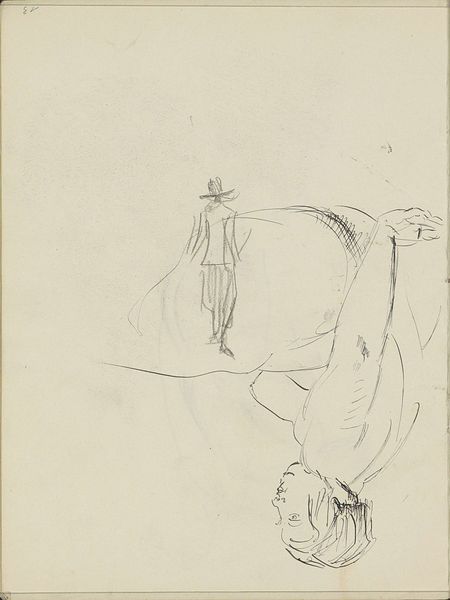
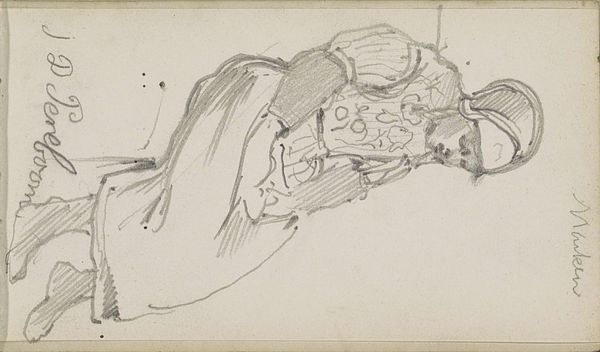
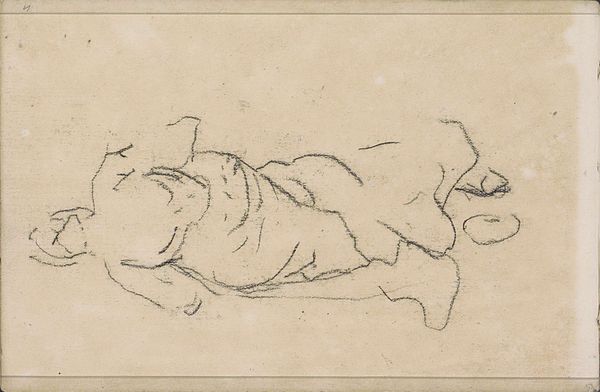
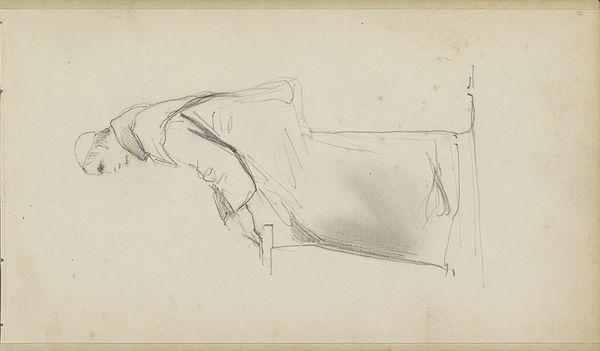
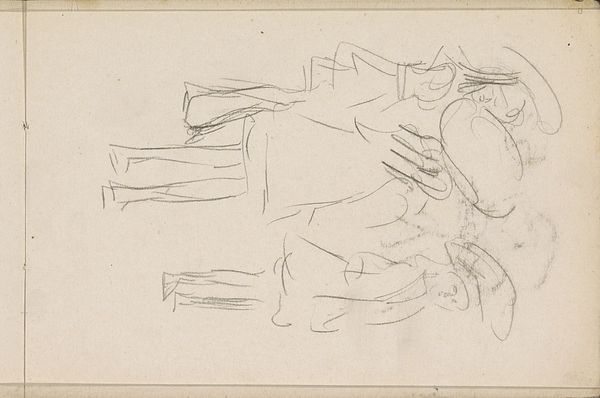
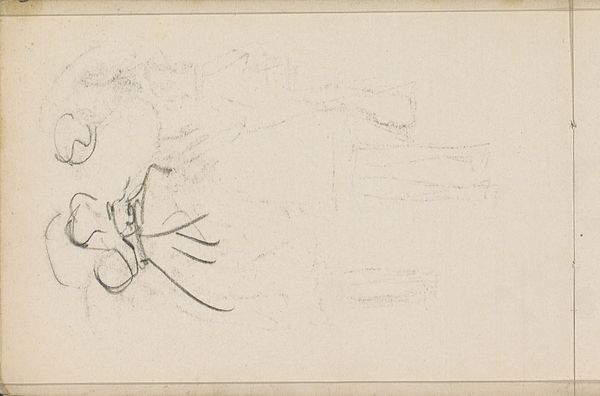
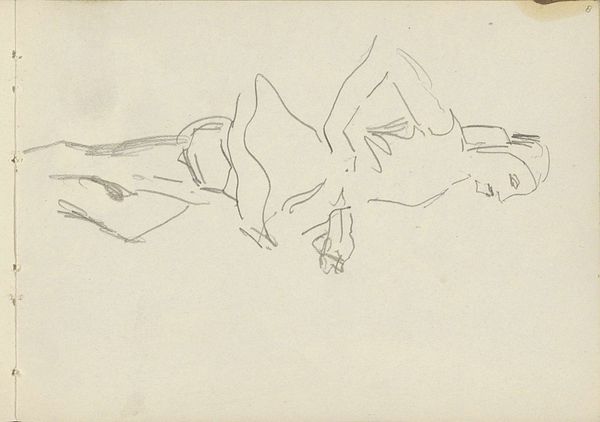
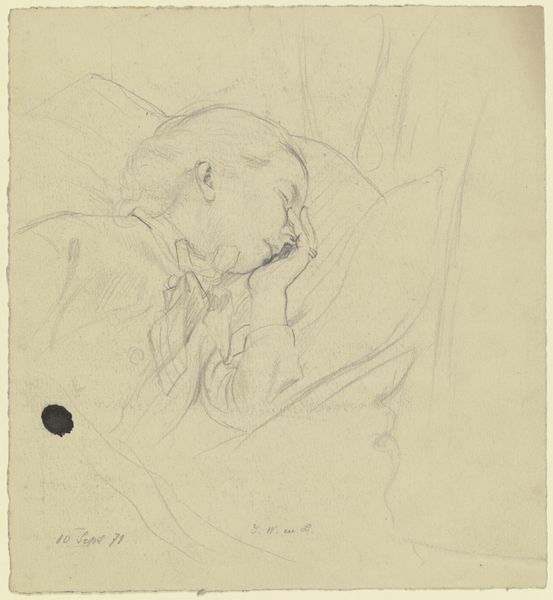
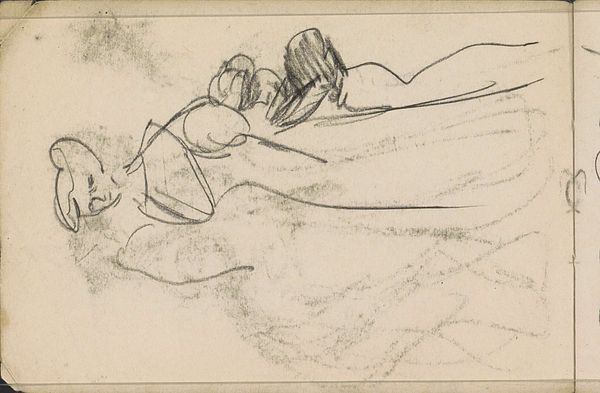
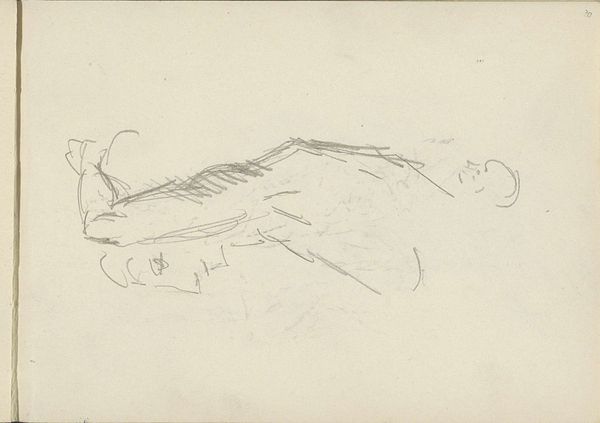
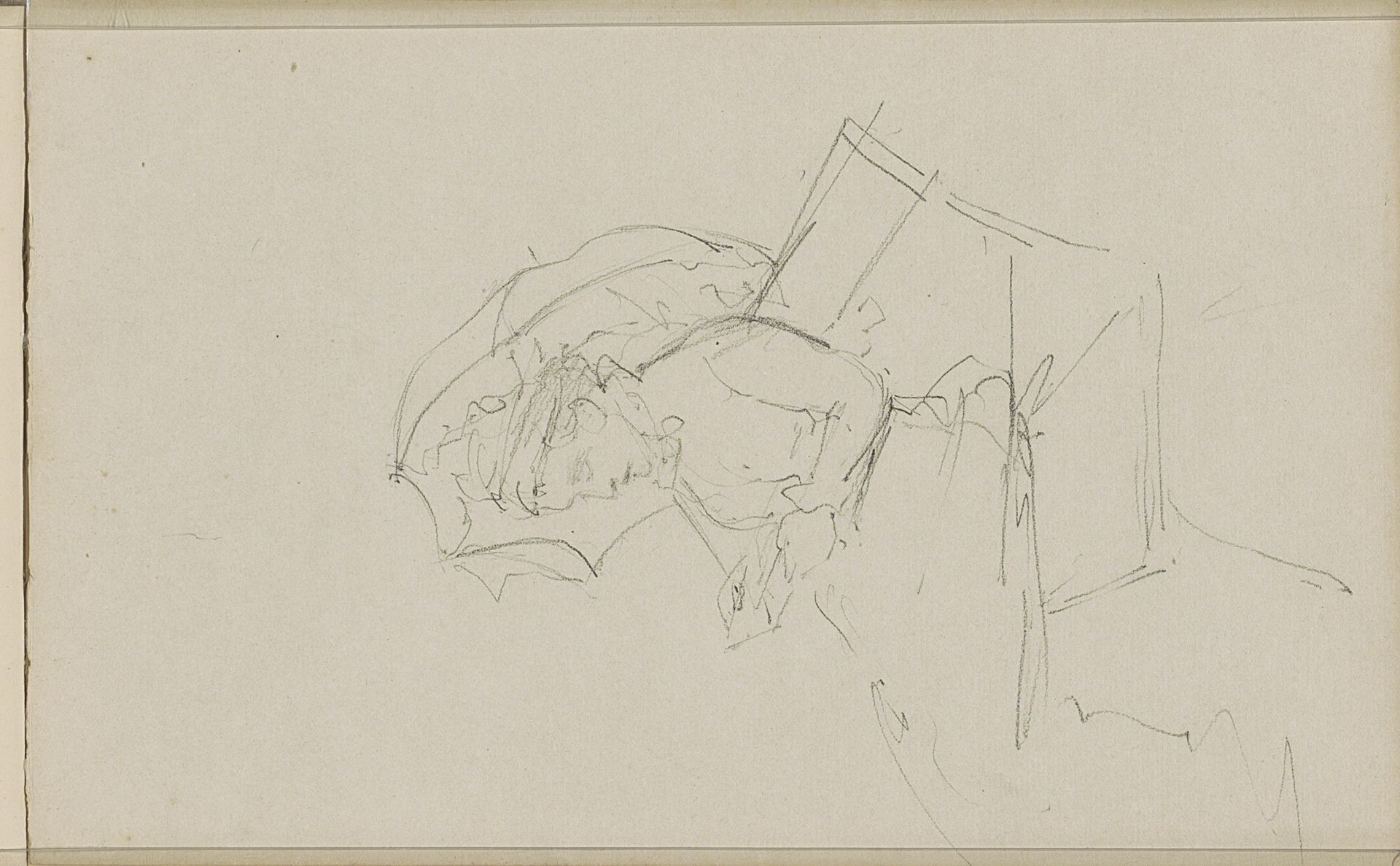
Editor: Here we have "Woman Reading on a Bench under a Parasol", a pencil drawing made sometime between 1865 and 1913. It's a quick sketch, really. The lines are light and fleeting, creating a sense of ephemeral beauty. What catches your eye in terms of form? Curator: The structural relationship between the figure and the parasol immediately strikes me. Observe how the converging lines of the parasol create a visual frame, drawing the eye inward toward the focal point: the woman's head and the book. It’s an interesting use of implied geometry to organize the composition, wouldn’t you agree? Editor: Absolutely. The parasol acts almost like an architectural element. What about the lines themselves? They seem so tentative. Curator: Precisely. The artist employs what we might call "linear economy". Note the varying weight and density of the pencil strokes. The face and book have a slightly heavier, more defined outline compared to the ethereal treatment of the surrounding forms. This strategic modulation of line quality directs our visual attention, reinforcing a hierarchy within the image. It also hints at the conceptual nature of drawing as exploration. What does it leave you wondering? Editor: I'm left wondering about the negative space, the emptiness surrounding the figure. It contributes so much to the feeling of quiet contemplation. Curator: A keen observation. The considered use of negative space allows the forms to breathe and resonate, emphasizing the subject’s isolation and concentration. Space itself is an active agent here. Editor: So, it's the interplay between these formal elements—line, shape, space—that really define the artwork? Curator: Indeed. It's how the artist manipulates these intrinsic elements, these basic building blocks of visual language, that elevates the simple act of sketching into something that can trigger further questions. Editor: It's like a language all its own! This exercise has definitely made me look more closely at the composition and think more carefully about the use of line. Curator: And hopefully inspired you to appreciate the expressive potential inherent within even the simplest of artistic means.
Vrouw lezend op een bank onder een parasol
1865 - 1913

Bramine Hubrecht
1855 - 1913Location
RijksmuseumArtwork details
- Medium
- drawing, pencil
- Location
- Rijksmuseum
- Copyright
- Rijks Museum: Open Domain
Tags
Comments
Share your thoughts
About this artwork
Editor: Here we have "Woman Reading on a Bench under a Parasol", a pencil drawing made sometime between 1865 and 1913. It's a quick sketch, really. The lines are light and fleeting, creating a sense of ephemeral beauty. What catches your eye in terms of form? Curator: The structural relationship between the figure and the parasol immediately strikes me. Observe how the converging lines of the parasol create a visual frame, drawing the eye inward toward the focal point: the woman's head and the book. It’s an interesting use of implied geometry to organize the composition, wouldn’t you agree? Editor: Absolutely. The parasol acts almost like an architectural element. What about the lines themselves? They seem so tentative. Curator: Precisely. The artist employs what we might call "linear economy". Note the varying weight and density of the pencil strokes. The face and book have a slightly heavier, more defined outline compared to the ethereal treatment of the surrounding forms. This strategic modulation of line quality directs our visual attention, reinforcing a hierarchy within the image. It also hints at the conceptual nature of drawing as exploration. What does it leave you wondering? Editor: I'm left wondering about the negative space, the emptiness surrounding the figure. It contributes so much to the feeling of quiet contemplation. Curator: A keen observation. The considered use of negative space allows the forms to breathe and resonate, emphasizing the subject’s isolation and concentration. Space itself is an active agent here. Editor: So, it's the interplay between these formal elements—line, shape, space—that really define the artwork? Curator: Indeed. It's how the artist manipulates these intrinsic elements, these basic building blocks of visual language, that elevates the simple act of sketching into something that can trigger further questions. Editor: It's like a language all its own! This exercise has definitely made me look more closely at the composition and think more carefully about the use of line. Curator: And hopefully inspired you to appreciate the expressive potential inherent within even the simplest of artistic means.
Comments
Share your thoughts