About this artwork
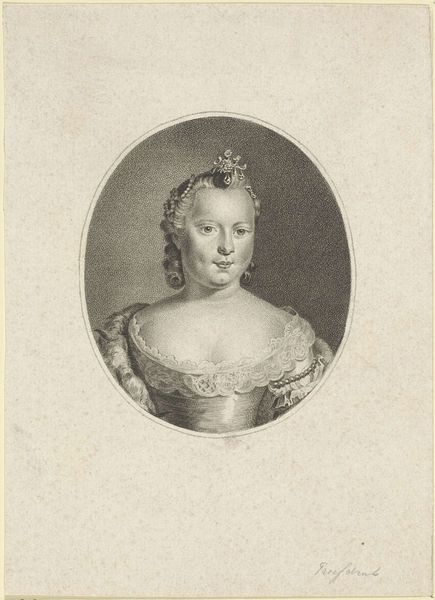
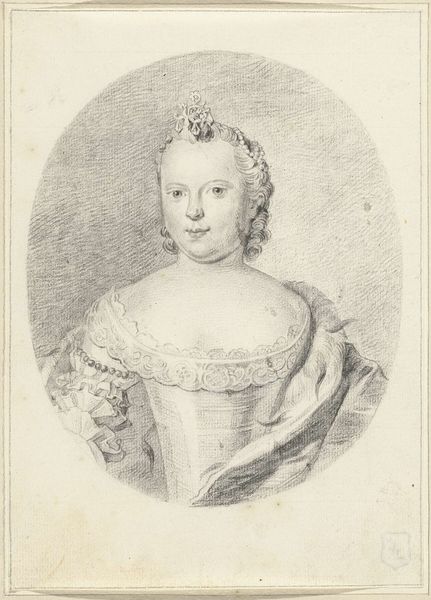
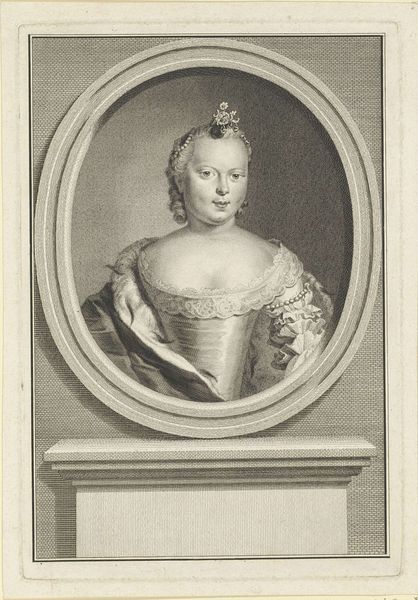
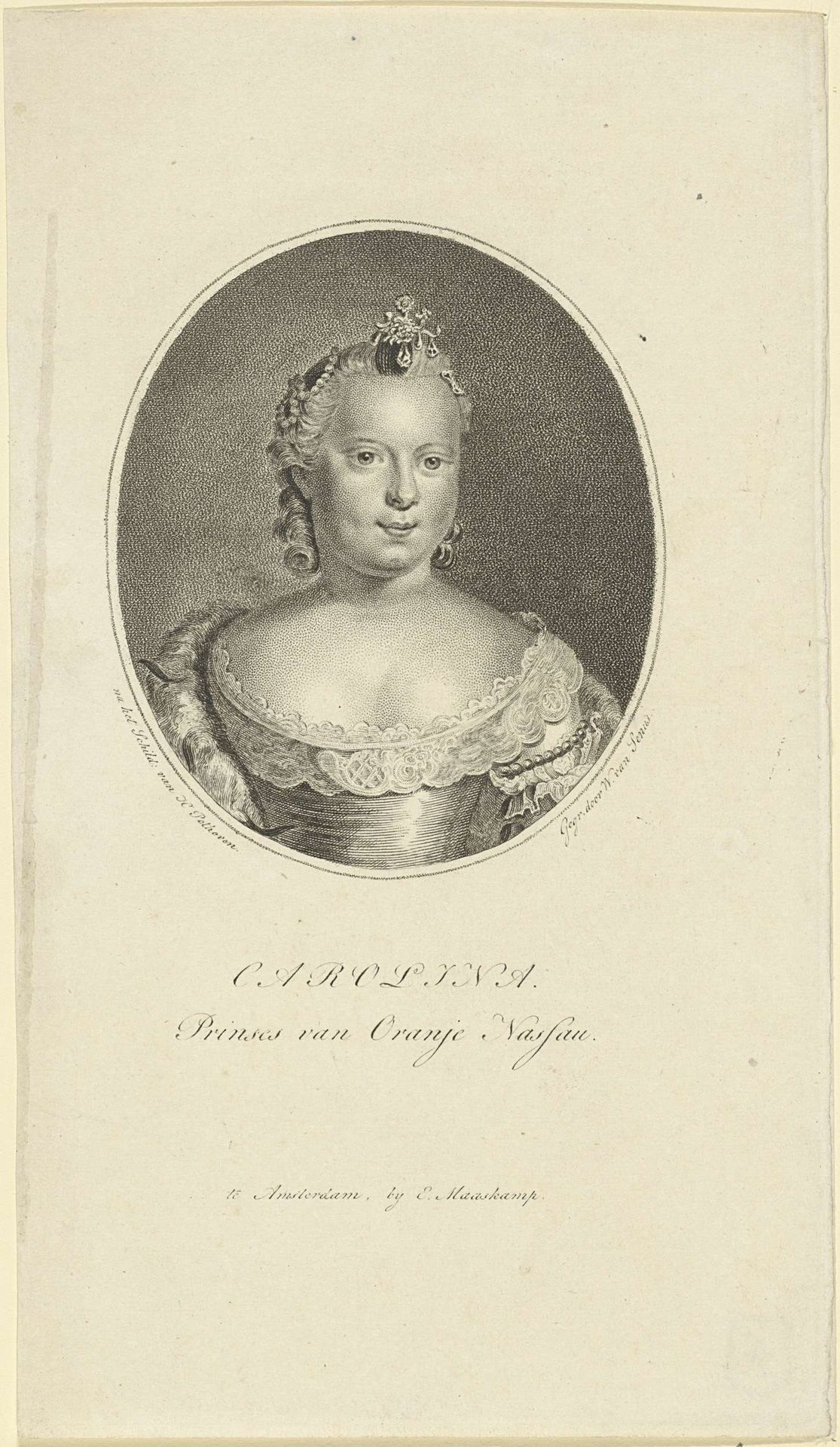
This is Willem van Senus's monochrome print of Carolina, Princess of Orange-Nassau. It is a formal portrait, where the figure is neatly framed within an oval, creating a structured and composed image. Notice how the delicate lines and stippling create subtle gradations of light and shadow. This technique models the Princess's features and the intricate details of her attire. The symmetry of her pose, combined with the oval frame, lends the portrait an air of classical order. Yet, the almost photorealistic style adds an element of modernity to this traditional form, reflecting the evolving artistic tastes of the time. The choice of a monochrome palette serves to strip away the distractions of colour, focusing our attention on form and structure. The composition invites us to consider how the elements of line, shape, and texture come together. It is a testament to the enduring power of portraiture, and the way it conveys both the likeness and the status of its subject.
Portret van Carolina, prinses van Oranje-Nassau
1787 - 1834

Willem van Senus
1773 - 1851Location
RijksmuseumArtwork details
- Medium
- engraving
- Dimensions
- height 232 mm, width 133 mm
- Location
- Rijksmuseum
- Copyright
- Rijks Museum: Open Domain
Tags
portrait
old engraving style
pencil drawing
15_18th-century
history-painting
engraving
Comments
Be the first to share your thoughts about this work.
About this artwork
This is Willem van Senus's monochrome print of Carolina, Princess of Orange-Nassau. It is a formal portrait, where the figure is neatly framed within an oval, creating a structured and composed image. Notice how the delicate lines and stippling create subtle gradations of light and shadow. This technique models the Princess's features and the intricate details of her attire. The symmetry of her pose, combined with the oval frame, lends the portrait an air of classical order. Yet, the almost photorealistic style adds an element of modernity to this traditional form, reflecting the evolving artistic tastes of the time. The choice of a monochrome palette serves to strip away the distractions of colour, focusing our attention on form and structure. The composition invites us to consider how the elements of line, shape, and texture come together. It is a testament to the enduring power of portraiture, and the way it conveys both the likeness and the status of its subject.
Comments
Be the first to share your thoughts about this work.