before 1543
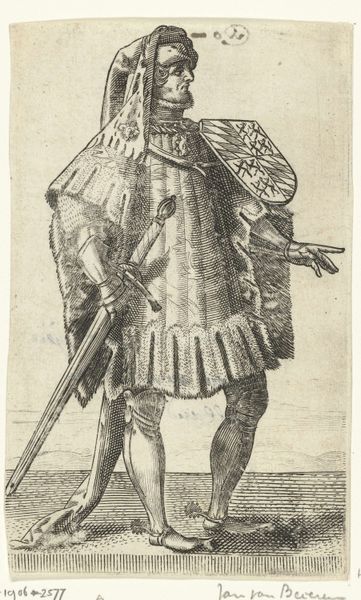
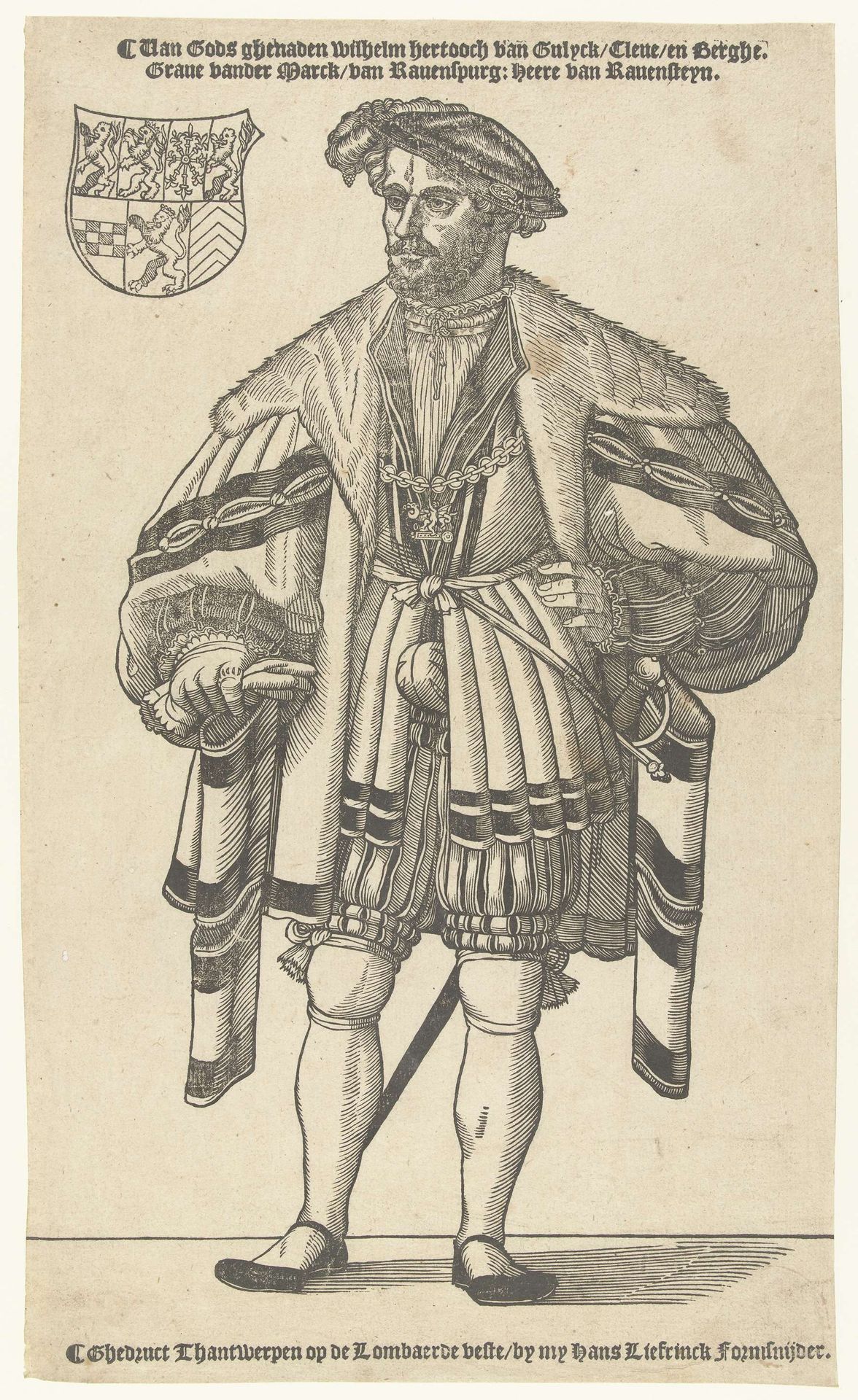
Portret van hertog Willem van Kleef, Gulik en Berg, graaf van Mark, heer van Ravenstein

Cornelis Anthonisz.
1499 - 1553Location
RijksmuseumListen to curator's interpretation
Curatorial notes
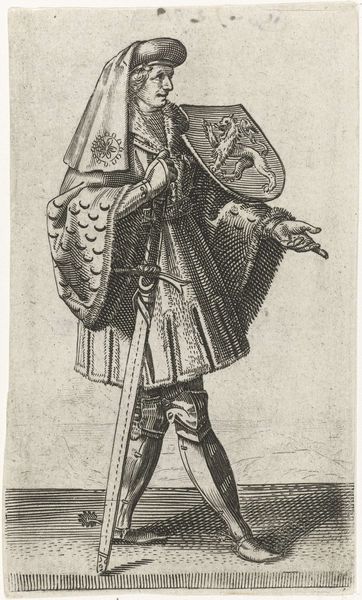
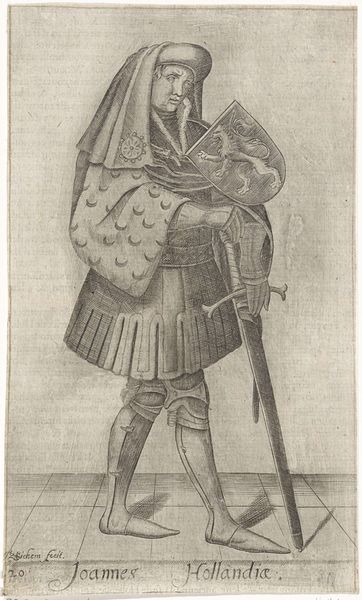
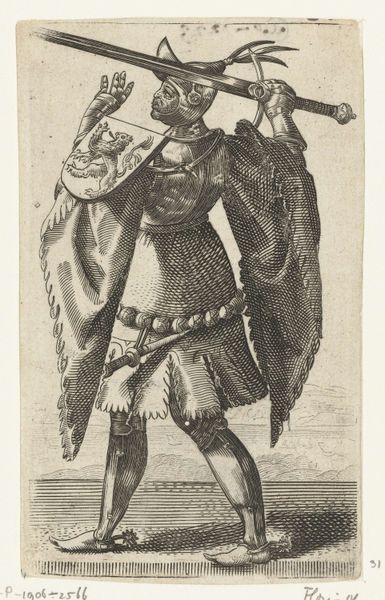
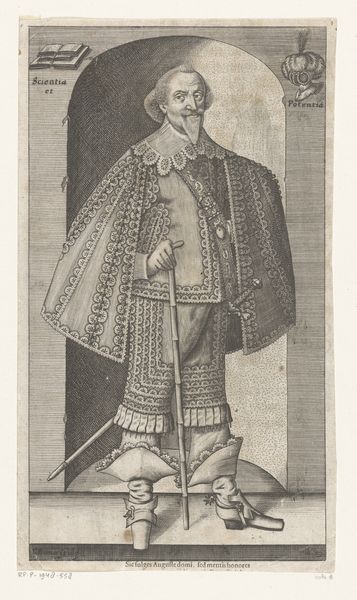
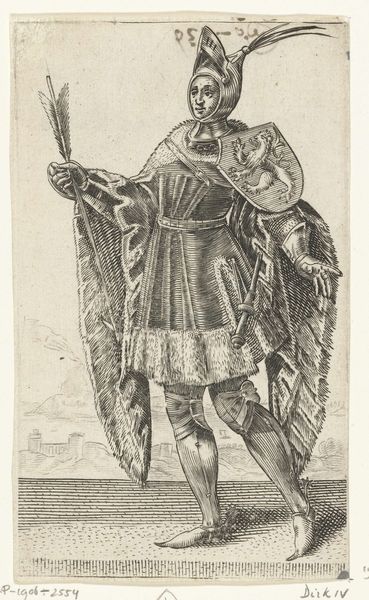
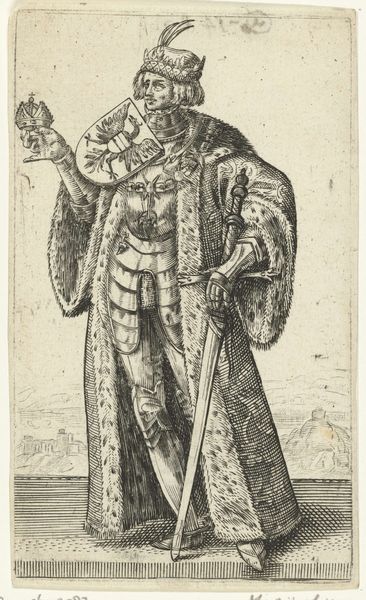
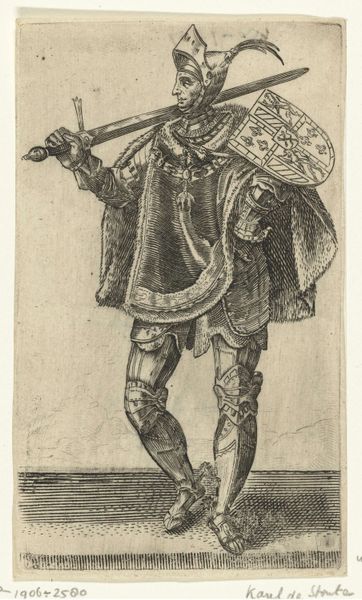
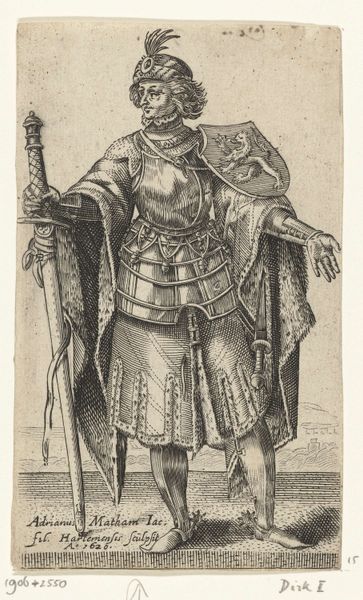
This is a woodcut portrait of Duke Wilhelm van Cleve, created by Cornelis Anthonisz. In it, the Duke is draped in finery, with his coat of arms displayed prominently, signaling power and lineage. Consider the prominent display of heraldry. Coats of arms, like those here, served as potent visual shorthand for family history, territorial claims, and social status. It’s a tradition that echoes through history, from the emblems on Roman shields to modern-day corporate logos, all designed to evoke instant recognition and loyalty. Yet, the symbols on the shield—lions, eagles, and geometric patterns—speak to a deeper, almost primal need to assert identity. The sword adds a psychological dimension to this display. The sword’s presence evokes both protection and power, tapping into the primal associations of weaponry. Such displays of power continue through time, evolving from swords to sceptres to the carefully curated images of modern leaders. Each object and gesture is designed to project an aura of control and authority.