#
abstract expressionism
#
abstract painting
#
impressionist painting style
#
impressionist landscape
#
oil painting
#
neo expressionist
#
acrylic on canvas
#
painting painterly
#
impressionist inspired
#
expressionist
Copyright: Carlos Almaraz,Fair Use
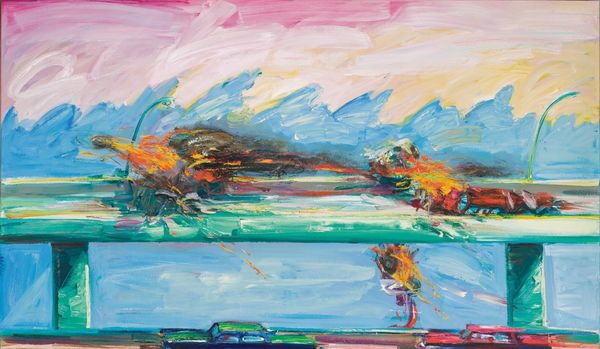
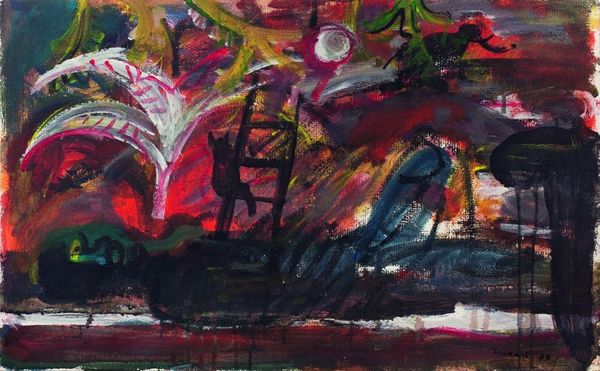
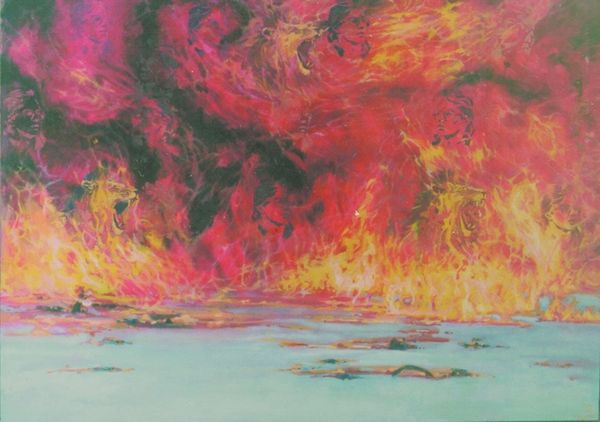
Editor: This is Carlos Almaraz's "Longo Crash" from 1982. It’s an acrylic on canvas, and wow, it’s really intense. The subject matter is so violent, but the brushstrokes feel almost dreamy. What is your take on this piece? Curator: Well, let's consider the socio-political climate of the 1980s in Los Angeles, where Almaraz was working. The city was grappling with rising crime rates, gang violence, and social unrest. "Longo Crash", in this context, can be viewed as a visceral reflection of that urban decay and anxiety, brought to life through the visual vocabulary of expressionism. What do you think the location choice adds to the piece? Editor: Good point. By setting it on a bridge overlooking a beach, doesn't that provide a jarring juxtaposition of tranquility and chaos? Curator: Exactly. This is part of the artist’s commentary on public life in Los Angeles, forcing viewers to confront unpleasant truths beneath the veneer of beauty, but whose gaze is centered? Is this for local residents, government officials, or an external view on the issues affecting the depicted public. Editor: That's fascinating. I hadn’t considered the layers of meaning embedded in the location itself and who it would appeal to the most. Curator: These elements contribute to the painting’s narrative power and Almaraz’s political stance. He transforms a scene of destruction into a powerful statement about the fractured social fabric of the time, but where is the optimism for the future and is that a comment within itself? Editor: Thinking about it as social commentary makes me appreciate it even more, seeing it as more than just an accident. Curator: It also encourages reflection on the broader implications of urban life and the artist’s role in giving voice to the experiences of marginalized communities.
Comments
No comments
Be the first to comment and join the conversation on the ultimate creative platform.
 Collect
 React
React Comment
More like this