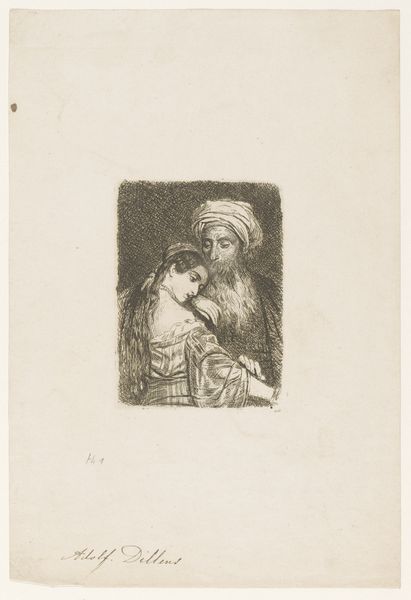
Dimensions: height 235 mm, width 148 mm
Copyright: Rijks Museum: Open Domain
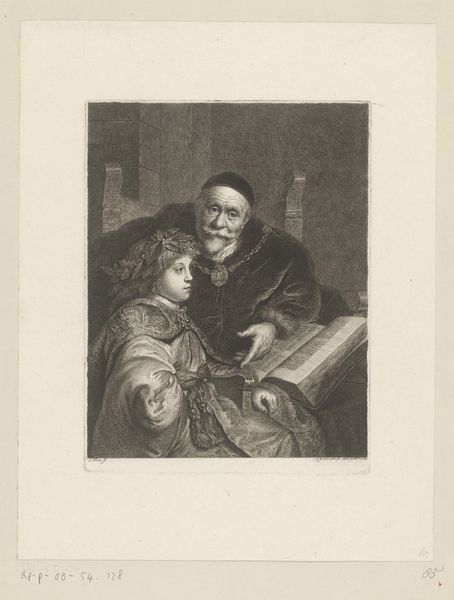
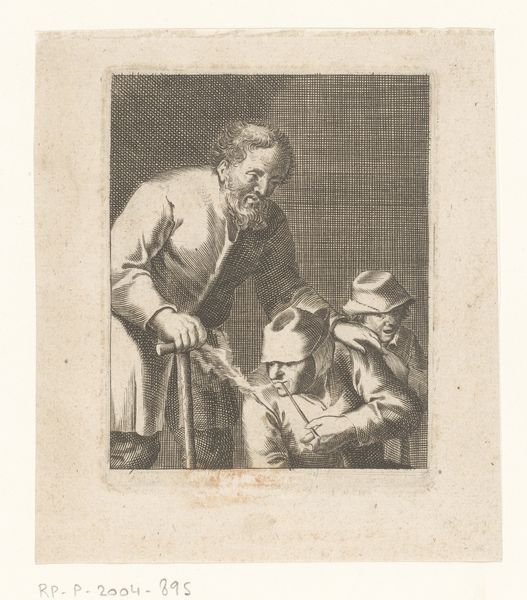
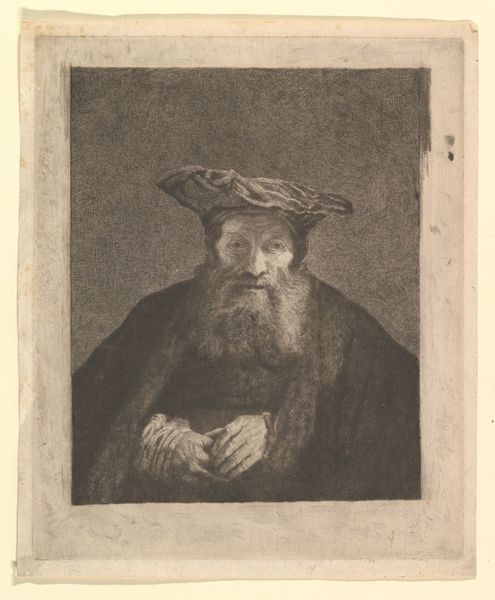
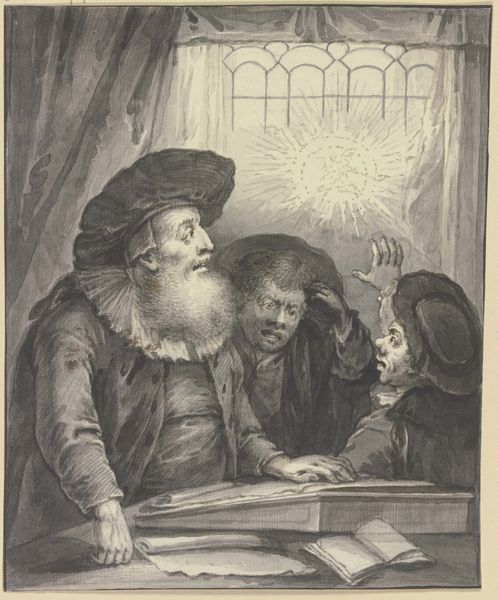
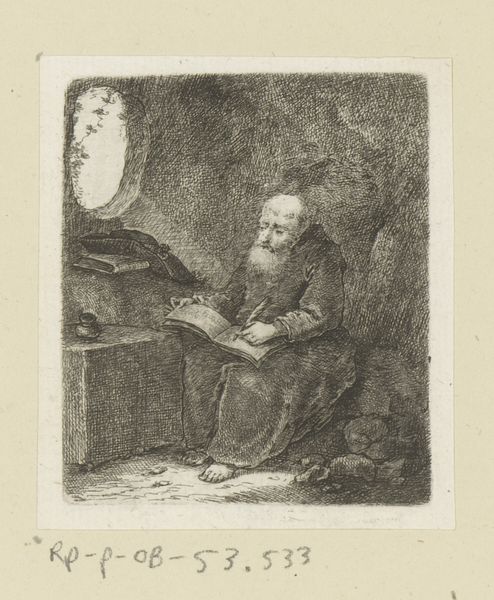
Curator: Ah, this engraving from 1776, by Johann Andreas Benjamin Nothnagel, is titled "Oude man wijst jongen bij in Hebreeuwse tekst" – "Old man instructing boy in Hebrew text". The print itself provides a rather intimate tableau. Editor: My initial impression? It’s striking how somber it is, despite what seems like a moment of instruction. The figures are almost swallowed by the density of the shading, yet their expressions hold a light of, dare I say, muted hope? Curator: Indeed. Considering Nothnagel's social context, prints such as this held significant pedagogical value. It showcases not just the imparting of knowledge but also highlights the craftsmanship embedded within printmaking. We see an attention to detail suggesting a skilled artisan invested in the dissemination of knowledge and skill. Editor: It’s interesting to think about the production of prints as a kind of intellectual labor. Looking at it that way, I start to wonder: What would it have been like to be the boy in the picture? Would it be difficult for a person from the Baroque period to grasp the written language? Curator: A sharp question, and one rooted in understanding the mechanics of learning and the social structures inherent within instruction. The materiality of the printed text itself, reproduced en masse, democratized access to scripture, subtly reshaping power dynamics within communities that may not have had prior, easy access to such knowledge. Editor: Almost a quiet revolution, on paper! It really puts a spotlight on how our perception is shaped by accessibility. We should perhaps be thankful, especially these days, for the easy availability of material around us, since Nothnagel managed to capture something vital. A story of instruction, discipline, perhaps faith – woven into the very grain of the print itself. Curator: It’s about more than just the visual depiction; it prompts a dialogue about the material conditions of knowledge transmission and the artistry embedded within its creation. A lovely piece indeed, provoking considerations that go beyond its aesthetic presentation. Editor: I concur, leaving us with more than meets the eye – the piece urges you to think about access to education, tradition, craft, and how all things tie together. A nice stop for us to wrap up here, what do you say?
Comments
No comments
Be the first to comment and join the conversation on the ultimate creative platform.
 Collect
 React
React Comment
More like this