1598
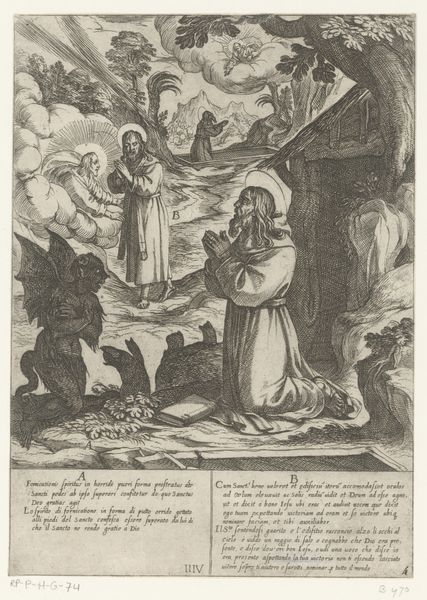
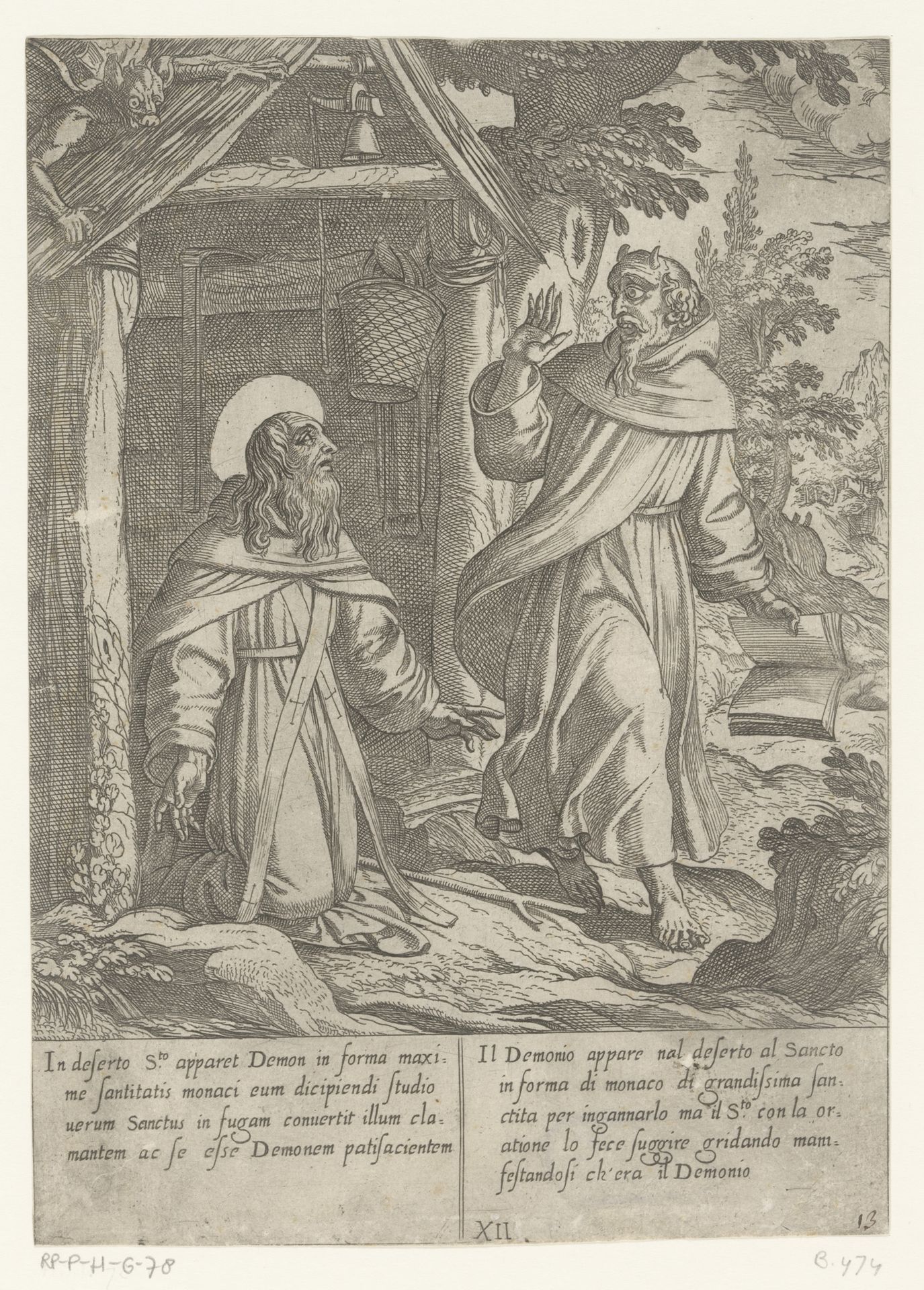
H. Antonius in de wildernis bezocht door de duivel in monnikspij

Antonio Tempesta
1555 - 1630Location
RijksmuseumListen to curator's interpretation
Curatorial notes
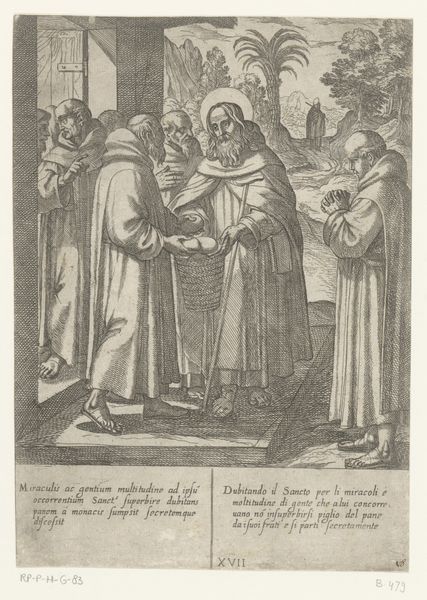
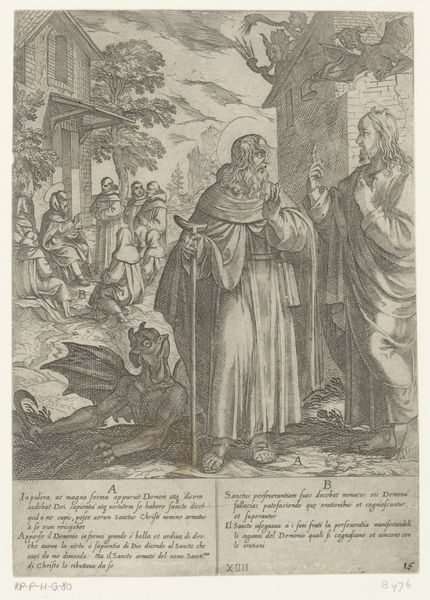
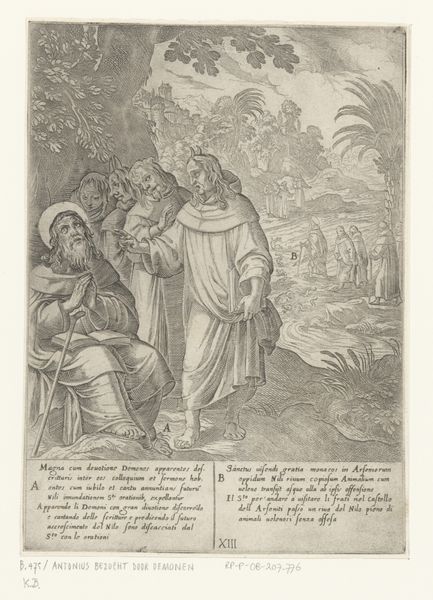
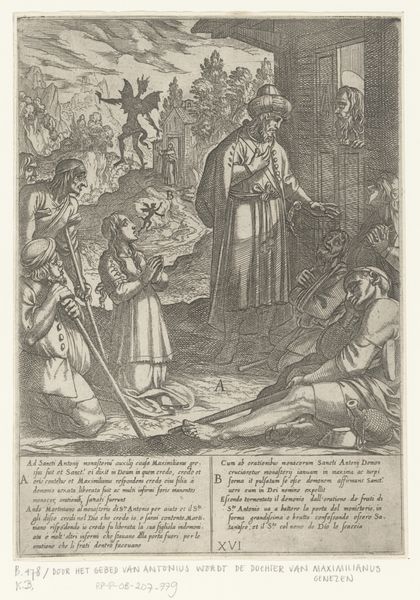
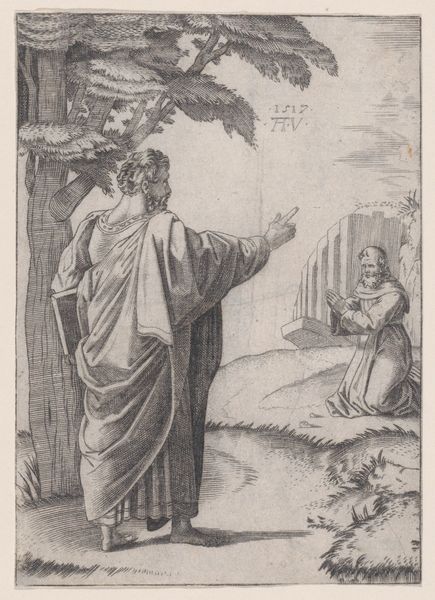
Antonio Tempesta etched "H. Antonius in de wildernis bezocht door de duivel in monnikspij" around 1600, a vision into the trials of Saint Anthony. Here, we see the devil, a master of disguise, appearing as a monk to tempt Saint Anthony. Notice the halos, symbols of holiness, contrasting starkly with the devilish figure lurking in the shadows. This visual tension speaks volumes about the battle between good and evil. The motif of temptation, of course, isn't unique to this story. We see echoes of it in countless other artworks, from Eve offering Adam the apple to the trials of Christ in the desert. The devil's appearance as a monk is particularly intriguing. It represents the most insidious form of temptation – one that masquerades as virtue. In this context, the monk's garb becomes a symbol of deceit, reflecting our anxieties about hidden threats. Like an actor in a play, the demon has donned the costume that best allows him to achieve his goal. It speaks to our collective fear of false prophets. The scene is psychologically charged, engaging viewers on a subconscious level. The visual narrative of temptation and resistance continues to fascinate, its power undiminished through the ages.